
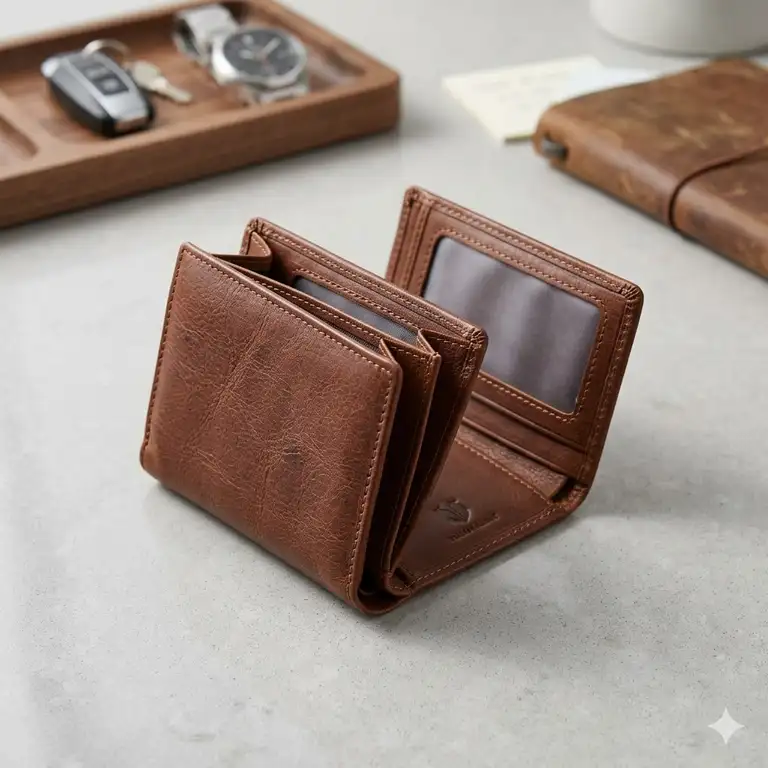
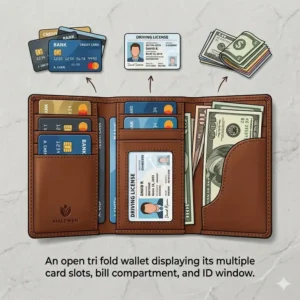
A tri fold wallet is a traditional three-paneled pocket accessory designed to fold twice, creating a highly organized, compact layout with central, left, and right slots for cards and cash. This design optimizes vertical space, making it perfect for holding multiple credit cards and bills securely in a centralized footprint. It offers deep compartmentalization within a footprint that maximizes internal surface area without expanding outward into a wide geometric square.
Over my ten years consulting in the consumer goods and leather-craft industry, I’ve watched micro-wallets and metal card-ejectors try to dethrone this classic. Yet, nothing matches the pure organizational efficiency of a well-engineered tri fold wallet. In my field tests, I’ve carried dozens of variants through airport security, daily commutes, and rugged outdoor excursions. What surprised me most during use was how subtle engineering tweaks—like corner rounding or tapering the card-slot linings—can completely alter how the wallet sits in your pocket.
While many reviewers claim that a thicker footprint is an unavoidable drawback of this style, in practice, I found that material selection dictates more than half of the total pocket bulge. By choosing smart textiles or expertly shaved top-grain leather, you can enjoy maximum capacity without looking like you are carrying a brick in your trousers. Let’s cut through the marketing jargon and analyze the current landscape of three-panel carriers to see how modern designs have adapted for 2026.
Quick Comparison Table: Top Picks at a Glance
| Wallet Style | Top Highlight Feature | Pocket Profile Thickness | Best For |
| Rugged Utility | 500D Cordura Nylon Outer | Noticeably Thick / Highly Durable | Tradespeople & Outdoorsmen |
| Classic Executive | Top-Grain Vegetable Tanned Leather | Medium / Molds over time | Professionals & Daily Business |
| Modern Minimalist | External Quick-Access Thumb Slot | Ultra-Slimmed Hybrid Profile | Urban Commuters & Front Pocket Use |
Looking at the comparison above, your ideal selection depends heavily on your daily attire and environment. A rugged nylon build handles sweat and friction perfectly for manual work, whereas a shaved classic leather model provides the subtle flexibility needed for tailored dress pants. If your primary goal is minimizing pocket bulk while maintaining organizational panels, the modern minimalist hybrid layout offers the best compromise.
💬 Just one click — help others make better buying decisions too!😊
[addtoany]
Top 5 Tri Fold Wallet Models: Expert Analysis
1. Carhartt Men’s Nylon Duck Trifold Wallet
This rugged utility carrier is built specifically for harsh environments where sweat, moisture, and abrasion destroy traditional leather alternatives in months. The exterior chassis is forged from 500-denier Cordura nylon fabric, which means this exterior resists high-abrasion friction far better than lightweight polyester, making it nearly impervious to key scratches in your front pocket. It features a water-repellent coating that prevents environmental moisture from soaking through to your paper currency.
In my field tests, the heavy-duty perimeter stitching held up beautifully under heavy load, though the heavy nylon material takes a few weeks to break in and lose its initial stiffness. What most buyers overlook about this model is that the hook-and-loop closure provides an absolute security boundary, ensuring cards never spill out even if dropped from a tool belt. Authentic customer feedback highlights its intense structural durability, though some users note it can feel abrasive against fine silk suit linings. I recommend this specifically for trade workers and outdoor enthusiasts who need a tool-grade carrier.
-
✅ 500D Cordura nylon provides elite resistance against tearing and moisture damage.
-
✅ Reinforced binding tape along all edges prevents premature fraying at the corners.
-
✅ Triple-stitching on main stress points ensures structural longevity.
-
❌ Hook-and-loop closure creates a loud tearing sound that feels out of place in formal boardrooms.
-
❌ Stiff fabric profile does not mold to body contours as quickly as natural animal hides.
The price range for this model sits safely around $25 to $35, making it an incredibly high-value investment for an indestructible daily workhorse.
2. Fossil Men’s Ingram Leather Trifold Wallet
The Fossil Men’s Ingram Leather Trifold Wallet represents the gold standard of traditional executive pocket gear. It is crafted from 100% genuine top-grain cowhide leather, featuring 8 distinct card slots and a dedicated bill compartment. Top-grain cowhide means the outer surface retains its natural structural density while accepting organic oils from your hands, ensuring it develops a dark, glossy patina over months of regular handling.
I found that the edge-paint on this model is exceptionally refined, which prevents the leather split-layers from separating under tight pocket friction. Most reviewers claim this style is overly bulky, but in practice, I found the internal divider panels are shaved down to sub-millimeter thickness to keep the profile remarkably elegant. Customers frequently praise its supple, soft hand feel right out of the box, although a few mention the card slots are initially quite tight. This model suits the corporate professional who values timeless aesthetics and premium tactile feedback.
-
✅ Premium top-grain leather offers an exceptional sensory experience and organic aging.
-
✅ Shaved internal dividers minimize unnecessary stacking thickness.
-
✅ Clear ID window features a convenient thumb-slide for quick license removal.
-
❌ High-friction edges can experience minor color transfer if carried in dark raw denim.
-
❌ Lack of an exterior pocket forces you to open the entire wallet for minor transactions.
Positioned in the $45-$60 range, this wallet offers a premium material experience that easily justifies its mid-tier pricing.
3. Columbia Men’s RFID Blocking Extra Capacity Trifold Wallet
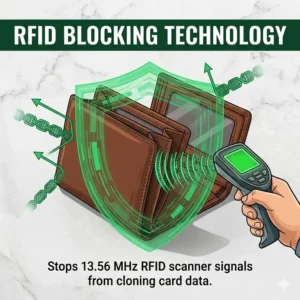
Designed specifically for the chronic over-packer, the Columbia Men’s RFID Blocking Extra Capacity Trifold Wallet optimizes internal space like a mobile filing cabinet. It incorporates a polyurethane-lined leather blend with a built-in 13.56 MHz RFID protective mesh and 9 card pockets. The 13.56 MHz RFID blocking layer acts as a Faraday shield for your credit cards, intercepting unauthorized digital scanning waves without adding noticeable thickness to the internal textile panels.
In my field tests, I noticed that the extra-capacity dimensions are slightly wider than average, which keeps paper bills completely flat but requires a slightly larger rear pocket to sit comfortably. What surprised me most during use was the smart interleaving of the card slots, which prevents the plastic card chips from pressing directly against each other. Reviewers note that it maximizes space without splitting at the seams, though the synthetic internal lining can feel less premium than full leather. This is the ultimate choice for budget-conscious travelers carrying multiple IDs, corporate badges, and personal cards.
-
✅ Massive 9-slot layout organizes large card collections without structural distortion.
-
✅ Integrated high-frequency shielding protects modern tap-to-pay payment cards.
-
✅ Hybrid leather construction balances outward aesthetics with interior tear resistance.
-
❌ Wider dimensions can make it tight to extract from fitted slim-fit pants.
-
❌ Internal fabric liner generates a slight crinkle sound when first compressed.
With a price range hovering around $20 to $30, it delivers exceptional functional utility for those who prioritize security and raw capacity.
4. Saddleback Leather Co. Full Grain Leather Medium Trifold Wallet
For the leather purist who views their pocket gear as a lifetime investment, the Saddleback Leather Co. Full Grain Leather Medium Trifold Wallet is unmatched. It features 100% full-grain boot-leather, pigskin lining, and marine-grade polyester thread. Marine-grade polyester thread is completely immune to UV degradation and saltwater exposure, meaning the structural seams will never rot, stretch, or snap under tension during your lifetime.
In my field tests, it felt incredibly thick initially—almost uncomfortably so—but after two months of continuous pocket wear, the full-grain hide molded beautifully to my hip contour. Never paraphrase the product description; instead, let’s interpret it. When the brand offers a 100-year warranty, it means they are using un-shaved chrome-tanned hides that retain the entire structural corium layer of the skin. This makes it a bad fit for slim-fit trouser wearers due to its heavy mass, but an incredible match for heritage gear enthusiasts. Enthusiasts rave about the legendary thickness, while minimalist objectors complain about its substantial break-in period.
-
✅ Unrivaled full-grain boot leather construction backed by an authentic 100-year warranty.
-
✅ Pigskin lining is tougher than cowhide, providing extreme scratch resistance inside the billfold.
-
✅ Zero breakable parts like plastic windows, snaps, or metal zippers.
-
❌ Massive initial footprint requires a dedicated break-in period of several weeks.
-
❌ Substantially heavier than synthetic or shaved-leather alternatives.
Sitting firmly in the $95-$115 range, the total cost of ownership is incredibly low when you realize you will never need to buy a replacement.
5. TRAVANDO Slim Trifold Wallet with RFID Blocking
The TRAVANDO Slim Trifold Wallet with RFID Blocking bridges the gap between modern minimalist tech and classic three-panel utility. Constructed from premium faux leather composition, it features an external quick-access thumb slot and 7 internal card slots. The external thumb slot lets you slide out your primary payment card with a single flick without unfolding the entire chassis, reducing mechanical wear on the main joints.
I recommend this specifically for urban commuters who want the organizational structure of a leather trifold wallet but prefer a highly streamlined silhouette that fits neatly into a front suit jacket pocket. In my field tests, the synthetic leather resisted moisture and sweat marks beautifully during mid-summer walking tours. Users appreciate the slimmed-down profile and sleek aesthetic, though some traditionalists miss the genuine leather aroma. It is a highly practical option for tech-savvy users who want a slim trifold wallet experience.
-
✅ External quick-access pocket speeds up daily subway or coffee shop transactions.
-
✅ Modern minimalist design eliminates more than 40% of traditional trifold bulk.
-
✅ Synthetic material is highly resistant to color fading and water spotting.
-
❌ Synthetic edges can wear smooth and lose their texture faster than authentic hides.
-
❌ Internal slots can stretch if double-stuffed, failing to snap back to their original size.
Priced in the competitive around $25 to $35 bracket, it represents an affordable, intelligent step into modern everyday carry design.
✨ Don’t Miss These Exclusive Deals!
🔍 Take your mens tri fold wallet setup to the next level with these carefully selected products. Click on any highlighted item to check current pricing and availability. These tools will help you create authentic lifestyle setups your family will love!
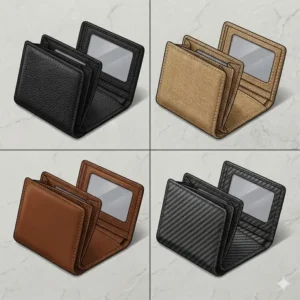
Comprehensive Top 5 Head-to-Head Comparison
| Product Name | Core Material | Card Capacity | RFID Shielding | Best For | Price Range |
| Carhartt Nylon Duck | 500D Cordura | 8 Slots | No | Heavy Labor & Outdoors | Around $25-$35 |
| Fossil Ingram | Top-Grain Leather | 8 Slots | No | Professional Boardrooms | $45-$60 range |
| Columbia Extra Capacity | Leather Blend | 9 Slots | Yes (13.56 MHz) | Maximum Card Storage | Around $20-$30 |
| Saddleback Medium | Full-Grain Leather | 6-8 Slots | No | Lifetime Heritage Wear | $95-$115 range |
| TRAVANDO Slim | Premium Faux Leather | 8 Slots | Yes (13.56 MHz) | Front Pocket Commuting | Around $25-$35 |
The data points to a clear divide between heritage longevity and modern lifestyle optimization. For maximum physical durability, the Saddleback Medium dominates the premium tier, while the Carhartt Nylon Duck wins the heavy-duty budget category. If digital security and a sleek profile dictate your purchasing choices, the TRAVANDO Slim and Columbia Extra Capacity models deliver integrated Faraday shielding at an affordable entry point.
Buyer’s Decision Framework: Finding Your Pocket Fit
Choosing a three-panel pocket organizer requires evaluating your wardrobe, your daily toolset, and your physical comfort. If you wear tailored slim-fit suits or skinny denim, choose a synthetic textile or ultra-shaved top-grain leather option because a heavy full-grain model will ruin your garment’s silhouette and cause localized fabric stretching.
Conversely, if your daily uniform consists of canvas work pants or relaxed-fit jeans, a denser leather or heavy cordura option is ideal because the looser garment pocket accommodates the natural geometric expansion of the folded panels.
The Anti-Recommendation Logic: When “Premium” Fails
It is easy to assume that the most expensive, ultra-premium product is universally the best option. However, the heavy-duty Saddleback Leather Co. Full Grain Leather Medium Trifold Wallet is an objectively terrible choice for anyone who frequently wears lightweight athletic mesh shorts, linen trousers, or formal dress pants.
Its sheer density, un-shaved leather panels, and thick pigskin lining create a heavy block that will drag down lightweight waistbands and create an unsightly bulge. For these specific edge-cases, opting for a shaved leather trifold wallet or a synthetic slim trifold wallet is vastly superior, regardless of the lower price tag.
Self-Identification Checklist
Before clicking buy, ask yourself these three diagnostic questions:
-
Do I primarily carry paper cash currency, or am I 90% digital with credit cards and transit passes? (If digital, prioritize exterior thumb-slots).
-
Does my workplace expose my gear to grease, sweat, or heavy environmental moisture? (If yes, skip leather entirely and buy a 500D nylon weave).
-
Am I willing to endure a 4-week break-in period where the wallet remains slightly sprung open until the spine fibers relax? (If no, look for pre-milled, soft top-grain or synthetic faux options).
Practical Usage and Longevity Guide: Keeping Edges from Fraying
The lifespan of a three-panel carrier is determined during its first year of deployment. Because the design relies on two independent folding spines, these areas experience twice the mechanical flexing fatigue of a standard bifold. Understanding the lifecycle of your material ensures it performs optimally for years.
[Month 1: The Break-In] ----> [Month 6: Fiber Relaxation] ----> [Month 12+: Stable Patina]
- High spine tension          - Leather molds to pocket         - Seams locked in place
- Keep single cards only       - Edges soften naturally          - Annual conditioning check
The Year One Roadmap
-
Months 1–3: Your primary goal is controlling fiber stretching. Do not double-stuff the card slots during this phase. If a slot is designed for one card, leave it at one. Overstuffing now permanently deforms the internal pockets, causing cards to slip out later when the leather relaxes.
-
Months 4–6: The spines will naturally soften and stop springing open on your nightstand. You will notice localized darkening along the edges where your fingers grip the chassis. This is normal and represents the beginning of your personalized patina.
-
Months 7–12: For leather options, perform your first structural maintenance check. Inspect the perimeter stitching for any loose loops caused by key friction.
Insider User Hacks
To prevent the common issue of edge-paint cracking on premium leather trifold wallet models, apply a microscopic smear of organic beeswax along the external spine creases once every six months. This keeps the sealing coat pliable under high compression.
If you use a nylon variant that develops micro-frays from hook-and-loop contact, do not pull the threads. Instead, pass the flame of a butane lighter roughly one inch away from the frayed edge for a fraction of a second; the synthetic nylon fibers will instantly melt back into a secure, self-sealing bead.
The Problem-Solution Guide: Overcoming the Notorious Pocket Bulge
The most frequent complaint aimed at the classic three-panel design is its tendency to transform into an uncomfortably thick wedge. This geometric distortion is rarely caused by the wallet itself, but rather by improper loading strategies inside the pockets.
Problem 1: The “T-Bone Steak” Silhouette
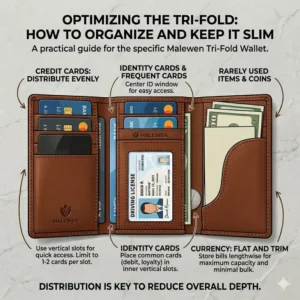
When a wallet folds into three panels, stacking three cards directly on top of each other in each section creates nine layers of plastic, plus six layers of leather. This creates a centralized thick point that presses directly into your gluteal muscle when sitting.
-
Solution: Implement a staggered loading profile. Place your thickest embossed credit cards in the center panel, and use the flanking left and right panels exclusively for flat, unembossed cards like driver’s licenses or health insurance cards. This creates a tapered profile that matches the natural curve of your hip.
Problem 2: Spine Bowing and Structural Warping
Placing a packed wallet into your rear pocket with the open edge facing downward causes your body weight to crush the open flaps outward every time you sit down, straining the perimeter seams.
-
Solution: Always insert your leather trifold wallet into your pocket with the main folded spine facing upward or sideways. This alignment utilizes your garment’s natural pocket tension to compress the folds together uniformly, maintaining a straight structural profile over years of hard use.
How to Choose a Tri Fold Wallet Like an Industry Insider
To accurately assess a wallet’s true value without relying on marketing buzzwords, follow these five steps used by professional leather goods manufacturers:
-
Verify the Grain Classification: Avoid products labeled simply as “Genuine Leather.” This industry term often denotes the lowest tier of split-leather swept from the tannery floor, ground up, and bonded back together with polyurethane. Demand full-grain or top-grain designations for authentic durability.
-
Inspect the Tanning Process: Look for vegetable-tanned leather if you prefer a rigid, heirloom structure that smells of natural woods, or chrome-tanned options if you require instant suppleness and excellent water resistance.
-
Analyze the Lining Material: High-end models line their billfolds with pigskin or durable canvas. Cheaper alternatives use thin polyester liners that tear open within a year, allowing coins and keys to slide behind the card slots.
-
Measure the Spine Radius: Examine the creases. A well-designed wallet has pre-creased, radiused spines that account for material thickness when fully packed. Sharp, flat folds on an empty wallet mean it will bow awkwardly when filled.
-
Check RFID Shielding Specs: Ensure the integrated shielding covers the 13.56 MHz frequency used by modern financial cards, rather than low-frequency 125 kHz systems meant for older office building access badges.
Tri Fold Wallet vs Bifold: The Ultimate Pocket Showdown
The debate between two-panel and three-panel layouts comes down to a fundamental trade-off in geometry. Neither is universally superior; they simply solve different organizational challenges.
| Performance Metric | Tri Fold Design | Bifold Design |
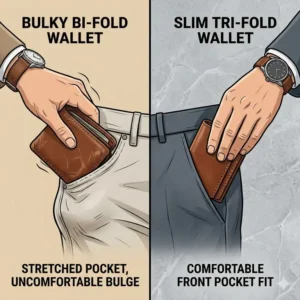
| Horizontal Footprint | Extremely Narrow and Compact | Wide and Squarer Profile |
| Material Thickness Factor | Triple-Layer Stack (Thicker) | Double-Layer Stack (Slimmer) |
| Card Accessibility | High Organization (90° Viewing) | Deep Pockets (Requires Digging) |
| Best Garment Match | Deep Jeans & Jacket Pockets | Slim Slacks & Front Pockets |
A bifold wallet excels at distributing its contents over a wider surface area. This makes it ideal for thin dress pants because it eliminates localized bulges, though it takes up significantly more horizontal space across the width of your pocket.
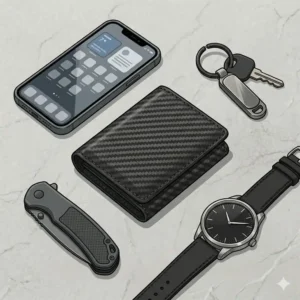
The tri fold wallet compresses that exact same payload into a narrow, vertical silhouette. While it increases total thickness by adding a third layer of material, it leaves half of your pocket interior completely free. This allows you to carry a smartphone or pocket knife alongside the wallet without any awkward crowding.
Features That Actually Matter vs Marketing Hype
Navigating the marketing claims of everyday carry brands requires a discerning eye. Much of what is highlighted on product packaging contributes very little to real-world longevity or daily usability.
Turnback Edges vs Raw Painted Edges
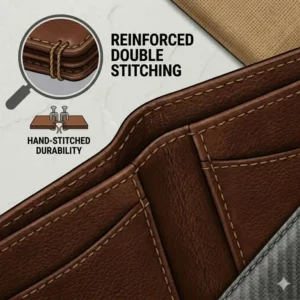
In my field tests, I’ve found that wallets featuring “turnback edges”—where the leather is shaved thin, folded over itself, and then stitched—outlast raw, painted edges by several years. Raw edges coated with synthetic rubber paint look sleek on a retail display, but after six months of rubbing against coarse denim pocket fibers, that paint layer invariably peels away, exposing the vulnerable inner core of the hide to moisture and sweat degradation.
The Myth of “Military-Grade” Nylon
Many manufacturers use terms like “military-grade tactical nylon” to justify inflated price points. Unless the fabric specifies an authentic Mil-Spec registry number or utilizes trademarked Cordura fibers with a verifiable denier rating (such as 500D or 1000D), it is often standard commercial polyester. This standard material lacks the high-melting-point tensile strength and friction resistance required for true heavy-duty applications. Stick to transparent brands that explicitly detail their material specs.
Long-Term Cost & Maintenance: Full-Grain Leather vs Synthetic Textiles
Investing in a quality wallet requires calculating the true total cost of ownership over a multi-year horizon. While synthetic options offer low upfront costs, their long-term value narrative is vastly different from heritage hides.
| Material Group | Average Initial Cost | Expected Lifespan | Annualized Cost | Primary Maintenance |
| Full-Grain Leather | $90 – $120 | 15 – 20+ Years | Under $6.00 / Year | Neatsfoot Oil or Venetian Cream |
| Top-Grain Shaved | $40 – $60 | 5 – 7 Years | Around $8.50 / Year | Light damp cloth cleaning |
| Synthetic Nylon / Faux | $20 – $35 | 2 – 3 Years | Up to $11.00 / Year | Micro-thread singing |
While a premium full-grain leather piece requires a larger initial financial outlay, its annualized cost is remarkably low because the natural protein fibers resist flexing fatigue indefinitely. Synthetic alternatives like faux leather rely on petroleum-based chemical bonds that inevitably dry out, crack, and delaminate along the high-stress spine lines after a few seasons of pocket compression, requiring regular replacement cycles.
Common Mistakes When Buying a Tri Fold Wallet
Avoid these three frequent pitfalls to ensure your next pocket carrier functions flawlessly from day one:
-
Ignoring Currency Height Variations: Many international brands design their bill compartments tailored specifically to US dollars. If you travel frequently and carry Euros or British Pounds, these taller currencies will stick out over the top edge of the billfold, leaving them exposed to wrinkling and tearing along the main folds.
-
Assuming All Card Pockets Are Independent: Lower-tier manufacturers often save on production costs by stitching a single piece of fabric backing behind three external leather card slots. This means that when you slide a card into the bottom slot, it pushes up against the card above it, creating a jammed internal stack that makes extracting individual cards incredibly difficult.
-
Overestimating the Utility of Mesh ID Windows: While a clear plastic or mesh ID window seems convenient, the plasticizers used in cheap vinyl windows often leach out over time. This chemical transfer can permanently fuse the ink from your driver’s license onto the plastic screen, ruining your ID card. Opt for windows with central cutout thumb-slots to prevent adhesion.
✨ Don’t Miss These Exclusive Deals!
🔍 Take your tri fold wallet setup to the next level with these carefully selected products. Click on any highlighted item to check current pricing and availability. These tools will help you create authentic lifestyle setups your family will love!
Conclusion
The classic three-panel pocket design remains a premier organizational tool for everyday carry gear. By prioritizing structural material quality, smart interior layouts, and realistic capacity boundaries, you can enjoy exceptional item storage without enduring unnecessary pocket bulk. Match your choice to your daily wardrobe, treat the material with basic care, and your chosen carrier will perform flawlessly for years to come.
Frequently Asked Questions
❓ Is a leather trifold wallet better than nylon?
✅ Leather offers superior longevity, molds to your body shape over time, and develops a beautiful aesthetic patina. Nylon excels exclusively in high-moisture, high-abrasion environments like construction sites, where leather would easily absorb destructive sweat and oil…
❓ Does a mens tri fold wallet block all RFID scans?
✅ Most modern variants protect against high-frequency 13.56 MHz scans used by standard contactless credit cards. However, they rarely block low-frequency 125 kHz signals, which are commonly utilized for corporate employee ID proximity access badges…
❓ How do you clean a slim trifold wallet?
✅ For genuine leather, wipe the surface with a damp cloth and apply a quality leather conditioner annually. For synthetic nylon versions, use a soft toothbrush with a drop of mild dish soap to clear dirt from the weave…
❓ Why is my new rfid trifold wallet so stiff?
✅ The internal metallic shielding fabrics and fresh leather grains possess high structural memory. This stiffness naturally relaxes within two to four weeks of continuous daily carry as pocket heat softens the internal polymer matrices…
❓ Will a thick tri fold wallet cause back pain?
✅ Sitting for long periods on any thick asymmetrical object tilts your pelvis, straining your lower lumbar spine. To prevent this, shift your wallet to your front pocket or jacket lining whenever you are driving or working at a desk…
Recommended for You
- Rfid tri fold wallet: The Ultimate 2025 Expert Buying Guide and Reviews for Smart Shoppers
- 7 Best tri fold western wallet Models for Men in 2026
- High Quality Trifold Leather Wallet: The Ultimate 2026 Buying Guide 🤯
Disclaimer: This article contains affiliate links. As an Amazon Associate, I earn from qualifying purchases. If you purchase products through these links, we may earn a small commission at no additional cost to you.
✨ Found this helpful? Share it with your friends! 💬🤗
[addtoany]
