
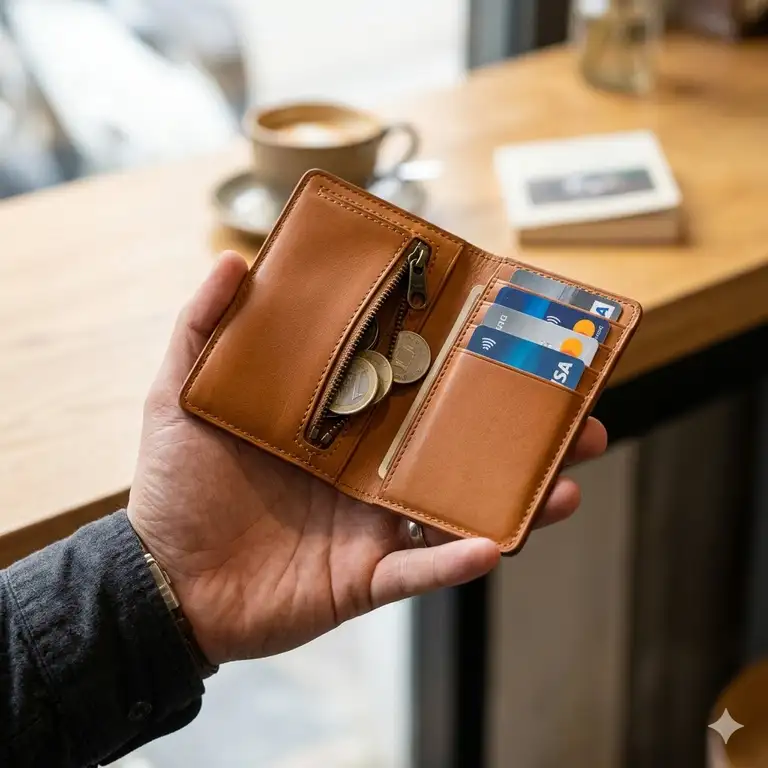
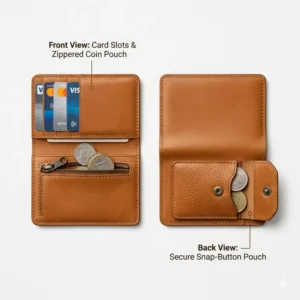
What is a card holder with coin? In its simplest terms, it is a streamlined alternative to the traditional bifold wallet, designed specifically to prioritize credit cards and digital IDs while providing a dedicated, low-profile compartment for physical currency. In 2026, where digital payments dominate 90% of our daily transactions, these hybrid accessories bridge the gap between a completely “cashless” lifestyle and the lingering reality of parking meters, laundromats, and small-town bakeries that still demand a few copper and nickel tokens.
The shift toward minimalist wallets wasn’t just a fashion trend; it was a response to the “Costanza Wallet” epidemic of the early 2000s. We realized that carrying three-year-old receipts and expired gym memberships wasn’t just disorganized—it was physically uncomfortable. However, the first wave of slim card holders made one fatal error: they assumed coins had vanished from the face of the Earth. If you’ve ever found yourself awkwardly clenching three quarters in your fist because your sleek titanium card slider had nowhere to put them, you know the struggle. The modern card holder with coin solves this by integrating clever expansion gussets or hidden trays that keep your silhouette slim without sacrificing utility.
In my experience, the secret to a great carry isn’t about how much you can fit, but how much you can forget you’re carrying. A high-quality card holder should disappear into your front pocket, yet offer instant access when it’s time to pay. As we look at the landscape of everyday carry (EDC) in 2026, the focus has shifted from “maximum storage” to “intelligent organization.”
Quick Comparison: Top Slim Coin-Friendly Wallets
| Product Name | Material | Card Capacity | Coin Storage Style | Best For |
| Bellroy Card Pocket | Eco-tanned Leather | 4-15 Cards | High-capacity Internal | All-rounder |
| Ridge Wallet + Tray | Grade 5 Titanium | 1-12 Cards | Modular Cavity Tray | Tech Enthusiasts |
| Secrid Miniwallet | European Leather/Alum | 4-6 Cards | Internal Press-stud | Security Junkies |
| Thread Elastic Wallet | Tight-knit Elastic | 2-8 Cards | External Zip Pocket | Active Lifestyles |
| Harber London Leather | Full-grain Cowhide | 4-8 Cards | Discrete Pull-tab | Professional Style |
Analysis of the Current Market
The data above reveals a clear divide in design philosophy. While Bellroy focuses on leather flexibility to accommodate varying loads, the Ridge utilizes rigid materials that offer superior protection but require a modular “tray” add-on for coins. If you are someone who frequently deals with a handful of change, the internal volume of the Bellroy is superior. However, for those who only carry “emergency” coins or a spare key, the Secrid or Ridge provides a more structured, indestructible feel that prevents cards from bending over time.
💬 Just one click — help others make better buying decisions too! 😊
[addtoany]
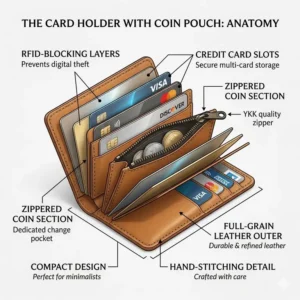
Top 5 card holder with coin Models: Expert Analysis
1. Bellroy Card Pocket (The Sophisticated Minimalist)
The Bellroy Card Pocket remains a gold standard because it treats your coins with the same respect as your cards. Unlike “sleeve” style holders that make retrieving change a gymnastic feat, this model features a 3/4 zip that opens wide.
The use of gold-rated LWG leather means the wallet starts a bit stiff but molds to your pocket’s curve within two weeks. The internal “nook” for coins is a masterclass in spatial design—it uses the tension of your cards to keep the coins flat against the side, preventing that annoying “jingle” as you walk. In my opinion, this is the best choice for someone transitioning from a traditional wallet who isn’t quite ready to give up the tactile feel of premium leather.
-
Key Specs: 4.1 x 2.8 inches; Internal SIM card slot; YKK hardware.
-
Expert Commentary: Most buyers overlook the internal SIM slot, but in 2026, it’s perfect for those tiny microSD cards for your drone or camera. It’s more than a wallet; it’s a micro-organizer.
-
Customer Feedback: Users rave about the “taco” style opening, though some note that overfilling it with coins can make the zipper feel tight.
-
Pros:
-
Massive capacity for its size
-
Supple, premium leather feel
-
Hidden internal pocket for folded bills
-
-
Cons:
-
Leather can scratch if kept with keys
-
Zipper adds slight bulk compared to fold-overs
-
-
Price Range: Around $60–$75.
-
Value Verdict: A premium investment for those who value organization and tactile quality.
2. Ridge Wallet with Coin Tray (The Industrial Powerhouse)
The Ridge Wallet is less of a wallet and more of a piece of aerospace engineering for your pocket. While the base model is famous for its “sandwich” design, the integrated coin tray is what makes it a viable card holder with coin contender.
Constructed from Grade 5 Titanium or 3k Carbon Fiber, this wallet is literally bulletproof (though I wouldn’t recommend testing that). The coin tray is a modular insert that takes up the space of about two credit cards. What the spec sheet won’t tell you is that this tray is also the perfect place to hide a physical AirTag or a spare house key. If you work in a rugged environment or just hate the look of “floppy” leather, this is your winner.
-
Key Specs: RFID blocking; 6061-T6 aluminum or Titanium; Elastic expansion.
-
Expert Commentary: I recommend the Titanium version over the Aluminum. It’s slightly heavier, but the scratch resistance is vastly superior, meaning it will still look brand new in 2030.
-
Customer Feedback: People love the “fidget factor” of the card fan-out feature, but some find the coin tray capacity limited to about 5-6 standard coins.
-
Pros:
-
Lifetime warranty on most parts
-
Absolute RFID security
-
Ultra-slim profile
-
-
Cons:
-
Coin tray reduces card capacity
-
Can be “screechy” when sliding cards if grit gets inside
-
-
Price Range: $95–$140 range (depending on material).
-
Value Verdict: The last wallet you’ll ever buy, perfect for the “buy it for life” crowd.
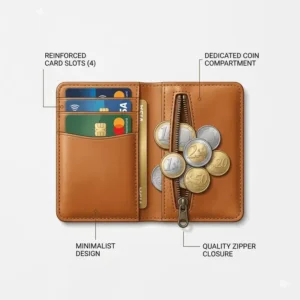
3. Secrid Miniwallet (The Quick-Access King)
The Secrid Miniwallet is famous for its patented lever mechanism that pops your cards out in a tiered staircase. But inside the leather wrap lies a surprisingly capable coin compartment.
The aluminum “Cardprotector” core prevents your cards from bending or breaking, which is a common issue with soft-sided card holders. The leather exterior features a press-stud closure that keeps everything secure. What most people miss is that the coin area is actually a specialized fold. It’s not meant for a roll of quarters, but for the change you get back at the coffee shop, it’s incredibly efficient.
-
Key Specs: 65mm x 102mm; European bovine leather; Holds 6 cards in the core + 4 extra.
-
Expert Commentary: The lever action is addictive. Beyond the cool factor, this is actually a safety feature—you can access your most-used card without ever fully opening your wallet in public.
-
Customer Feedback: High marks for the “click” sound and build quality; some users wish the coin section was zipped for extra security.
-
Pros:
-
Fastest card access on the market
-
Protects cards from “RFID skimming”
-
Very compact footprint
-
-
Cons:
-
The mechanism can jam if you try to force 7 cards into the 6-card slot
-
Press-stud creates a slight “bump” in the pocket
-
-
Price Range: Around $90–$110.
-
Value Verdict: Best for urban commuters who need speed and security.
4. Thread Wallets – Vertical Card Holder (The Active Lifestyle Choice)
If you spend your weekends hiking, biking, or at the gym, the Thread Wallets vertical option is a game-changer. It uses a high-tension elastic for the cards and a durable canvas/leather hybrid for the coin zip.
The “vertical” orientation is key here. It allows the wallet to sit deeper in your pocket, making it much less likely to fall out during physical activity. Unlike rigid metal wallets, the elastic expands and contracts based on your needs. If you’re only carrying two cards today, it stays paper-thin. If you need eight cards and five bucks in quarters for the vending machine, it stretches to accommodate.
-
Key Specs: Tight-knit elastic; Key ring attachment; Slim profile.
-
Expert Commentary: This is the “budget-friendly” hero. Don’t be fooled by the price; the elastic is incredibly resilient. I’ve seen these used for two years straight without losing their “snap.”
-
Customer Feedback: Users love the variety of patterns and the ability to clip it to a lanyard, though some mention the elastic can get dirty over time.
-
Pros:
-
Incredibly lightweight
-
Flexible capacity
-
Built-in loop for keys or carbiners
-
-
Cons:
-
No RFID protection
-
Fabric can fray if it catches on Velcro
-
-
Price Range: $25–$35 range.
-
Value Verdict: The best choice for teens, students, or athletes.
5. Harber London Leather Card Holder (The Executive Choice)
For those who want to look like they own the boardroom (even if they’re just there for the free coffee), Harber London offers an exquisite handmade option. This card holder with coin pocket uses a pull-tab system for cards and a discrete, overlapping leather flap for coins.
The craftsmanship here is levels above mass-produced wallets. They use full-grain vegetable-tanned cowhide that smells exactly like a luxury car interior. The coin pocket is designed to lie completely flat when empty. This is crucial for formal wear—you don’t want a lumpy pocket ruining the lines of a tailored suit.
-
Key Specs: Handmade in Spain; Pull-tab for deep cards; Fits 4-8 cards.
-
Expert Commentary: The “pull-tab” is more than a gimmick. It allows the wallet to be shorter because you don’t need to leave room for your thumb to reach the bottom cards.
-
Customer Feedback: High praise for the leather quality and stitching; a few users noted the coin flap can be a bit tight initially.
-
Pros:
-
Exceptional aesthetics
-
Gets better with age (patina)
-
Very slim, even when full
-
-
Cons:
-
Expensive compared to fabric options
-
Requires occasional leather conditioning
-
-
Price Range: Around $80–$100.
-
Value Verdict: The “status” wallet that backs it up with real utility.
✨ Don’t Miss These Exclusive Deals!
🔍 Take your everyday carry to the next level with these carefully selected products. Click on any highlighted item to check current pricing and availability. These tools will help you create a more organized, stress-free life!
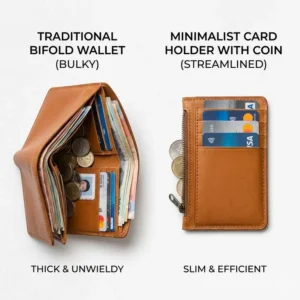
Practical Usage Guide: Mastering the Minimalist Carry
Switching to a card holder with coin isn’t just about buying a new accessory; it’s about a lifestyle adjustment. If you’ve been carrying a “brick” in your back pocket for a decade, your first 30 days with a slim wallet will feel strange—you’ll constantly tap your pocket to make sure it’s still there.
Step 1: The Initial Purge
Before you move into your new wallet, lay everything from your old one on a table.
-
The 30-Day Rule: If you haven’t used a card in the last 30 days, it doesn’t belong in your daily driver.
-
Digital Alternatives: Loyalty cards for grocery stores or gyms should be scanned into your phone (Apple Wallet or Google Pay). There is zero reason to carry a physical “Buy 10, Get 1 Free” sandwich card in 2026.
-
Coin Management: Use your new coin pocket for active change. Once you get home, dump the excess into a jar. A slim card holder is meant to manage daily flow, not act as a piggy bank.
Step 2: Maintenance for Longevity
Whether you chose leather or metal, your wallet needs love.
-
For Leather: Every six months, apply a tiny amount of leather balm. This keeps the fibers hydrated and prevents cracking, especially if you live in a dry climate or keep your wallet in a warm pocket.
-
For Metal: Use compressed air once a month to blow out any lint or grit. Small particles can act like sandpaper between your cards, scratching the magnetic strips or EMV chips over time.
Step 3: Optimization Tricks
If your wallet is feeling a bit tight, try “nesting” your cards. Place cards with flat numbers (like modern Apple Cards or flat-print Visas) against cards with raised (embossed) numbers. This allows them to sit closer together, saving about 1-2mm of thickness—which sounds small, but in a minimalist wallet, that’s 10% of your total bulk!
Common Problems & Solutions for Small Wallets
Problem: The “Coin Rattle”
Nothing ruins a cool, stealthy vibe like walking into a quiet room and sounding like a loose bag of change.
-
The Solution: Look for wallets with felt lining or internal tensioners. If your wallet doesn’t have these, a “hacker” trick is to keep a single folded $20 bill inside the coin slot. The paper acts as a silencer, holding the coins firmly against the wall of the wallet so they can’t vibrate.
Problem: Difficulty Accessing Cards in the Middle
In a stack of six cards, getting to number three can be a pain.
-
The Solution: Order your cards by frequency of use, not importance. Your ID and your primary credit card should always be on the “outside” or in the dedicated quick-access slots. If you frequently need a third card, consider a wallet like the Secrid or Harber London that uses a tiered or pull-tab system specifically designed to solve this friction point.
Problem: Wallet Losing Its Shape
Leather wallets can “over-stretch” if you pack them too full, leading to cards falling out later when you carry less.
-
The Solution: Never carry more than the “Max Capacity” listed by the manufacturer. If a wallet says it holds 8 cards, and you force 12 into it, the leather fibers will permanently deform. If you find your needs have grown, it’s better to upgrade to a slightly larger model than to ruin a slim one.
How to Choose the Right card holder with coin
Choosing the right model requires an honest assessment of your daily habits. Are you someone who carries five different “emergency” quarters for the car vacuum, or do you just need a place to put the pennies you get as change?
-
Assess Your Volume: Count your “must-have” cards. If the number is over 10, you should avoid “sleeve” style holders and look for “accordion” or “expandable” models like the Bellroy or Ridge.
-
Evaluate Your Environment: If you work construction or spend a lot of time outdoors, leather will absorb sweat and grime. A metal or hardshell wallet (like Ridge or Secrid) can be wiped clean with a damp cloth and offers better physical protection.
-
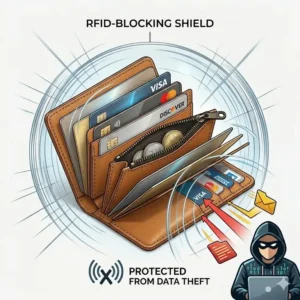
Check for RFID Needs: In 2026, electronic pickpocketing is a rare but real concern in high-traffic tourist areas. Most modern card holders come with RFID blocking by default, but double-check if that’s a priority for you. According to the Identity Theft Resource Center, while physical skimming is down, “contactless” security is still a valid layer of defense.
-
Coin Access Frequency: Do you need to get to your coins five times a day? If so, an external zipper is mandatory. If the coins are just “in case,” an internal slot or hidden tray is better because it keeps the wallet’s profile cleaner.
Choosing Based on Pocket Location
Where you carry your wallet matters. Front-pocket carry is significantly better for your back health. A study published in the Journal of Physical Therapy Science noted that sitting on a thick wallet in your back pocket can cause “Wallet Sciatica” by tilting the pelvis and putting pressure on the sciatic nerve. If you’re making the switch to a card holder, use it as an opportunity to move it to your front pocket.
Card holder with coin vs. Traditional Bifold
| Feature | Slim Card Holder | Traditional Bifold |
| Pocket Profile | 0.3 – 0.5 inches | 1.0 – 1.5 inches |
| Card Accessibility | Instant (Fanned/Lever) | Slower (Sleeves) |
| Coin Capacity | Moderate (5-10 coins) | High (Varies) |
| Back Pain Risk | Low (Front Carry) | High (Back Carry) |
| Durability | High (Less material stress) | Medium (Folds wear out) |
Analysis: Why the Slim Model Wins in 2026
Looking at the comparison above, the slim card holder is clearly the winner for the modern professional. While the traditional bifold offers more raw storage, it encourages “hoarding” behavior. The slim model forces you to be intentional about what you carry. From a purely ergonomic perspective, the reduction in bulk (dropping from 1.5 inches to under half an inch) is a massive relief for your clothing and your posture. As Consumer Reports often highlights in their lifestyle guides, “less is more” applies perfectly to the things we carry every day.
Common Mistakes When Buying a Slim Wallet
One of the most frequent errors is buying for the person you want to be, rather than the person you are.
1. The “Too Small” Trap
Many people buy a 3-card sleeve because it looks amazing in photos, but they actually have 7 essential cards. This leads to “wallet bloat,” where the wallet looks stretched and ugly. Always buy a wallet with a capacity of 2 cards more than your current count to allow for temporary additions like hotel key cards or transit passes.
2. Ignoring Hardware Quality
On a card holder with coin, the zipper or the snap-button is the primary point of failure. If you’re buying a zip-model, ensure it uses YKK or Riri zippers. Cheap zippers will split after three months of use, turning your expensive leather wallet into a useless pouch.
3. Forgetting the “Tail”
In 2026, many of us carry “fob” keys for our cars or offices. If your wallet doesn’t have a way to integrate or attach these, you end up with a slim wallet but a massive, jangling mess of keys. Look for wallets like the Thread or certain Bellroy models that have a built-in loop or “Key Cover” compatibility.
Features That Actually Matter (And Those That Don’t)
Marketing for wallets is full of buzzwords. Let’s filter the noise:
-
Matters: Full-Grain Leather. This is the highest quality of leather. It uses the top layer of the hide and includes all the natural grain. It’s more durable and develops a beautiful patina. “Genuine Leather” is actually a marketing term for the lowest grade of real leather—it’s essentially the “plywood” of the leather world.
-
Matters: Integrated Security. In an age of digital theft, having a wallet that physically shields your cards (like the aluminum core in the Secrid) is a tangible benefit.
-
Doesn’t Matter: 20+ Card Capacity. If you are carrying 20 cards, you don’t need a card holder; you need a file cabinet. Don’t pay extra for “mega-capacity” in a minimalist product.
-
Doesn’t Matter: Tactical Features. Unless you are literally going into a combat zone, you don’t need a “tactical” wallet with a built-in saw blade or bottle opener. These often make the wallet uncomfortable to hold and can even get you flagged by airport security (TSA).
Long-Term Cost & Maintenance Analysis
When you spend $80 on a Bellroy or Secrid, you’re playing the long game. A $15 wallet from a department store will typically last 6–12 months before the stitching frays or the “faux leather” starts to peel.
If you buy a high-quality card holder with coin, you can expect a lifespan of 5–10 years.
-
Cost Per Year: An $80 wallet over 8 years costs you $10/year.
-
Cost Per Year: A $15 wallet replaced every year costs you $15/year.
Beyond the math, there is the “frustration factor.” A high-end wallet maintains its tension, meaning your cards won’t fall out onto the floor when you’re paying for groceries. It’s a classic example of “buying the best and only crying once.”
✨ Don’t Miss These Exclusive Deals!
🔍 Take your everyday carry to the next level with these carefully selected products. Click on any highlighted item to check current pricing and availability. These tools will help you create a more organized, stress-free life!

Conclusion: Elevating Your Everyday Carry
Choosing the right card holder with coin in 2026 is about more than just a place to put your plastic; it’s about refining your daily flow. We’ve moved past the era of the bulky, overstuffed bifold and into a time where efficiency and elegance are paramount. Whether you prefer the industrial durability of the Ridge Wallet, the mechanical precision of the Secrid Miniwallet, or the classic luxury of Harber London, there is a solution that fits your specific needs.
Remember, the best wallet is the one that you don’t have to think about. It should sit comfortably in your pocket, protect your data, and provide just enough space for those rare but necessary physical coins. By following our guide on purging unnecessary items and choosing high-quality materials like full-grain leather or titanium, you’re investing in a piece of gear that will serve you for the next decade.
FAQs
❓ How many coins can a slim card holder typically hold?
✅ Most minimalist models are designed for 5-8 standard coins. This is enough for a few quarters for a meter or some “emergency” change. If you need to carry a significant amount of coins, look for a “zip-around” model like the Bellroy Card Pocket…
❓ Does RFID blocking damage my credit cards?
✅ No, RFID blocking is a passive shield—usually a thin layer of metal or specially treated fabric. It does not emit any signal and will not harm the magnetic strips or the chips on your cards in any way…
❓ Can I carry a key in a card holder with coin?
✅ Yes, most “tray” style wallets (like the Ridge) or gusseted leather pockets (like Harber London) can easily accommodate a standard house key. However, bulky car fobs usually require an external attachment point or a separate key organizer…
❓ Will a metal wallet scratch my phone?
✅ Yes, if kept in the same pocket. Metal wallets (Titanium, Aluminum, Carbon Fiber) are much harder than phone glass or plastic cases. To avoid scratches, always keep your metal card holder in a separate pocket from your smartphone…
❓ Is leather better than metal for a card holder?
✅ It depends on your style. Leather is more “forgiving” and comfortable in a tight pocket, while metal offers superior protection against bending and RFID theft. Leather develops a unique look over time, whereas metal stays looking the same for years…
Recommended for You
- 7 Best Small Zip Coin Pouch Options in 2026: Expert Reviews and Guide
- 7 Best mens coin pouch Options for 2026: The Ultimate Review
- 7 Best mens coin purse Options for 2026: Style and Ultimate Function
Disclaimer: This article contains affiliate links. As an Amazon Associate, I earn from qualifying purchases. If you purchase products through these links, we may earn a small commission at no additional cost to you.
✨ Found this helpful? Share it with your friends! 💬🤗
[addtoany]
