
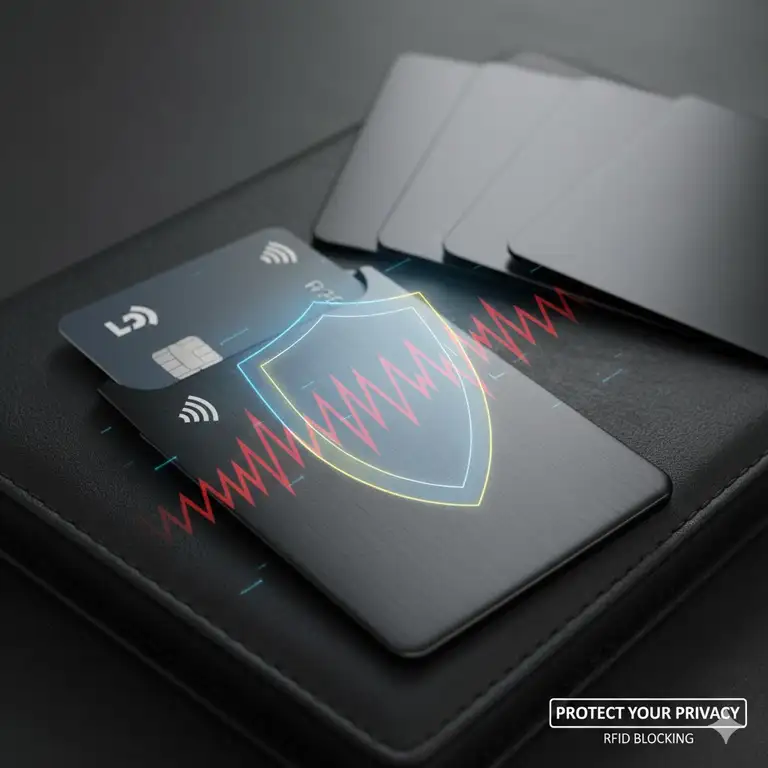
Ever had that mini heart-attack when you tap your card and… nothing? Or worse, you check your bank statement and see a bunch of tiny charges you know you didn’t make? Your wallet feels safe tucked in your pocket, but your card’s data might as well be shouting its details to anyone nearby with a scanner. In our tap-and-go world, a simple piece of paper or plastic is suddenly one of the most important security tools you can own. We’re talking, of course, about debit card sleeves.
✨Was this helpful? Spread the word! 🚀
[addtoany]
These unassuming little pockets are your first line of defense against two major enemies: physical wear-and-tear (hello, cracked magnetic stripes) and digital theft. With contactless “tap-to-pay” technology now standard, your card’s RFID (Radio-Frequency Identification) chip is a broadcasting beacon. Thieves with simple, easy-to-buy skimmers can snatch your card number and expiration date right through your wallet or purse.
But not all debit card sleeves are created equal. Some are flimsy paper, some are rigid plastic, and only the best ones have the metallic lining needed to block those prying RFID signals. How do you choose?
Before we dive deep, let’s see how using debit card sleeves stacks up against other options (or doing nothing at all).
Comparison: Protection Methods
| Protection Method | Cost | RFID Security | Physical Protection | Convenience |
| Debit Card Sleeves | Low | ✅ High (with RFID models) | ✅ Good (prevents scratches/bending) | High (fits in any wallet) |
| RFID-Blocking Wallet | Medium – High | ✅ High | ✅ Excellent (part of wallet) | Medium (locks you into one wallet) |
| No Protection | None | ❌ None | ❌ None | High (until your card fails or is skimmed) |
Quick Comparison: Top 7 Debit Card Sleeves for 2025
Here’s a quick glance at the top products we’ll be reviewing today. Whether you need hardcore security, a splash of color, or just a bulk pack for the whole family, we’ve got you covered.
| Product Model | Key Feature | Material | RFID Blocking | Best For |
| Alpine Rivers Sleeves | Slim, tear-resistant | Patented Tyvek | ✅ Yes | Daily Use & Durability |
| ID Stronghold Sleeves | FIPS 201 Approved | Heavy-Duty Poly | ✅ Yes (Max) | High-Security & Gov Use |
| Boxiki Travel Cases | Rigid, locking design | Hard Plastic | ✅ Yes | Preventing Card Bending |
| Travelambo Sleeves | Ultra-slim profile | Aluminum-Lined Paper | ✅ Yes | Minimalists & Tight Wallets |
| Toughergun Sleeves | Budget bulk pack | Laminated Paper | ✅ Yes | Family Packs & Giveaways |
| JAVOedge Decorative | Stylish designs | Laminated Paper | ✅ Yes | Fashion & Organization |
| Yar-Craft Clear Sleeves | Physical protection only | Clear Vinyl | ❌ No | Magnetic Stripe Protection |
🌟 Top 7 Debit Card Sleeves: Expert Analysis
I’ve sorted through the clutter, read hundreds of reviews, and tested these for fit and finish. Here are the 7 best debit card sleeves you can buy right now.
1. Alpine Rivers RFID Blocking Sleeves
If you’re looking for the best all-around workhorse, this is it. The Alpine Rivers sleeves are consistently a top-seller, and for good reason. They strike a perfect balance between being incredibly thin and surprisingly durable.
-
Detailed Specifications:
-
Material: Patented tear-resistant, water-resistant Tyvek composite.
-
RFID Tech: Blocks 13.56 MHz frequencies (the standard for all contactless credit/debit cards).
-
Dimensions: 3.5 inches x 2.25 inches (standard card size).
-
Pack Size: Typically comes in a 12-pack (6 card sleeves, 6 passport sleeves).
-
-
Customer Review Analysis:
-
Users overwhelmingly praise the slim fit. Many report they can finally fit a protected card back into their tight wallet slots, which is a common failure of thicker sleeves. The “tear-resistant” claim holds up, with many noting they last months longer than cheap paper sleeves.
-
The main complaint is that the fit can be too snug, requiring a bit of effort to slide the card in and out for the first few uses.
-
-
Warranty Information: Alpine Rivers offers a 100% satisfaction guarantee, which is a strong sign of confidence in their product.
-
Professional Applications: Ideal for the daily commuter and frequent traveler who needs reliable protection without adding any bulk to their wallet or passport holder.
-
Pros/Cons Analysis:
-
✅ Pros: Extremely slim and lightweight, highly durable Tyvek material, water-resistant, comes with passport sleeves.
-
❌ Cons: Very tight fit initially, plain design (if you’re looking for style).
-
2. ID Stronghold RFID Blocking Sleeves
For the security purist, look no further. ID Stronghold is a brand that takes data protection very seriously. These aren’t just sleeves; they’re government-grade security shields.
-
Detailed Specifications:
-
Material: Heavy-duty, rigid poly-composite material.
-
RFID Tech: FIPS 201 Approved. This is the standard mandated for use by U.S. government employees to protect federal IDs. It’s built to block a wide range of frequencies.
-
Dimensions: Slightly larger than a standard card to allow for easy insertion/removal.
-
Pack Size: Varies, but 10-packs are common.
-
-
Customer Review Analysis:
-
Customers buy this for one reason: maximum security. Reviews consistently mention a feeling of “total peace of mind.” They are noted as being very rigid and sturdy, which also adds significant physical protection against bending.
-
The downside is a direct trade-off: they are bulky. Many users state they can only fit one or two of these in a standard bifold wallet.
-
-
Warranty Information: Lifetime warranty on their sleeves, which is unmatched in this category.
-
Professional Applications: Perfect for government employees, federal contractors, or anyone handling highly sensitive data (like corporate access cards). Also great for travelers in high-risk areas.
-
Pros/Cons Analysis:
-
✅ Pros: FIPS 201 Approved (highest security), extremely rigid and durable, lifetime warranty.
-
❌ Cons: Bulky (will not fit in many wallet slots), more expensive than average.
-
3. Boxiki Travel RFID Blocking Hard Cases
Tired of sleeves that bend and tear? Boxiki Travel offers a completely different take on the debit card sleeve. This is a rigid, crush-proof hard case designed for a single card.
-
Detailed Specifications:
-
Material: High-impact rigid plastic shell.
-
RFID Tech: Built-in RFID blocking liner.
-
Dimensions: About the size of a credit card, but 3-4mm thick.
-
Features: Locking mechanism (clicks shut), thumb-slide for easy card ejection.
-
-
Customer Review Analysis:
-
People love the rigidity. If you’ve ever snapped a card in your back pocket, this is your solution. The “click” closure is satisfying and secure.
-
The main negative is obvious: it’s a single-card solution and it’s bulky. This isn’t a “sleeve” as much as a “mini-safe.” It’s not for your everyday wallet; it’s more for a badge holder, lanyard, or loose in a bag.
-
-
Warranty Information: Standard 1-year warranty.
-
Professional Applications: Excellent for employee ID badges that double as access cards. Also great for just carrying a driver’s license and one debit card to the gym or on a run.
-
Pros/Cons Analysis:
-
✅ Pros: Completely crush-proof and bend-proof, secure locking design, easy card access.
-
❌ Cons: Only holds one card, very thick, doesn’t fit in traditional wallet slots.
-
4. Travelambo RFID Blocking Sleeves
This is the classic, no-nonsense debit card sleeve. If you just Googled “debit card sleeves” and want the standard, baseline product, Travelambo is what you’re picturing.
-
Detailed Specifications:
-
Material: Paper exterior with an aluminum-foil interior lining.
-
RFID Tech: Blocks 13.56 MHz frequencies.
-
Dimensions: Standard size, with a V-shaped cutout for easy card access.
-
Pack Size: Often sold in large 20 or 30-packs with multiple colors.
-
-
Customer Review Analysis:
-
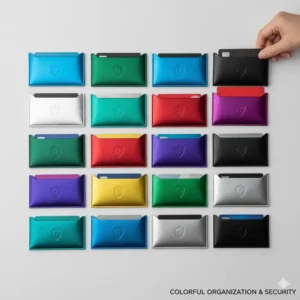
These are popular because they are cheap, effective, and colorful. The color-coding is a frequently praised feature, allowing users to quickly grab their “blue” debit card or “red” credit card.
-
The durability is the clear drawback. Being paper and foil, they will crease, tear, and fall apart with heavy use, especially at the seams. They are semi-disposable.
-
-
Warranty Information: Typically a 1-year replacement warranty, which is generous given the product’s nature.
-
Professional Applications: Great for office environments to color-code different access cards or for handing out to employees before a corporate travel event.
-
Pros/Cons Analysis:
-
✅ Pros: Very inexpensive, ultra-thin, color-coded for organization.
-
❌ Cons: Low durability (tears and creases easily), foil can sometimes stick to the card.
-
5. Toughergun RFID Blocking Sleeves
This is the ultimate budget, bulk-buy option. If you have a large family, a small business, or just lose things constantly, the Toughergun sleeves provide basic, certified protection at a rock-bottom price per sleeve.
-
Detailed Specifications:
-
Material: Laminated paper with an electromagnetic-shielding foil interior.
-
RFID Tech: Lab-tested to block 13.56 MHz.
-
Dimensions: Standard size, slim profile.
-
Pack Size: Typically sold in packs of 30, 50, or even 100.
-
-
Customer Review Analysis:
-
The value is the key selling point. Customers are happy that they get a huge number of sleeves for a low price, allowing them to replace them as soon as they look worn out. They do the job of blocking signals (as tested by users at self-checkouts).
-
Like the Travelambo, they are not built to last. They are a “quantity over quality” purchase, but the quality is perfectly acceptable for the price.
-
-
Warranty Information: Standard 1-year “no-hassle” warranty.
-
Professional Applications: Perfect for handing out at trade shows, giving to new employees with their access badges, or for bank branches to give to customers.
-
Pros/Cons Analysis:
-
✅ Pros: Extremely low price-per-sleeve, available in massive bulk packs, slim design.
-
❌ Cons: Not very durable, plain white design.
-
6. JAVOedge Decorative Card Sleeves
Who said security has to be boring? If you’re tired of plain white or silver, JAVOedge offers a huge array of stylish debit card covers that also include RFID protection.
-
Detailed Specifications:
-
Material: Laminated paper/plastic composite with shielding liner.
-
RFID Tech: Blocks 13.56 MHz signals.
-
Dimensions: Standard credit card size.
-
Features: Dozens of designs (floral, marble, geometric, solid colors).
-
-
Customer Review Analysis:
-
The designs are the #1 reason for purchase. Users love being able to spot their card easily in a crowded wallet. They’re a functional fashion accessory. They’re also surprisingly durable, with the lamination preventing the tearing common in paper sleeves.
-
The only occasional complaint is that the lamination can add a tiny bit of extra thickness, but it’s generally not as bulky as the ID Stronghold.
-
-
Warranty Information: Standard 30-day return policy, with longer-term support for defects.
-
Professional Applications: A great way to add a bit of personal flair to a work ID, or to help visually impaired individuals quickly identify the correct card.
-
Pros/Cons Analysis:
-
✅ Pros: Huge variety of stylish designs, good durability due to lamination, helps organize your wallet.
-
❌ Cons: Slightly thicker than basic paper sleeves, higher cost per sleeve than bulk packs.
-
7. Yar-Craft Clear Vinyl Sleeves
Wait, what about a sleeve that doesn’t block RFID? Sometimes, you just want to protect your card from physical damage without blocking its signal (like a tap-to-enter office badge). For that, Yar-Craft clear sleeves are perfect.
-
Detailed Specifications:
-
Material: Heavy-duty clear vinyl (plastic).
-
RFID Tech: ❌ None. This is for physical protection only.
-
Dimensions: Available in vertical or horizontal orientation.
-
Features: Thumb-notch for easy removal.
-
-
Customer Review Analysis:
-
These are popular for protecting magnetic stripes. Users who’ve had cards demagnetized by their phone case or wallet clasp swear by these. They prevent the stripe from getting scratched and scuffed.
-
It’s not a security product. Buyers who purchase this thinking it blocks RFID are (understandably) disappointed.
-
-
Warranty Information: Standard return policy.
-
Professional Applications: The #1 use case is for office ID badges that need to be scanned or tapped daily. It protects the badge from wear without requiring removal from the sleeve.
-
Pros/Cons Analysis:
-
✅ Pros: Protects magnetic stripes and card surfaces, crystal clear, durable vinyl, thumb-notch.
-
❌ Cons: Absolutely no RFID protection (which is the point), can feel a bit “sticky.”
-
✨ Don’t Miss These Exclusive Deals!
🔍 Take your wallet security to the next level with these carefully selected debit card protectors. Click on any highlighted item to check current pricing, see all the designs, and read more reviews. These simple tools are a tiny investment for major peace of mind!
💬 Just one click – help others make better buying decisions too!😊
[addtoany]
🧐 What Exactly Are Debit Card Sleeves and Why Bother?
So, you’ve seen the products, but let’s get into the nitty-gritty. A debit card sleeve is a simple sheath designed to hold a single card. But its purpose is twofold, and one is far more important than the other.
1. The Obvious: Physical Protection 🛡️
This is the original reason card sleeves existed.
-
Scratch Protection: Your wallet isn’t as clean as you think. Dirt, grit, and sand can get in and act like sandpaper against your card’s magnetic stripe (the “magstripe”).
-
Demagnetization: That magstripe is sensitive. If you store it next to your smartphone, a magnetic wallet clasp, or a security tag remover at a store, you risk scrambling the data. A sleeve provides a small, but often effective, buffer.
-
Bending/Snapping: While a soft sleeve won’t stop a card from snapping if you sit on it wrong, it does add a layer of rigidity and prevents the top laminate from peeling.
2. The Critical: Digital Protection (RFID) 📡
This is the real reason you need one in 2025. Most of your cards—debit, credit, passport, even some driver’s licenses—are now “contactless.” They have a tiny RFID chip and antenna inside.
-
How it Works: This chip is passive. It does nothing until it’s “activated” by a radio signal from a payment terminal. When you tap your card, the terminal sends a signal, the chip powers on, and it broadcasts your card number and expiration date to complete the sale. It’s incredibly convenient.
-
The Threat (Skimming): That convenience is the problem. Criminals can buy (or build) portable RFID readers. They can walk past you in a crowded subway, airport, or mall and “ping” your wallet from a few feet away. Your card, thinking it’s a payment terminal, happily broadcasts its data. The thief captures it and can then use it for online purchases or clone a new card.
-
How RFID Sleeves Work: A proper debit card sleeve is lined with a special metallic material (like aluminum or a nickel-copper alloy) that creates a “Faraday cage.” This cage blocks radio signals. When your card is in the sleeve, it simply can’t hear the skimmer’s “ping,” and its data stays private.
Here’s a simple breakdown of the threats:
Table: Physical vs. Digital Card Threats
| Threat Type | How It Happens | How a Sleeve Helps | Recommended Sleeve |
| Physical | Scratches from debris in wallet | Provides a clean, protective barrier | Yar-Craft Clear Vinyl |
| Physical | Demagnetization from magnets | Creates a buffer (modest protection) | Yar-Craft Clear Vinyl |
| Physical | Bending or snapping | Adds a layer of rigidity | Boxiki Travel Hard Case |
| Digital | RFID Skimming in public | Creates a Faraday cage, blocking signals | Alpine Rivers or ID Stronghold |
Types of Debit Card Covers Explored
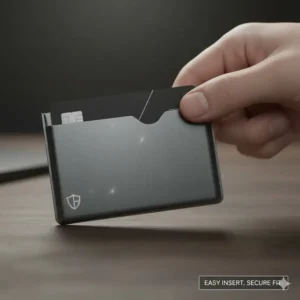
When you’re shopping for card sleeves for debit cards, you’ll find they generally fall into a few material categories.
-
Paper + Foil: These are the most common and cheapest, like the Travelambo sleeves. They are an aluminum foil layer glued inside a paper or cardstock shell.
-
Pros: Very thin, very cheap.
-
Cons: Least durable, will tear at the seams with repeated use.
-
-
Laminated Paper: A step up. These (like Toughergun or JAVOedge) take the paper/foil concept and add a thin plastic laminate on the outside.
-
Pros: More durable, water-resistant, allows for printed designs.
-
Cons: Still susceptible to creasing.
-
-
Tyvek / Composite: This is the premium “soft” sleeve, like the Alpine Rivers. Tyvek is a brand name for a material that looks like paper but is a high-density polyethylene fiber.
-
Pros: Extremely tear-proof, water-resistant, and very thin.
-
Cons: More expensive, can be a very tight fit.
-
-
Rigid Plastic: These are hard-shell cases, like the Boxiki Travel.
-
Pros: Maximum physical protection (bend/crush-proof).
-
Cons: Bulky, usually only holds one card.
-
-
Clear Vinyl: These are for physical protection only.
-
Pros: Protects magstripes, keeps card visible.
-
Cons: Zero RFID protection.
-
Table: Comparison of Sleeve Materials
| Material | Avg. Durability | RFID Blocking? | Profile (Thickness) | Best For |
| Paper + Foil | Low | ✅ Yes | Ultra-Slim | Budget bulk buys |
| Laminated Paper | Medium | ✅ Yes | Slim | Everyday use, style |
| Tyvek / Composite | High | ✅ Yes | Slim | Durability, tight wallets |
| Rigid Plastic | Very High | ✅ Yes | Bulky | Bend protection, single card |
| Clear Vinyl | High | ❌ No | Slim | Physical protection only |
📋 How to Choose the Perfect Debit Card Sleeve (Buyer’s Guide)
Feeling overwhelmed? Don’t be. Choosing the right debit card protectors is easy if you ask these five questions.
-
What’s My Main Goal?
-
Are you only worried about RFID skimming? Go for the slimmest certified blocker, like Alpine Rivers.
-
Are you only worried about your magstripe scratching off? A simple Yar-Craft clear sleeve is all you need.
-
Are you a construction worker who keeps breaking cards in their pocket? You need a Boxiki Travel hard case.
-
-
How Thick Is My Wallet?
-
This is the biggest make-or-break factor. If your wallet is already a “Costanza wallet,” you must get the thinnest sleeves possible (Tyvek or paper/foil).
-
A rigid sleeve like the ID Stronghold simply will not fit in a standard wallet slot. It’s designed for a jacket pocket or bag.
-
-
What’s My Security Level?
-
For 99% of people, any sleeve that blocks 13.56 MHz (the standard) is enough.
-
If you work for the government, handle secure access cards, or are just paranoid (in a good way!), then look for FIPS 201 Approved sleeves like ID Stronghold. This is the official U.S. government standard. For more on this, you can check out the U.S. General Services Administration’s guidelines on identity credentials.
-
-
How Many Cards Do I Need to Protect?
-
Just your main debit card and credit card? A 10-pack is fine.
-
Want to protect your entire family? Or your store loyalty cards, library card, and office ID? Grab a bulk 50-pack from Toughergun.
-
-
Do I Care About Style?
-
If you’re a “function over form” person, the plain white or silver sleeves are perfect.
-
If you want to color-code your wallet or add some personality, JAVOedge is your best bet. It’s a genuinely useful organizational tool.
-
Table: Buyer’s Guide Checklist
| Feature | What to Look For | Why It Matters |
| RFID Blocking | “Blocks 13.56 MHz” or “FIPS 201” | This is the only frequency that matters for contactless payments. |
| Material | Tyvek, Rigid Plastic, or Laminated Paper | Determines durability. Paper-only sleeves will fail in weeks. |
| Profile | “Slim,” “Ultra-Thin,” or “Rigid” | This decides if the sleeve will actually fit inside your wallet. |
| Pack Size | 10-pack, 20-pack, etc. | Don’t overpay for 50 if you only need two. |
| Durability | “Tear-Resistant,” “Water-Resistant” | You want a sleeve that lasts, otherwise, you’ll stop using it. |

The Great Debate: Debit Card Sleeves vs. RFID Wallets
This is a common question. Why fuss with individual sleeves when you can just buy a wallet that has the protection built-in? It’s a valid point, but there are trade-offs.
An RFID-blocking wallet lines its entire outer shell with the same shielding material used in a sleeve. When the wallet is closed, it creates a complete Faraday cage.
-
Pros of an RFID Wallet:
-
All-in-One: No need for individual sleeves.
-
Convenient: Just put your cards in like a normal wallet.
-
Durable: The protection lasts as long as the wallet does.
-
-
Cons of an RFID Wallet:
-
Expensive: A good one costs $25 – $100+. Sleeves cost pennies.
-
Inflexible: You’re locked into that one wallet. If you like to switch wallets, or just want to protect a card in your pocket, it’s useless.
-
“All or Nothing”: You can’t just protect one card. They’re all blocked. This is annoying if you have an office ID you want to tap without removing it.
-
Table: Sleeves vs. Wallets Head-to-Head
| Feature | Debit Card Sleeves | RFID-Blocking Wallets | Winner |
| Cost | ✅ Low ($0.20 – $1.00 per) | High ($25.00 – $100.00+) | Sleeves |
| Flexibility | ✅ High (Use in any bag, wallet, or pocket) | Low (Is its own wallet) | Sleeves |
| Convenience | Medium (Must slide card in/out) | ✅ High (Cards are just in slots) | Wallets |
| Selective Blocking | ✅ High (You choose which cards to protect) | Low (Blocks everything inside) | Sleeves |
| Durability | Low to High (Varies by material) | ✅ High (Lasts as long as wallet) | Wallets |
The Verdict: Sleeves are the perfect solution for 90% of people. They are cheap, flexible, and let you keep the wallet you already love. An RFID wallet is a good investment only if you’re already in the market for a new, high-quality wallet anyway. Major tech blogs like CNET often review top RFID wallets if you’re curious to learn more.
🌍 Beyond Debit Cards: What Else Can You Protect?
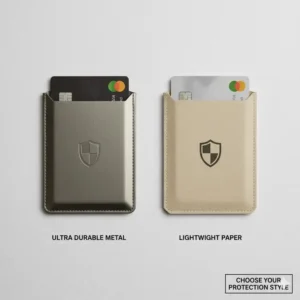
Remember, any card with that little “tap” or “wave” symbol is vulnerable. Think about what else you’re carrying.
-
Credit Cards: The most obvious one.
-
Passport Cards/Books: Modern passports have RFID chips with your personal info.
-
Enhanced Driver’s Licenses (EDLs): States like WA, NY, and MI offer EDLs with RFID for border crossing.
-
Global Entry / NEXUS Cards: These trusted traveler cards are RFID-based.
-
Office Access Badges: Many corporate IDs use RFID to open doors.
-
Hotel Key Cards: Yes, even these can be vulnerable.
A pack of debit card sleeves can secure almost all of these. (Note: Passports require a larger, passport-sized sleeve, which often comes included in packs like the Alpine Rivers).
Table: Protecting All Your RFID-Enabled Items
| Item | Sleeve Type Needed | Why Protect It? |
| Debit/Credit Card | Standard Card Sleeve | Prevent financial theft |
| Passport Book | Passport Sleeve | Protect personal identity info |
| Enhanced Driver’s License | Standard Card Sleeve | Protect identity & border-crossing info |
| Office ID Badge | Standard Card Sleeve | Prevent unauthorized building access |
| Hotel Key Card | Standard Card Sleeve | Prevent unauthorized room access |
💰 The Hidden Costs & Benefits: A Final Analysis
Is it really worth the hassle? Let’s break down the true value.
-
The “Cost” of a Sleeve: A 10-pack of high-quality sleeves might cost $7. That’s $0.70 per sleeve. If it lasts a year, you’re paying pennies a month.
-
The “Cost” of Not Using a Sleeve:
-
Time: The hours spent on the phone with your bank canceling a card, disputing fraudulent charges, and waiting for a new card to arrive.
-
Money: While banks are good about fraud, you might be on the hook for the first $50. Or, if a debit card is drained, you’re out that cash until the bank investigation is complete.
-
Security: The sheer panic and violation of knowing your data was stolen.
-
Table: Cost-Benefit Analysis
| Cost Factor | With a Debit Card Sleeve | Without a Sleeve |
| Upfront Cost | $1 – $10 for a pack | $0 |
| Risk of Fraud | Extremely Low | Moderate to High |
| Card Lifespan | Higher (protected from wear) | Lower (scratches, demagnetization) |
| Peace of Mind | ✅ High | ❌ Low |
| Long-Term Value | Excellent | Poor (High potential cost) |
Table: Performance Metrics at a Glance
| Product Type | Est. Skimming Block Rate | Est. Durability Score (1-10) |
| Paper/Foil (Travelambo) | 99.9% (when new) | 3/10 |
| Laminated (JAVOedge) | 99.9% | 6/10 |
| Tyvek (Alpine Rivers) | 99.9% | 9/10 |
| Rigid (ID Stronghold) | 99.99% (FIPS) | 10/10 |
| Clear Vinyl (Yar-Craft) | 0% | 8/10 |
🔍 Ready to Secure Your Wallet?
You’ve done the research! Now it’s time to take action. Click on any of the product links above to check today’s prices and secure your financial data before your next trip to the store.
🏁 Conclusion: A Small Sleeve for a Lot of Security
In the end, a debit card sleeve is one of the cheapest, simplest, and most effective bits of “cybersecurity” you can buy. It’s a $1 investment to protect accounts worth thousands.
The debate isn’t really if you need one (you do), but which one you need.
-
For the average person, the Alpine Rivers sleeves offer the perfect blend of durability and slimness.
-
For the maximum-security individual, the ID Stronghold is military-grade peace of mind.
-
And for the person who just wants to stop their magstripe from scratching, the Yar-Craft is the simple, non-tech solution.
Don’t wait until you see a weird charge on your statement. Protecting your data is as simple as sliding your card into a new home.
FAQs
❓ Do I really need RFID debit card sleeves?
❓ Do debit card sleeves protect the magnetic stripe?
❓ Do RFID blocking sleeves wear out over time?
❓ Where can I buy the best debit card sleeves?
❓ Can I put two cards in one debit card sleeve?
Recommended for You
- RFID Aluminum Wallet: 7 Best Security Picks 2025
- 7 Best Leather Bifold Wallet with ID Window 2025
- Mens wallet with id window on outside: 7 Powerful Models for 2025
Disclaimer: This article contains affiliate links. If you purchase products through these links, we may earn a small commission at no additional cost to you.
✨ Found this helpful? Share it with your friends! 💬🤗
[addtoany]
