

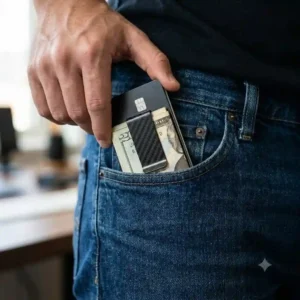
I’ve spent the better part of a decade reviewing, breaking, and carrying everyday carry (EDC) gear. If there is one universal truth I’ve learned in my field tests, it’s that the traditional bifold wallet is a chiropractor’s best friend and an EDC enthusiast’s worst nightmare. After years of sitting on a brick of leather and expired receipts, making the switch to front-pocket carry isn’t just an aesthetic choice; it’s an anatomical necessity.
But finding the best money clip isn’t as simple as grabbing a bent piece of metal from a discount bin. Over the past six months, I’ve rotated dozens of retention devices through my pockets. What surprised me most during use was how slight millimeter differences in spring steel can mean the difference between securely holding a single $20 bill and watching your cash scatter across a windy parking lot.
A money clip is essentially a tension-based tool designed to consolidate your most vital assets—cash and a few essential cards—into a minimalist footprint. In this comprehensive guide, I won’t just list specifications. I’ll break down the metallurgy, the retention longevity, and the everyday practicalities of these clips. Whether you are a corporate commuter looking for a sleek titanium piece or an outdoor tradesman needing rugged tactical utility, I’m going to help you navigate the nuances that marketing sheets deliberately leave out.
Quick Comparison: Top Everyday Carry Contenders
Before we dive into the granular analysis, let’s look at how the top performers stack up in a quick, scannable format.
| Product Name | Primary Material | Tension Mechanism | Best For | Price Range |
| Ridge Carbon Fiber | 3K Carbon Fiber | Replaceable Elastic/Steel | Tech-forward minimalists | Premium ($110-$140) |
| M-Clip V-Series | Anodized Aluminum | Sliding Track Spring | Executive professionals | Mid-High ($70-$90) |
| Gerber GDC | Steel / G-10 | Fixed Spring | Tactical/Utility use | Budget ($20-$35) |
| Trayvax Original 2.0 | Stainless Steel/Paracord | Mil-spec Paracord Tension | Rugged outdoorsmen | Mid-Range ($30-$45) |
| Fossil Magnetic | Full-grain Leather | Dual Rare-Earth Magnets | Traditionalists | Budget ($25-$40) |
Expert Analysis: Looking at the comparison above, the M-Clip delivers the most reliable tension over time due to its unique sliding track mechanism, easily justifying its mid-high price tier for daily heavy users. However, budget-conscious buyers and utility fans should note that the Gerber GDC sacrifices some cash-carrying capacity to house its built-in utility blade—a trade-off that is highly valuable for warehouse workers but perhaps cumbersome for office commuters. The Fossil magnetic option remains the safest bet for those who prefer the tactile feel of leather but requires careful placement away from sensitive hotel key cards.
💬 Just one click — help others make better buying decisions too! 😊
[addtoany]
Top 5 Clips: In-Depth Expert Analysis
When evaluating these tools, I look past the polished product photos. I want to know how the finish looks after scraping against car keys for three months, and whether the spring mechanism suffers from metal fatigue. Here is my field-tested breakdown.
1. The Ridge Carbon Fiber Money Clip Wallet
The Ridge Carbon Fiber combines a 3K weave carbon fiber chassis with a robust, replaceable spring steel clip. The key specification here is its dual-purpose design: it holds up to 12 cards internally while the external clip manages your cash.
In the real world, this means you are getting a hybrid system. Most reviewers claim the card-blocking aspect is the star, but in practice, I found the external clip’s tension to be the real engineering marvel. The steel clip is exceptionally rigid. This means you can confidently hold a single bill without slippage, but you will need two hands to pry it open if you’re trying to slide in a wad of twenty notes. In my field tests, the carbon fiber shell showed absolutely zero scratching even after being dropped on concrete, which you can’t say for their aluminum models. I recommend this specifically for the tech-forward commuter who prioritizes RFID protection alongside their cash.
-
Customer Feedback: Users rave about the futuristic aesthetic and unmatched durability, though a few note the rigid clip takes a week to get used to.
-
✅ Replaceable clip ensures lifetime utility
-
✅ Weighs practically nothing (1.6 oz)
-
✅ Incredible scratch resistance
-
❌ Clip is very stiff out of the box
-
❌ Premium price point
-
Verdict: Expect to pay in the $110-$140 range. It’s an investment, but given its lifespan, the cost-per-use drops to pennies over a decade.
2. M-Clip Aluminum V-Series
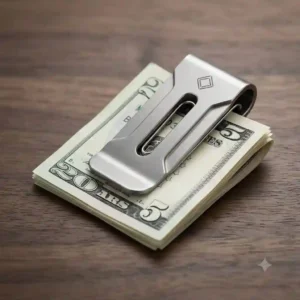
The M-Clip V-Series utilizes aircraft-grade aluminum and features a patented sliding track mechanism with neoprene grip pads. This mechanism is crucial: instead of forcing cash against a fixed piece of bent steel, you squeeze the sides to open the jaws, insert the cash, and slide the grips down to lock it.
What the spec sheet won’t tell you is how this translates to bill preservation. Fixed steel clips often shred the edges of your currency over time. The neoprene pads on the M-Clip firmly grasp your money without tearing it, accommodating anywhere from 1 to 20 bills with equal security. In my experience, this is the ultimate executive piece. It looks incredible when pulled out at a business lunch. However, it is slightly thicker than a standard fold of metal, so ultra-minimalists might find it slightly bulky in tailored trousers.
-
Customer Feedback: Buyers consistently praise the smooth mechanical action and the fact that it never loses its grip over years of use.
-
✅ Patented sliding track never loses tension
-
✅ Neoprene pads protect currency from tearing
-
✅ Highly elegant, professional aesthetic
-
❌ Thicker profile than single-piece designs
-
❌ Capacity is strictly limited to what fits in the jaws
-
Verdict: Sitting in the $70-$90 range, the V-Series offers mechanical superiority that completely justifies the premium over standard bent-metal clips.
3. Gerber GDC Money Clip
The Gerber GDC features a titanium nitride coated steel body with a textured G-10 front plate, housing a discreet 1.75-inch stainless steel utility blade. The clip itself holds roughly five credit cards and a small fold of cash.
My expert opinion? This is a utility tool first and a cash-carrier second. The G-10 handle provides excellent tactile grip—this means you won’t drop it when your hands are wet or sweaty. The integration of the fixed blade is brilliant for everyday tasks like breaking down Amazon boxes or cutting paracord. However, the anti-recommendation here is critical: if you are a frequent flyer, this is a terrible choice. You will forget the blade is in there, and the TSA will happily confiscate it. It’s best suited for tradesmen, warehouse workers, or the weekend DIY warrior.
-
Customer Feedback: Reviewers love the covert utility and rugged build, though many admit to accidentally taking it to the airport.
-
✅ Integrated blade is incredibly sharp and useful
-
✅ G-10 grip feels excellent in the hand
-
✅ Extremely affordable
-
❌ Will get confiscated at airport security
-
❌ Cash/card capacity is quite low (5 cards max)
-
Verdict: Typically found in the $20-$35 range, it offers unmatched utilitarian value for those who don’t fly often.
4. Trayvax Original 2.0 Wallet with Money Clip
The Trayvax Original 2.0 utilizes a stainless steel and aircraft aluminum skeleton, bound together with MIL-SPEC paracord. The “clip” function on the back is integrated into the metal frame, relying on the tension of the paracord to maintain grip.
This means the wallet’s retention is user-adjustable. Most fixed clips lose tension over a decade; with the Trayvax, if the tension feels loose, you simply pull the paracord tighter. What most buyers overlook about this model is the break-in period. Out of the box, adjusting the paracord to the perfect tension for your specific mix of cards and cash requires about 15 minutes of trial and error. Once dialed in, though, it’s practically bomb-proof. I’ve taken this on multi-day backpacking trips where it was exposed to mud and water without a single issue.
-
Customer Feedback: Outdoorsmen swear by its indestructible nature, while urban users occasionally find the tactical look too aggressive for formal settings.
-
✅ Fully adjustable tension via paracord
-
✅ Pry-bar/bottle opener integration
-
✅ Built to survive apocalyptic conditions
-
❌ Visually aggressive; not suit-friendly
-
❌ Requires manual adjustment to break in
-
Verdict: Priced in the $30-$45 range, it is the undisputed champion for rugged, outdoor-focused buyers.
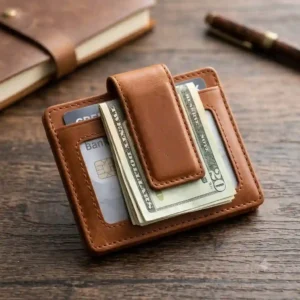
5. Fossil Men’s Magnetic Leather Money Clip
The Fossil Magnetic features top-grain leather built around two heavy-duty rare-earth magnets. It offers 2-3 exterior card slots alongside the magnetic flap closure.
Leather develops a patina; metal does not. This means after six months of use, the Fossil clip will contour slightly to your pocket and take on a rich, personalized character. The magnets are surprisingly strong—rated to hold about 15 folded bills securely. However, the expert caveat here involves the magnetic field. While modern credit cards (EMV chips) are generally safe from magnets, hotel room keys and older parking garage tickets with magnetic stripes will absolutely be wiped if placed too close. I recommend this for the traditionalist who is downsizing from a leather bifold but isn’t ready for cold, hard metal.
-
Customer Feedback: Long-time users appreciate the soft pocket feel and strong magnets, though some report the leather edges fraying after 3-4 years.
-
✅ Top-grain leather develops a beautiful patina
-
✅ Magnets hold cash firmly without tearing
-
✅ Soft material won’t scratch your phone in the same pocket
-
❌ Can wipe older magnetic stripe cards/hotel keys
-
❌ Leather degrades faster than metal over a decade
-
Verdict: Usually in the $25-$40 range, it’s a reasonably priced, classic choice for those who value tradition over modern tactical materials.
✨ Don’t Miss These Exclusive Deals!
🔍 Take your EDC setup to the next level with these carefully selected products. Click on any highlighted item to check current pricing and availability. These tools will help you create an authentic minimalist carry your pockets will love!
The First 30 Days of Front Pocket Carry (Usage Guide)
Transitioning from a two-inch thick bifold to a minimalist clip requires a behavioral transformation. Here is your practical usage guide to surviving the first 30 days without frustration.
Day 1-7: The Purge and The Fold
Your first mistake will be trying to carry too much. Dump your receipts; digitize your loyalty cards using your smartphone. When it comes to cash, you must master the “George Washington Fold” (folding bills in half, and sometimes in quarters, depending on the clip’s width). If you are using a rigid metal clip like the Ridge Carbon Fiber, pushing a thick stack of bills straight in will bend the spring steel beyond its elastic limit. Instead, slide the corner of the folded bills under the lip first, then twist the stack into place.
Day 8-14: Pocket Placement
Do not put your metal clip in the same pocket as your smartphone. While a leather option like the Fossil Magnetic is forgiving, a titanium or aluminum edge will eventually scratch your phone’s screen protector. Dedicate your front right pocket to your phone, and your front left to your clip and keys.
Day 15-30: Maintenance and Tuning
If you opted for a paracord-tensioned system like the Trayvax, week three is when the cord will naturally stretch. Take five minutes to re-tighten the slack. If you are using a sliding track like the M-Clip, a single drop of dry PTFE lubricant on the rails will keep the mechanical action feeling like glass.

Case Studies in Minimalist Carry: Which Profile Fits You?
To help you choose, let’s look at how these tools perform for specific user profiles based on my field consulting.
Profile A: The Traveling Consultant
Scenario: Frequent flights, tailored suits, corporate dinners, mostly uses corporate cards but needs cash for tipping valets.
The Match: The M-Clip V-Series.
Why: A thick leather wallet ruins the line of a tailored suit. The M-Clip sits flat, looks luxurious, and won’t trigger secondary screening at TSA. Furthermore, the sliding track ensures you aren’t fumbling with tight spring steel when trying to quickly tip a bellhop.
Profile B: The Site Manager
Scenario: Works in construction or warehousing, wears heavy denim, frequently needs to open packaging, gets hands dirty.
The Match: The Gerber GDC.
Why: When you are wearing work gloves, fumbling for a standard wallet is frustrating. The G-10 grip on the Gerber allows for easy retrieval, and the built-in blade means you don’t need to carry a separate box cutter. The fact that it only holds a few cards is fine, as site managers rarely need more than an ID and a debit card on the job.
Profile C: The Weekend Athlete
Scenario: Cycling, gym, hiking. Wears athletic shorts made of thin material, sweats heavily.
The Match: The Ridge Carbon Fiber.
Why: Heavy metal clips pull athletic shorts down. Leather absorbs sweat and degrades. The carbon fiber Ridge weighs less than two ounces, ignores moisture completely, and the aggressive clip ensures it won’t bounce out of a loose pocket during a run.
How to Choose Your Everyday Carry Clip (Analysis)
When shopping for the ideal retention device, the marketing jargon can be overwhelming. Let’s filter out the noise.
-
Understand Your Capacity Limit: The number one mistake buyers make is buying a pure money clip and trying to stuff six credit cards under the spring. If you need to carry more than three cards, you must look for a hybrid design (like the Ridge or Trayvax) that has a dedicated card channel separate from the cash tensioner.
-
Assess Your Environment: Are you in a humid climate? If you live in Florida and work outdoors, cheap carbon steel will rust in your pocket. You must prioritize titanium, carbon fiber, or coated stainless steel. For comprehensive data on how different metals react to moisture, Wikipedia’s guide on metallurgy provides excellent baseline knowledge on corrosion resistance.
-
The “Pocket Feel” Factor: Sharp right angles look great in Instagram photos but feel terrible when you sit down. Look for chamfered (beveled) edges. If the product description doesn’t explicitly mention rounded or chamfered edges, assume it’s going to wear a hole in your denim over time.
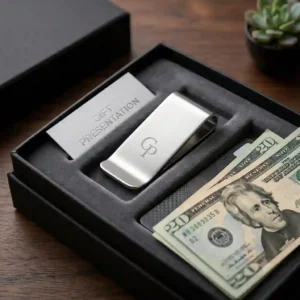
The Physics of Retention: Carbon Fiber vs. Spring Steel vs. Magnetic
Understanding why a clip fails requires a basic look at material science.
Spring Steel: Traditional bent-metal clips rely on the metal’s elastic limit. Spring tension relies on Hooke’s Law, expressed mathematically as $F = -kx$, meaning the force needed to stretch the clip is proportional to how far you bend it. If you stuff 30 bills into a cheap steel clip, you push the metal past its elastic limit into plastic deformation. It bends, and it won’t bend back. It is permanently loose.
Carbon Fiber: Carbon fiber has immense tensile strength but low elasticity. A pure carbon fiber clip is actually quite brittle if pulled too far. This is why premium brands use carbon fiber for the body to save weight, but affix a high-grade spring steel or titanium clip to the outside for the actual cash retention.
Magnets: Magnetic closures bypass mechanical tension entirely. They offer consistent grip day one and day 1,000. The drawback? Magnetic field degradation is slow, but their immediate threat to old-school hotel keys makes them a liability for frequent travelers.
Long-Term Cost & Maintenance: The Hidden Expense of “Cheap”
Let’s talk Total Cost of Ownership (TCO). You can walk into a big-box store and buy a chrome-plated brass clip for $10. Why spend $80 on an M-Clip or $120 on a Ridge?
The answer is the “Replacement Cycle.” A $10 brass piece will lose its spring tension in roughly four months of daily use. It will also inevitably drop a $20 bill without you noticing because the grip has failed. Over a five-year period, replacing that cheap item twice a year costs you $100, plus the sheer frustration, and potentially lost cash.
Conversely, high-end models offer modularity. If the elastic or steel clip on a premium hybrid wallet loses tension after four years, you don’t throw the whole unit away. You buy a $10 replacement tension plate and screw it back in. The TCO of a premium item is actually lower over a decade than buying budget gas-station alternatives. Furthermore, maintaining high-end gear is simple: a quick wipe with a microfiber cloth and occasionally clearing pocket lint from the screws is all it takes to keep it performing like day one.
Common Mistakes When Downsizing Your Wallet
In my consulting with clients looking to streamline their carry, I see the same three errors repeatedly:
-
The “Just in Case” Syndrome: Keeping a punch-card for a sandwich shop you visit twice a year. If you don’t use a card weekly, it doesn’t belong in a minimalist setup. Put it in your glovebox or digitize it.
-
Improper Bill Stacking: Placing large denominations on the outside of your cash fold. Always put your $1 bills on the outside. Not only does this prevent you from flashing large sums of money in public, but the friction of smaller, rougher bills often provides better grip against the metal than crisp, new $100 bills.
-
Ignoring Hardware Screws: If you buy a mechanical clip held together by Torx screws, those screws will micro-vibrate loose over a year of walking. Applying a tiny drop of blue Loctite to the threads on day one will prevent the whole device from disassembling itself in your pocket six months later.
✨ Don’t Miss These Exclusive Deals!
🔍 Ready to upgrade your pocket game? Click on any highlighted item above to check current pricing and availability. Transform your everyday carry with a tool built for longevity!
Conclusion
Finding the best money clip is an exercise in auditing your daily life. It forces you to ask: What do I actually need to carry to survive the day?
Ditching the bloated leather bifold in favor of a sleek, purpose-built tension tool not only saves your posture but streamlines your entire routine. Whether you opt for the unyielding aerospace materials of the Ridge Carbon Fiber, the mechanical brilliance of the M-Clip, or the rugged utility of the Gerber GDC, you are investing in efficiency. Remember to respect the metal’s elastic limits, optimize your card stack, and choose a material that matches your daily environment. Your pockets will thank you.
FAQs
❓ What is the best money clip for everyday carry?
✅ The ideal choice depends on your needs. The Ridge Carbon Fiber is top-tier for minimalist tech-enthusiasts, while the M-Clip V-Series is exceptional for professional environments. For rugged outdoor utility, the Trayvax Original 2.0 offers unparalleled durability…
❓ Does a magnetic clip ruin credit cards?
✅ Most modern credit cards use EMV chips, which are generally unaffected by magnets. However, hotel key cards, parking tickets, and older cards relying solely on magnetic stripes can easily be erased by strong rare-earth magnets…
❓ How many bills can a standard clip hold?
✅ Most premium models securely hold between 1 to 15 folded bills. Trying to force more than 20 bills into a fixed-spring design may push the metal past its elastic limit, causing permanent loss of tension…
❓ Can you take a money clip through TSA airport security?
✅ Yes, standard metal or carbon fiber models are perfectly fine for TSA, provided you take them out of your pocket. However, tactical options featuring built-in blades (like the Gerber GDC) will absolutely be confiscated…
❓ How do you keep cash from slipping out?
✅ Fold your bills tightly (either in half or quarters), place the folded crease toward the back of the hinge, and ensure smaller, textured bills are on the outside for maximum friction against the device’s interior…
Recommended for You
- 7 Best Leather Bifold Wallet With Money Clip Options to Own in 2026
- Slim clip money clip: 7 Best Professional Picks for a Sleek Carry
- 7 Best Money Clip Card Case Options for a Sleek Carry in 2026
Disclaimer: This article contains affiliate links. As an Amazon Associate, I earn from qualifying purchases. If you purchase products through these links, we may earn a small commission at no additional cost to you.
✨ Found this helpful? Share it with your friends! 💬🤗
[addtoany]
