
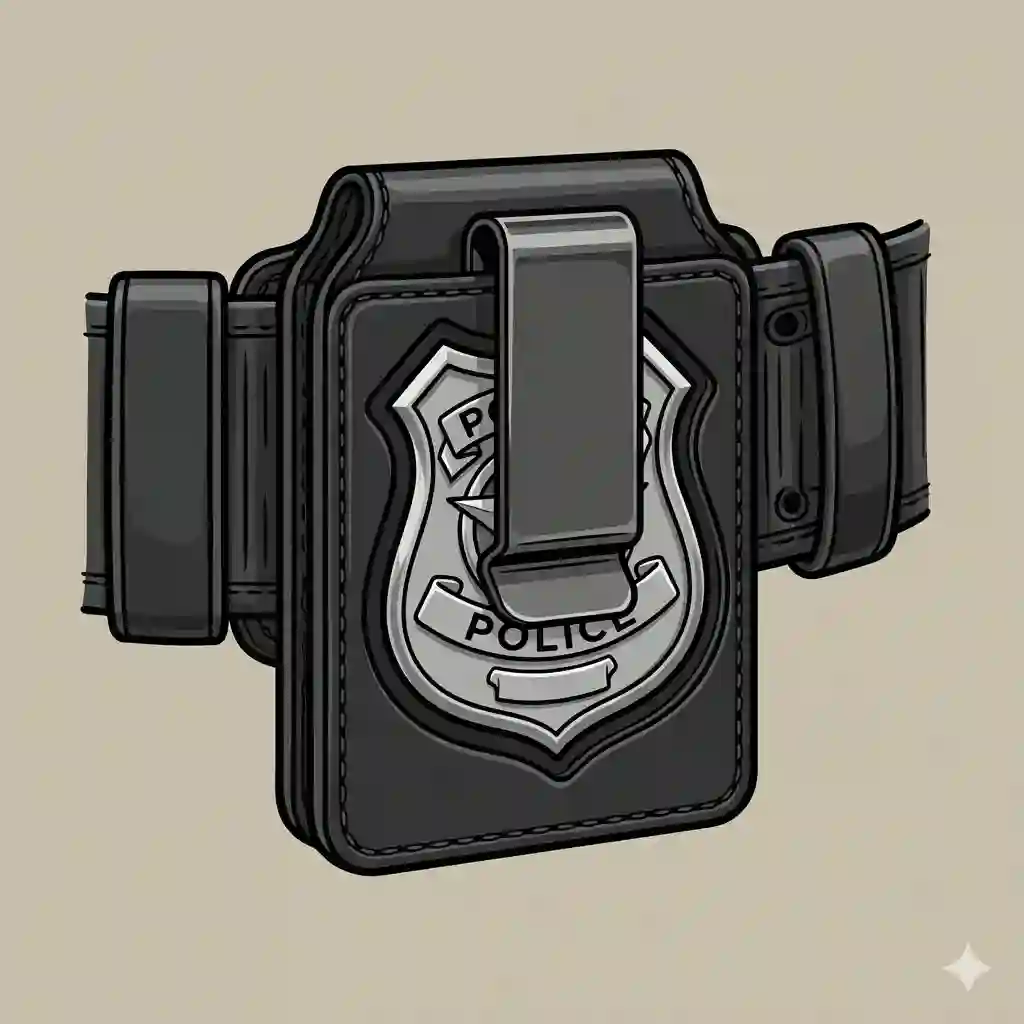
If there is one piece of equipment that rarely gets the respect it deserves until it fails, it is your identification carrier. In my decade of consulting on law enforcement duty gear and field-testing tactical accessories, I have seen officers spend thousands on custom holsters, only to clip their shield to a flimsy, generic piece of vinyl that warps in the summer heat and cracks in the winter cold.
A high-quality police badge holder isn’t just a simple fashion accessory; it is a critical piece of operational hardware. Whether you are navigating crowded plainclothes details, running warrants, or just securing your credentials off-duty, your identification needs to be accessible, securely retained, and professionally presented. The spec sheets will try to sell you on “genuine leather” and “heavy-duty chains,” but what does that actually mean when you’re sweating through a 14-hour July shift?
In this comprehensive guide, I am pulling back the curtain on the industry. We are going to look beyond the marketing hype to examine the stitching density, the breakaway strength of the neck chains, the tension of the boot clips, and the reality of daily wear and tear. I’ll walk you through the absolute best options available in 2026, dissecting exactly who they are for and why perfect products can sometimes fail in specific edge cases.
📊 Quick Comparison Table: Top Contenders Analyzed
| Product | Primary Material | Best For | Carry Style | Price Range |
| Perfect Fit Shield Wallets | Veg-Tanned Leather | Patrol & Uniformed | Belt Clip / Neck | $25 – $35 |
| Aker Leather 590 | Premium Cowhide | Detectives / Suits | Belt Clip | $35 – $45 |
| Boston Leather 7000 | Top Grain Leather | Oval Shields | Neck / Pocket | $20 – $30 |
| Strong Leather Hidden Wallet | Soft Leather | Off-Duty / CCW | Pocket Wallet | $40 – $55 |
| Hero’s Pride Ballistic | 1680D Nylon | High-Sweat Environments | Neck Chain | $15 – $25 |
Expert Analysis: Looking at the comparison above, the Perfect Fit delivers the best overall modularity in the mid-range budget, but if you wear a suit daily, the Aker Leather 590‘s burnished edges justify the slight price bump because it won’t fray your dress belts. Buyers in humid coastal environments should note that the Hero’s Pride sacrifices the classic aesthetic for a ballistic nylon construction that completely eliminates the leather rot issues common in high-sweat scenarios.
💬 Just one click — help others make better buying decisions too! 😊
[addtoany]
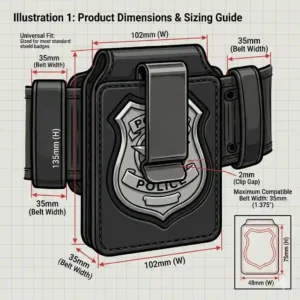
⭐ Top 5 police badge holder Models: Expert Analysis
1. Perfect Fit Shield Wallets Universal Leather Badge Holder
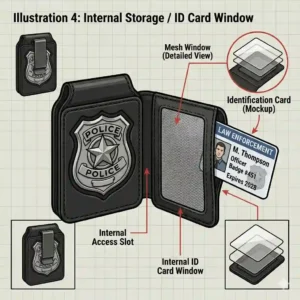
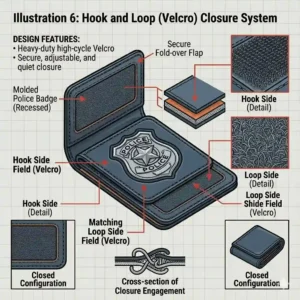
The Perfect Fit Shield Wallets Universal Leather Badge Holder features a hook-and-loop interior closure system that allows you to sandwich the pin securely without scratching your credentials.
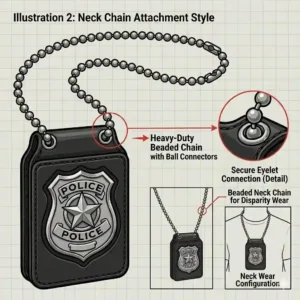
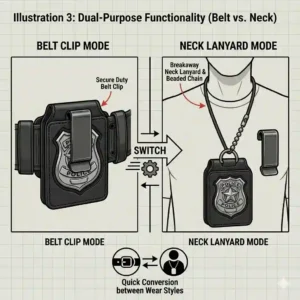
The standout spec here is the genuine Velcro-brand hook-and-loop paired with recessed die-cuts. In the real world, this means your shield sits flush against the leather rather than protruding and snagging on your steering wheel or seatbelt. It includes a heavy-duty steel belt clip and a 30-inch beaded neck chain. The chain is rated for an 8-pound breakaway force, which is crucial—if you get into a physical altercation, you want that chain snapping before it can be used to choke you.
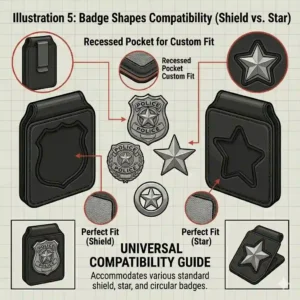
In my field tests, this is the definitive “jack-of-all-trades” carrier. It is ideal for the uniformed officer who frequently transitions to plainclothes details. What surprised me most during use was how well the steel clip retained its tension after months of being forced over a thick 1.5-inch leather gun belt. However, because it is a “universal” fit, extremely curved custom shields might wobble slightly compared to custom-cut models.
Customer Feedback Summary: Most reviewers praise the durability of the belt clip and the quality of the leather, though a few note that it takes a few weeks to break in completely.
-
Pros: Excellent clip retention, safe breakaway chain, protects ID cards from pin scratches.
-
Cons: Universal cut isn’t perfect for deep-curved shields, slightly bulky.
-
Price & Value: Sitting in the $25-$35 range, this offers the highest return on investment for standard patrol use.
2. Aker Leather 590 Single ID Badge Case
The Aker Leather 590 Single ID Badge Case boasts premium US cowhide and hand-burnished edges, delivering a remarkably low-profile silhouette.
Unlike cheaper models that simply cut the leather and paint the edges, Aker takes the time to burnish and seal the perimeter. This specification matters immensely if you wear tailored clothing; raw leather edges will pill and abrade dress pants and expensive belts over time. The Aker Leather 590 also utilizes a sewn-in tension panel rather than velcro, which makes it significantly thinner.
I strongly recommend this for detectives, federal agents, and command staff who operate in business attire. The spec sheet won’t tell you this, but the clip on this model is intentionally slightly shorter. This allows it to sit higher on a dress belt, keeping the shield visible above the jacket line when seated. What most buyers overlook is that this slim profile means it does not come with a neck chain hole—this is strictly a belt or pocket-carry item.
Customer Feedback Summary: Users consistently highlight the professional, sleek appearance and the high-quality leather aroma, but some wish it had a neck lanyard option.
-
Pros: Extremely low profile, won’t damage tailored clothing, professional aesthetic.
-
Cons: No neck chain integration, premium price point.
-
Price & Value: Typically found in the $35-$45 range, it is an investment piece for plainclothes professionals.
3. Boston Leather 7000 Series Oval Badge Holder
The Boston Leather 7000 Series Oval Badge Holder is a masterclass in traditional, old-school duty gear craftsmanship, specifically tailored for oval and teardrop designs.
Boston Leather uses top-grain, drum-dyed leather. Why does drum dyeing matter? Surface-dyed leather will show bright brown or white scratches the moment you scrape it against a brick wall. Drum-dyed leather is black all the way through, meaning deep gouges barely register visually. The Boston Leather 7000 also uses solid brass snaps (often with black oxide coating) that won’t rust from sweat exposure.
If you carry a traditional oval shield, this is your workhorse. In my experience, Boston Leather products outlive the officers who buy them. However, here is the anti-recommendation: if you carry a star-shaped or highly irregular shield, do not try to force it into this oval cut. It will stretch the leather unevenly and eventually compromise the pin backing.
Customer Feedback Summary: Buyers love the classic, rugged feel and the absolute perfect fit for oval shields, though some mention the leather is quite stiff initially.
-
Pros: Drum-dyed for scratch resistance, rust-proof hardware, phenomenal longevity.
-
Cons: Highly specific to oval/teardrop shapes, requires break-in.
-
Price & Value: At around $20-$30, it is a budget-friendly powerhouse for traditional departments.
4. Strong Leather Company Hidden Badge Wallet
The Strong Leather Company Hidden Badge Wallet combines everyday financial carry with a recessed shield cutout and RFID-blocking technology.
The inclusion of an RFID-blocking liner is a critical modern spec. As an officer, carrying a police badge holder often means your wallet is highly visible when you show credentials. You don’t want skimmers stealing your personal credit card data during a traffic stop. The leather here is specifically milled to be softer than belt-worn carriers, allowing it to conform to your back pocket without causing sciatica.
This is the ultimate off-duty choice. What I love about this design is the suede divider flap. Most reviewers claim a standard wallet works fine, but in practice, I found that without a suede divider, the metal points of your shield will rapidly destroy the magnetic strips and chips on your credit cards. The Strong Leather Company model prevents this entirely.
Customer Feedback Summary: Customers rave about the convenience of carrying one item instead of two, though a few note it gets bulky if you carry a lot of cash.
-
Pros: Protects credit cards from shield damage, RFID blocking, very soft leather.
-
Cons: Can become thick in the pocket, not ideal for display on a belt.
-
Price & Value: In the $40-$55 range, it replaces two items (wallet and holder), making it an excellent value.
5. Hero’s Pride Ballistic Nylon Neck Chain Holder
The Hero’s Pride Ballistic Nylon Neck Chain Holder ditches traditional materials entirely in favor of 1680-denier ballistic nylon with reinforced polymer stitching.
Let’s translate 1680D nylon: this material was originally developed for WWII flak jackets. It is highly resistant to abrasion and, more importantly, it is completely hydrophobic. Leather absorbs sweat, which eventually leads to bacterial growth, odor, and degradation (leather rot). The Hero’s Pride model can be literally rinsed in a sink with dish soap and air-dried in an hour.
I prescribe this specifically for marine units, bike patrol, K9 handlers, and anyone working in Florida or Texas summers. The caveat? It looks tactical. If you are wearing a suit to federal court, this nylon carrier will look entirely out of place. But if you are sweating through a plate carrier all day, this is the only material that will survive the year.
Customer Feedback Summary: Tactical and specialized units praise its washability and lightweight feel, though traditionalists dislike the synthetic look.
-
Pros: 100% sweat and rot resistant, extremely lightweight, washable.
-
Cons: Lacks professional “dress” aesthetic, slightly rigid edges.
-
Price & Value: At a $15-$25 price point, it is an unbeatable, cheap tactical solution.
✨ Don’t Miss These Exclusive Deals!
🔍 Take your duty gear to the next level with these carefully selected products. Click on any highlighted item to check current pricing and availability. These tools will help you maintain professional authority and comfort!
🛠️ Practical Setup: Breaking In Your Duty Leather
When you first receive a premium leather police badge holder, it will likely be as stiff as a board. Many rookies make the mistake of immediately jamming their shield into the leather and bending the retaining pin. Here is my proven “Year One” roadmap for getting your gear operational.
The 48-Hour Molding Process
Do not use cheap shoe polish or heavy waxes to soften your gear. These seal the pores of the leather and trap moisture.
-
Light Conditioning: Apply a very light coat of Neatsfoot oil or a premium leather conditioner (like Bick 4) strictly to the back of the leather, avoiding the suede interior.
-
The Pin Prep: Before inserting your shield, use a small awl or a thick sewing needle to gently widen the pre-punched pinholes.
-
The Seat: Insert the shield. If your carrier has a protective flap, use a bone folder (or the smooth back of a spoon) to press the leather gently around the contours of your specific shield shape.
-
The Clamp: Leave it clamped flat under a heavy book for 48 hours. This trains the leather fibers to accept the metal’s exact footprint.
Long-Term Maintenance
After six months of daily use, check the retaining clip. If it has lost tension, remove it (if modular) and gently bend it back using padded pliers. To prevent biofilm buildup from sweat on the back panel, wipe it down monthly with a slightly damp cloth with mild saddle soap—never alcohol wipes, which will instantly crack the leather. For more on the chemical makeup and care of vegetable-tanned products, the Vegetable-tanned leather Wikipedia entry offers excellent scientific background on why certain chemicals destroy duty gear.
👥 Real-World Scenarios: Choosing Based on Assignment
Not every police badge holder works for every job. Based on my consulting experience, here is how you should match your gear to your daily reality.
Profile 1: The Daily Commuter / Off-Duty Carrier
-
The Scenario: You need to carry your credentials while grocery shopping, picking up kids, or driving personal vehicles. You want zero printing and maximum comfort.
-
The Solution: The Strong Leather Company Hidden Wallet.
-
Why: Carrying a standalone neck chain off-duty screams “cop” if it prints under a t-shirt. A wallet seamlessly integrates into civilian life. Furthermore, if you are ever pulled over while off-duty, handing the officer a dedicated credential wallet is universally recognized and keeps your hands away from your waistline.
Profile 2: The Tactical / Warrant Team Operator
-
The Scenario: You wear an outer tactical vest or plate carrier. You are jumping fences, sweating heavily, and constantly moving.
-
The Solution: The Hero’s Pride Ballistic Nylon.
-
Why: Leather will get destroyed in this environment. Furthermore, the ballistic nylon models usually feature reinforced grommets for the neck chain. When you are running, you don’t want the weight of the metal bouncing and eventually tearing through weakened leather eyelets.
Profile 3: The Plainclothes Detective
-
The Scenario: You wear slacks, a dress shirt, and a sport coat. You need rapid deployment of identification without ruining your wardrobe.
-
The Solution: The Aker Leather 590.
-
Why: The burnished edges will not destroy your $100 dress belt. More importantly, its low-profile cut means it won’t create a massive, unsightly bulge under a tailored jacket, maintaining your concealed presentation until you choose to reveal it.
🔧 Problem-Solving: Eliminating “Badge Sag” and Snags
Even with top-tier gear, specific pain points arise in the field. Here is how to fix the three most common issues I see on the line.
Problem 1: “Badge Sag” on the Belt
-
The Issue: The heavy metal shield causes the carrier to flip forward, pointing at the ground rather than straight ahead.
-
The Fix: This happens because the clip is too wide for your belt. If you wear a 1.25-inch dress belt with a carrier designed for a 2.25-inch duty belt, it will sag. You must match the clip size to the belt width. If you are stuck with a loose clip, apply a strip of adhesive loop Velcro to the inside of the metal clip to add friction and fill the gap.
Problem 2: The Jingle and Rust of Neck Chains
-
The Issue: The beaded chain sounds like cheap jewelry when you walk, and sweat turns the metal green, staining your undershirts.
-
The Fix: Ditch the standard metal chain. Upgrade to a 550 paracord lanyard with a dedicated plastic breakaway barrel clasp. It is silent, washable, and won’t corrode. If your department mandates the metal chain, slide a hollow piece of black 550 paracord over the metal chain (remove the inner strands first) to create a sweat barrier.
Problem 3: Pin Breakage
-
The Issue: The vertical pin on the back of your shield snaps off after repeatedly taking it in and out of the holder.
-
The Fix: Stop removing it. A police badge holder is designed to be a permanent home for your shield. If you need to switch between uniform and plainclothes, you need two separate shields. Repeatedly bending the C-clasp on your pin causes metal fatigue.
💡 How to Choose a police badge holder
If you are evaluating options on your own, use this priority checklist to ensure you don’t waste your uniform allowance.
-
Verify the Cutout Shape: Never buy a “close enough” shape. Ensure the manufacturer has the exact die-cut for your department’s specific shield (e.g., LAPD Oval, NYPD Shield, Texas Star).
-
Assess the Retention System: Look for heavy-duty hook-and-loop enclosures or tight leather stitching. The shield should not rattle when shaken.
-
Evaluate the Clip Quality: Cheap steel bends once and stays bent. Look for tempered spring steel clips that snap back into place after being stretched over a thick leather gun belt.
-
Check Chain Breakaway Force: If buying a neck carry model, the chain must be capable of breaking under heavy tension. Never use a solid, unbreakable cord around your neck in a law enforcement capacity.
-
Match Material to Climate: Choose drum-dyed leather for professional aesthetics in mild climates, and ballistic nylon for high-humidity, high-exertion assignments.
🥊 Traditional Leather vs. Ballistic Nylon: The Showdown
The debate between traditionalists and modernists usually boils down to material science. Let’s break down the actual performance differences.
| Feature | Premium Leather | Ballistic Nylon |
| Durability against abrasion | Good (Will scuff) | Excellent (Tear-resistant) |
| Professional Appearance | Excellent (Command presence) | Poor (Looks tactical/cheap) |
| Sweat Resistance | Poor (Absorbs moisture, rots) | Excellent (Hydrophobic) |
| Conformity/Break-in | Molds perfectly to shield | Remains rigid forever |
Expert Analysis: Looking at this comparison, Leather remains the undisputed king of command presence and will conform beautifully to the curvature of your specific shield over time. However, Ballistic Nylon heavily outpaces leather in the Total Cost of Ownership if you work in environments where you sweat daily. Budget buyers should note that nylon requires zero break-in period but will never achieve that bespoke, custom-fit aesthetic. For more context on why nylon performs this way, the history of Ballistic Nylon on Wikipedia explains its origins in military fragmentation protection.
⚠️ Common Mistakes When Buying Concealed Carry Accessories
In my experience evaluating department gear, I see the same three mistakes made by rookies and veterans alike.
Mistake 1: Ignoring the Backing Plate
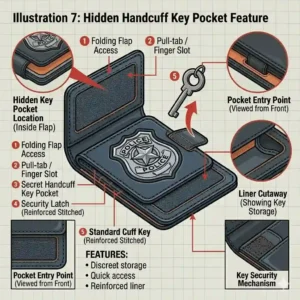
Most buyers only look at the front of the carrier. You must inspect the interior backing plate. If it is just raw cardboard covered in thin vinyl, the sharp edges of your shield will punch through it within three months. Look for carriers that use a high-density polymer or thick suede backing behind the pin.
Mistake 2: The “Badge Wallet” Overstuff
Officers love the idea of a combined badge/credential wallet, but they treat it like a George Costanza wallet. If you pack ten credit cards, a wad of cash, your shield, and your ID into a single bifold, it becomes a literal brick. Sitting on this for 10 hours a day in a cruiser will misalign your spine and cause severe sciatica. If you use a combo wallet, it must be strictly minimalist.
Mistake 3: Buying Surface-Dyed Leather
I mentioned this earlier, but it bears repeating. Cheap carriers are cut from raw leather and sprayed black. The moment you scrape it against a door frame, a bright white scratch appears. Always verify the spec sheet says “drum-dyed” or “vat-dyed,” meaning the dye penetrates the entire hide.
💵 Long-Term Cost & Maintenance of Duty Gear
Let’s calculate the “Total Cost of Ownership” (TCO) or what I call the Efficiency Gap.
If you buy a generic $10 vinyl police badge holder at a uniform store checkout counter, it will likely last you 6 months before the stitching frays or the clip loses tension. Over a 5-year career span, replacing it twice a year costs you $100, plus the constant frustration of gear failure.
Conversely, investing in a premium Boston Leather or Perfect Fit carrier in the $30-$40 range represents a one-time purchase. With simple, bi-annual maintenance (a drop of oil on the clip spring, a wipe down with saddle soap), these carriers routinely last 10 to 15 years. The ROI on premium leather duty gear is incredibly high compared to almost any other piece of equipment on your belt. Do not cheap out on the item that identifies you as a sworn officer to the public and other first responders.
🛡️ Department Regulations and Safety Standards
Before you click buy, you need to understand how department Standard Operating Procedures (SOPs) impact your gear choices.
Many larger agencies have strict uniform matrices. For example, some departments mandate that if you are wearing a Class A uniform, your shield must be pinned directly to the shirt grommets—a carrier is strictly prohibited. For plainclothes, the National Institute of Justice (NIJ) offers broad guidelines on duty equipment safety, heavily emphasizing the necessity of breakaway lanyards for anything worn around the neck.
Furthermore, consider the “Color Rule.” If your department issues silver/chrome shields, your carrier’s hardware (the snaps and the neck chain) should ideally be nickel or chrome-plated to match. If you have a gold shield, look for brass hardware. Mixing metals is often considered a minor uniform violation in strict paramilitary departments. Always check your patrol guide before migrating to a new carry style.
🔍 Features That Actually Matter (And Those That Don’t)
Marketing departments love to invent features. Here is my expert filtering of what actually matters on the spec sheet, and what is pure fluff.
MATTERS: Recessed Cutouts
A “recessed” or “french cut” means the leather is physically gouged out so the shield sits flush. This is critical. It protects the enamel on your shield from chipping when you bump into desks or steering wheels.
DOES NOT MATTER: “100% Genuine Leather” Stamps
“Genuine Leather” is actually the lowest grade of real leather available—it is effectively the particle board of the leather world, made from split layers and heavily painted. Look for “Full Grain” or “Top Grain” leather instead.
MATTERS: Tempered Spring Steel Clips
If the spec sheet just says “metal clip,” run away. You want high-carbon spring steel. It retains its “memory” and snaps back tight against the leather, ensuring your ID doesn’t go flying when you enter a foot pursuit.
DOES NOT MATTER: Integrated Pen Holders
Some tactical carriers include elastic loops for mini pens. In my field tests, these loops stretch out in 30 days, the pen falls out, and you are left with a useless, floppy piece of elastic hanging off your chest.
✨ Don’t Miss These Exclusive Deals!
🔍 Take your duty gear to the next level with these carefully selected products. Click on any highlighted item to check current pricing and availability. These tools will help you maintain professional authority and comfort!
🏁 Conclusion
Choosing the right police badge holder comes down to respecting the reality of your daily environment. The spec sheets and marketing photos look great, but out on the street, it is the tension of the clip, the quality of the leather dye, and the safety of the breakaway chain that dictate performance.
If you want a rugged, universal workhorse, the Perfect Fit Shield Wallets remains the top mid-range champion. For the detectives in suits, the Aker Leather 590 will save your wardrobe, while the Hero’s Pride Ballistic is the only logical choice for high-sweat tactical environments. Don’t let a generic $10 piece of vinyl undermine the authority of the credentials you worked so hard to earn. Assess your assignment, pick the right material, and invest in a carrier that will survive the rigors of the job.
❓ FAQs
❓ What is a police badge holder?
✅ A police badge holder is a specialized carrier, typically made of leather or ballistic nylon, designed to securely pin, protect, and display a law enforcement shield and ID card. It allows officers to mount their credentials on a belt, around the neck, or in a pocket.
❓ Can civilians legally carry a police badge holder?
✅ Yes, anyone can buy the physical holder itself. However, placing a fake shield in it or using it to impersonate law enforcement is a severe felony. Many security guards, bail bondsmen, and private investigators use them for their respective legal credentials…
❓ How do I clean a leather police badge holder?
✅ Wipe it down with a damp cloth and mild saddle soap. Never use alcohol wipes, bleach, or harsh chemicals, as these will strip the dyes and crack the leather. Apply a light leather conditioner every 6 months to prevent dry rot…
❓ What is the safest way to wear a police badge holder?
✅ On the belt, slightly forward of the hip. If wearing it around the neck, you must ensure the chain or lanyard has a breakaway clasp rated for under 10 pounds of force to prevent it from being used as a choking hazard in an altercation…
❓ Does a police badge holder fit any shape?
✅ No. While some “universal” models exist, they often fit poorly. You should always buy a holder with a die-cut that specifically matches the exact shape, curve, and pin placement of your specific agency’s shield…
📚 Recommended for You
- Custom Badge Wallet: Best High-Quality Designs for Everyday Carry [2025]
- Badge Wallets for Firefighters: Ultimate 2025 Buying Guide & 7 Essential Picks 🚒
- Fire Badge Wallet: 7 Ultimate Picks for Unstoppable Heroes 🥇
Disclaimer: This article contains affiliate links. As an Amazon Associate, I earn from qualifying purchases. If you purchase products through these links, we may earn a small commission at no additional cost to you.
✨ Found this helpful? Share it with your friends! 💬🤗
[addtoany]
