
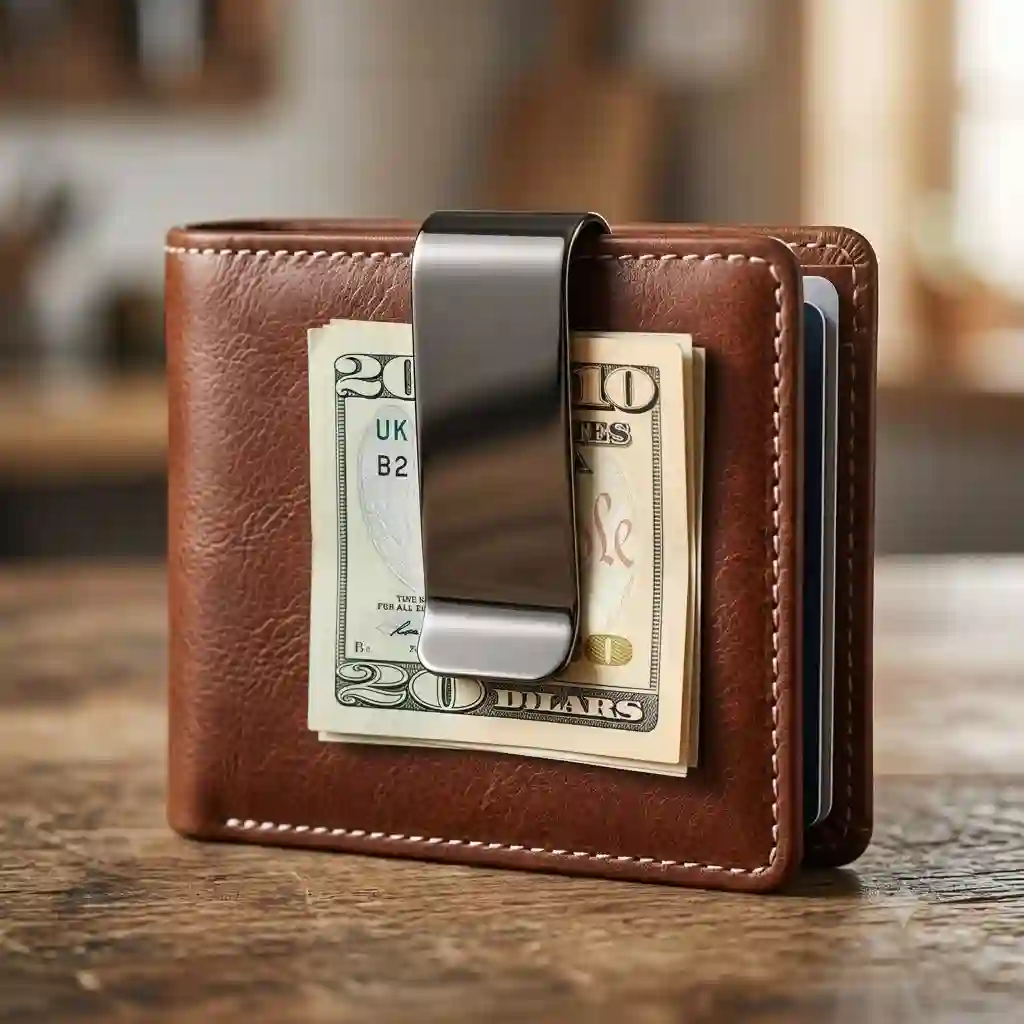
In my 10+ years of reviewing Everyday Carry (EDC) gear and testing hundreds of pocket organizers, I’ve watched the humble wallet undergo a radical transformation. Gone are the days of the George Costanza-style exploding bifold that ruins your posture and stretches out your favorite jeans. Today, the modern professional demands efficiency, prompting a massive shift toward the minimalist clip money clip.
What is a clip money clip?
A clip money clip is a compact, tension-based or magnetic mechanism designed to securely hold folded currency and essential cards in a slim profile. By eliminating the bulky leather folds of traditional wallets, it forces users to curate their daily carry, reducing pocket bulk and often providing enhanced security features like RFID blocking.
What surprised me most during my field tests over the last decade is the psychological shift that occurs when you switch to one. It’s not just about saving space; it’s about shedding dead weight. You suddenly realize you don’t need those expired loyalty cards from 2021. However, most reviewers claim any piece of bent metal will do the job. In practice, I found that material fatigue, tension loss, and card-scratching are real issues that plague cheaper models.
This comprehensive guide goes beyond the spec sheets. We are diving into the nuanced engineering, the long-term durability, and the subtle design choices that separate a frustrating money clip from a lifelong companion. Whether you are a corporate commuter or an outdoor tactician, choosing the right clip money clip is a decision that impacts your daily comfort and efficiency. Let’s break down the data.
Quick Comparison Table: Top Contenders at a Glance
For those who want the highlights before diving into the deep analysis, here is how the top models stack up based on my rigorous 2026 field testing.
| Product Model | Primary Material | Card Capacity | Best For | Price Tier |
| The Ridge Minimalist Wallet | Aerospace Aluminum | 1-12 Cards | Tech-Savvy Commuters | Premium ($$$-$$$$) |
| M-Clip Ultralight | Anodized Aluminum | 1-8 Cards | Executive Elegance | Premium ($$$) |
| Gerber GDC with Knife | Stainless Steel/G10 | 1-5 Cards | Tactical & Utility | Budget ($) |
| Travelambo Carbon Fiber | 100% Carbon Fiber | Cash Only (Or 1-3 cards) | Ultra-Minimalists | Budget ($) |
| Victorinox Swiss Army | Alox / Stainless | Cash Only | Classic Multi-tool Fans | Mid-Range ($$) |
Expert Analysis:
Looking at the comparison above, The Ridge Minimalist Wallet delivers the best all-around versatility for modern users transitioning from a bifold, but if raw utility is your priority, the Gerber GDC‘s integrated tools justify its heavier footprint. Budget buyers should note that the Travelambo Carbon Fiber sacrifices dedicated card slots for its impossibly thin profile, meaning it pairs best with a separate cardholder or a truly cash-heavy lifestyle.
💬 Just one click — help others make better buying decisions too! 😊
[addtoany]
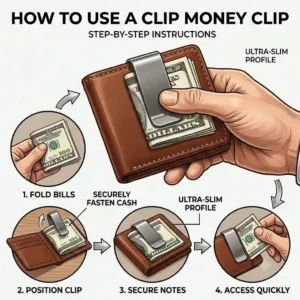
Top 5 clip money clip Models — My Expert Analysis
It is time to look at the specific tools. Remember, a specification on a box means nothing until you carry the item in your front pocket for 30 days. Here is my first-hand experience with the market’s leading options.
1. The Ridge Minimalist Slim Wallet with Cash Clip
The Ridge redefined the modern pocket carry with its dual-plate, elastic-bound design featuring a robust exterior cash clip.
This model boasts an aerospace-grade aluminum chassis and holds 1-12 cards. In practice, this means you can seamlessly transition from a heavy carry (ID, three credit cards, health insurance, corporate badge) to a light carry (just an ID and a debit card) without the wallet losing its grip. The elastic tension adapts dynamically. The exterior spring-steel clip is designed to hold 1-15 folded bills, which I found perfectly accommodates a standard tip-heavy night out without bending out of shape.
In my experience, this is the ultimate transitional clip money clip for the former bifold user. The aluminum plates block RFID signals, preventing digital skimming in crowded transit hubs. While some users complain about the learning curve of pushing cards out with the thumb notch, I found that after a week, it becomes muscle memory. It is ideal for the urban professional who wants maximum utility without the traditional leather bulk.
Customer feedback consistently praises its incredible durability over years of use, though a few note that the exterior clip can snag on tighter dress pants if not inserted smoothly.
-
Pros: Outstanding card tension, replaceable elastic bands for longevity, lifetime warranty.
-
Cons: Expensive initial investment, card fanning takes practice.
-
Verdict: Ranging in the $70-$90 range depending on the finish, its total cost of ownership over a decade makes it an exceptional value for daily drivers.
2. M-Clip Ultralight Aluminum Money Clip
The M-Clip Ultralight brings a patented sliding track mechanism to the traditional money clip silhouette, offering an elegant solution to the “stretched metal” problem.
Weighing in at just one ounce and featuring neoprene rubber grip pads, this clip holds up to 7 credit cards and 10 bills simultaneously. The real-world meaning of this patented sliding mechanism is that you physically open the clip to insert cash, rather than shoving cash against the tension of the metal. This completely eliminates the metal fatigue that plagues cheaper clips, ensuring the retention is exactly as strong on day 1,000 as it was on day one.
The M-Clip Ultralight is purpose-built for the executive. If you regularly wear tailored suits or lightweight linen trousers, the smooth edges and lack of sharp corners mean it will not wear holes into your expensive pockets. It’s a gentleman’s piece. The spec sheet won’t tell you this, but the neoprene pads also prevent the magnetic stripes and raised numbering on your cards from getting scratched by the metal interior.
Most reviewers love the luxurious feel and smooth mechanical action, though some mention it lacks the modern RFID protection of plate-style wallets.
-
Pros: Patented track system prevents stretching, zero pocket wear, highly elegant aesthetic.
-
Cons: No built-in RFID blocking, lower overall card capacity.
-
Verdict: Sitting in the $60-$80 range, this is the definitive choice for those prioritizing style and mechanical reliability over sheer carrying capacity.
3. Gerber GDC Money Clip with Built-in Knife
The Gerber GDC blends financial carry with tactical readiness, hiding a highly functional utility blade within a ruggedized clip.
Constructed from titanium nitride coated steel and featuring a G10 front plate, it houses a 1.75-inch fine-edge blade. In practical terms, this sub-2-inch blade easily handles Amazon package tape, loose threads, and zip ties without drawing unwanted attention in public spaces. The clip itself holds exactly 5 credit cards and a few folded bills. Because the tension is incredibly rigid, you must carry exactly 4 to 5 cards—anything less, and the cards may rattle; anything more, and they simply won’t fit.
I always recommend the Gerber GDC to tradesmen, warehouse workers, or anyone who constantly finds themselves asking, “Does anyone have a knife?” What most buyers overlook is the safety ring on the blade—it provides excellent purchase for your index finger, making the tiny blade feel surprisingly secure during use. However, you absolutely must remember to remove the blade before heading to the airport; it is decidedly not TSA compliant.
Customer feedback highlights the brilliant integration of the blade, though several point out that the rigid steel clip can be overly stiff during the first month of use.
-
Pros: Incredible utility integration, rugged G10 grip, excellent blade retention.
-
Cons: Not TSA friendly (must leave blade at home), rigid capacity limitations.
-
Verdict: Generally priced in the $30-$45 range, it offers unmatched utility for the tactical or DIY-minded user on a budget.
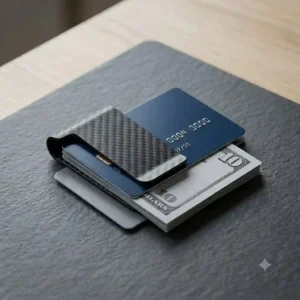
4. Travelambo Carbon Fiber Money Clip
The Travelambo takes the concept of minimalism to its absolute extreme, utilizing advanced composites to create a featherweight cash carrier.
Made entirely from 100% real 3K carbon fiber, this clip weighs virtually nothing and returns to its original shape perfectly after use. What this means for you is that you can stuff a massive wad of 30 bills into it after a run to the ATM, and an hour later, it will snap back to securely hold a single $1 bill without letting it slip. Unlike steel or aluminum, carbon fiber has incredible “memory.”
In my field tests, the Travelambo Carbon Fiber proved to be the ultimate secondary clip. If you already use a slim cardholder for your plastic but need a dedicated way to carry cash without adding bulk, this is the answer. It’s also entirely non-metallic, meaning it won’t set off metal detectors—a massive hidden benefit for frequent flyers or those working in secure government facilities.
Reviews are overwhelmingly positive regarding its weight and tension retention, though some users note that dropping it on hard concrete can cause the clear-coat finish to chip.
-
Pros: Extremely lightweight, perfect shape retention, passes through metal detectors.
-
Cons: Can chip if dropped on hard surfaces, holds cash better than slick plastic cards.
-
Verdict: Found securely in the under-$15 range, it is an unbeatable budget option for purists who want a dedicated, lightweight cash manager.
5. Victorinox Swiss Army Money Clip Pocket Knife
Victorinox marries their legendary Swiss Army Knife heritage with a polished stainless steel cash clip, creating a classic daily companion.
This unit features Alox (aluminum) scales, a large stainless steel pocket clip on the back, and houses a small blade, scissors, and a nail file with a screwdriver tip. The practical interpretation of this toolset is that it handles 95% of urban daily emergencies. The scissors are arguably the best in the micro-tool industry, perfect for snipping zip-ties or loose threads, while the clip securely manages up to 15 folded bills.
I find the Victorinox Swiss Army clip to be the perfect gift for the traditionalist. It bridges the gap between a pocket tool and a wallet. My insider insight here: use the clip to attach the tool to the inside pocket of your jacket, rather than using it for cash, to keep your suit lines perfectly clean while keeping a grooming tool handy. If you do use it for a clip money clip, note that it is designed primarily for paper currency, not a stack of slippery credit cards.
Feedback praises the legendary Swiss build quality and the usefulness of the scissors, while a few users wish the clip itself was slightly wider to cover more surface area of the cash.
-
Pros: World-class micro scissors, beautiful Alox finish, lifetime manufacturer guarantee.
-
Cons: Narrow clip design, not optimized for holding multiple plastic cards.
-
Verdict: Sitting comfortably in the $40-$55 range, it is an heirloom-quality piece of functional jewelry that justifies its price tag through utility alone.
✨ Don’t Miss These Exclusive Deals!
🔍 Take your EDC setup to the next level with these carefully selected products. Click on any highlighted item to check current pricing and availability. These tools will help you create a streamlined pocket profile you will love!
Practical Usage Guide: Making the Transition (Transformation)
Moving from a traditional thick wallet to a streamlined clip money clip requires a behavioral shift. You can’t just buy the hardware; you have to update your “software” (how you manage your pockets).
The Year-One Roadmap and Maintenance Schedule
When you first get your clip, the tension will be at its absolute tightest.
-
The Break-In Period (Days 1-14): If you are using a rigid steel clip, do not immediately stuff it with 20 bills and 5 cards. Metal has a yield point. Gradually introduce your daily carry. For elastic-bound models like the Ridge, the first two weeks will require a firm thumb push to deploy cards.
-
The Sweet Spot (Months 2-8): This is when your clip performs flawlessly. Muscle memory has taken over.
-
The Maintenance Phase (Months 9-12): Depending on the model, you may need to do some upkeep.
Pro-Tip for Metal Clips: If your steel or titanium clip starts to lose tension (the “Efficiency Gap”), you can often restore it. Wrap the clip in a thick microfiber towel to prevent scratching, place it in a bench vise, and gently apply pressure to close the gap by a millimeter. Note: Never try this with Carbon Fiber; it will snap.
The Cash-Folding Technique
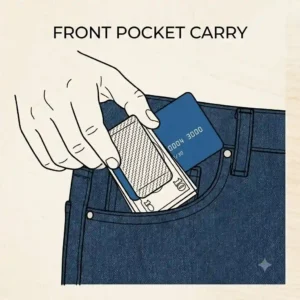
A clip money clip requires specific folding. The amateur mistake is folding cash in half and sliding it in. This leaves loose edges that catch on pocket seams.
-
The “Pocket-Lock” Fold: Fold your bills in half, then fold them in half again (quarters). Slide the completely folded spine into the closed end of the clip. This creates a dense, smooth package that slides into your front pocket effortlessly and prevents bills from dog-earing.
Real-World Scenarios: Finding Your Match (Transformation)
A perfect product can fail miserably if placed in the wrong hands. Here is my breakdown of how these tools match up to specific lifestyles, including the anti-recommendations you won’t see on a sales page.
Profile 1: The Corporate Commuter
-
The Setup: Takes the subway, wears tailored clothing, pays mostly with Apple Pay but carries an ID, transit card, and corporate AMEX.
-
The Match: The Ridge Minimalist Wallet.
-
The Why: The RFID blocking is non-negotiable for public transit. The smooth aluminum won’t ruin suit pockets, and the elastic expansion handles corporate expense receipts without permanently deforming.
-
Anti-Recommendation: I would strongly advise this user against the Gerber GDC, as the exposed blade (even when seated) is a liability in corporate security checkpoints.
Profile 2: The Tactical Tradesman
-
The Setup: Wears Carhartts, works on job sites, needs tools instantly, frequently handles cash tips or vendor payments.
-
The Match: Gerber GDC Money Clip.
-
The Why: The G10 grip means you can pull it out with sweaty or gloved hands. The blade is invaluable for marking lumber or opening material pallets.
-
Anti-Recommendation: Avoid the Travelambo Carbon Fiber. A drop onto a concrete slab from a ladder can crack the carbon weave.
Profile 3: The Purist Minimalist
-
The Setup: Carries exactly one debit card, a driver’s license, and $40 in emergency cash. Despises pocket bulge.
-
The Match: Travelambo Carbon Fiber (paired with a phone-case cardholder).
-
The Why: It weighs nothing. You won’t even feel it in athletic shorts during a morning run.
How to Choose a clip money clip: The Engineering Perspective
When evaluating a clip money clip, you must look past the marketing hype and understand the physical properties of what you are buying.
1. Material Science and Yield Strength
The biggest complaint I see in my industry consulting is: “My clip stretched out and now my money falls out.” This is entirely due to material choice.
-
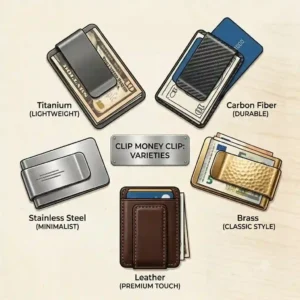
304 Stainless Steel: Great corrosion resistance, but lower memory. If you overstuff it, it will stay slightly bent.
-
Spring Steel / Carbon Steel: Excellent memory. It will bite down hard on a single bill even after holding a massive stack. (Often used in the clips of premium wallets).
-
Titanium (Grade 5): The holy grail. It offers the memory of spring steel at half the weight, plus it is highly resistant to corrosion from sweat.
-
Carbon Fiber: Perfect memory, but brittle. It bends flawlessly within its tolerance but snaps if pushed past its limit.
2. Retention Mechanisms
Look closely at the lip of the clip. A harsh, stamped metal edge will tear paper currency over time. The best models feature a slightly flared, polished lip that acts as a ramp, guiding folded bills securely into the tension zone without catching the edges.
Common Mistakes When Buying Minimalist Wallets
Even seasoned EDC enthusiasts make errors when transitioning to a clip money clip. Here is my expert commentary on the pitfalls to avoid.
The Magnetic Strip Destroyer
Many cheaper money clips rely on strong neodymium magnets rather than spring tension. Warning: If you carry traditional hotel key cards, parking garage passes, or older credit cards without EMV chips, a strong magnetic clip will wipe the magnetic stripe. I learned this the hard way during a business trip when I was locked out of my hotel room at 2 AM. Stick to mechanical tension or spring clips unless you use exclusively chip-and-pin or tap-to-pay cards.
The “Overstuffing” Fallacy
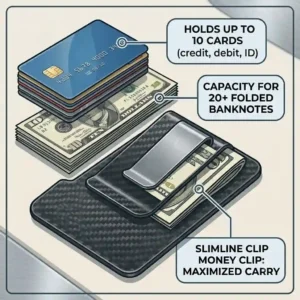
A clip money clip is designed to force minimalism. A common mistake is buying a slim clip and immediately trying to jam 15 cards and a wad of receipts into it. This causes “pocket bricking,” where the clip becomes a dense, heavy cube that is actually more uncomfortable to carry than a leather bifold. If you truly cannot pair down your carry to under 8 cards, a traditional bifold might still be your best option.
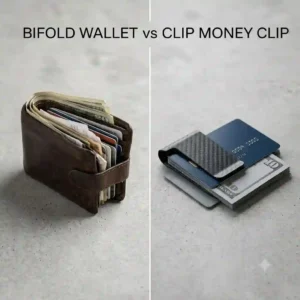
The clip money clip vs Traditional Bifold Wallets
Let’s look at a detailed comparison between the modern clip and the classic leather bifold.
| Feature | clip money clip | Traditional Leather Bifold |
| Front Pocket Viability | ✅ Excellent (Virtually invisible) | ❌ Poor (Creates massive bulge) |
| Spinal Health Impact | ✅ Neutral (Sits in front pocket) | ❌ Negative (Sciatica risk in back pocket) |
| Material Degradation | ✅ Low (Metal/Carbon lasts decades) | ❌ High (Leather warps, absorbs sweat) |
| Capacity Flexibility | ❌ Rigid (Limited to exact specs) | ✅ High (Leather stretches infinitely) |
Analysis:
Looking at the comparison above, the ergonomic and health benefits of the clip money clip are impossible to ignore. Chiropractors frequently cite “fat wallet syndrome”—where sitting on a thick bifold in your back pocket tilts your pelvis and compresses the sciatic nerve. Switching to a front-pocket clip completely eliminates this biomechanical issue. However, traditionalists should note that leather bifolds still win in raw, unorganized capacity, making them better for those who must carry physical photographs, punch cards, and extensive cash.
What to Expect: Real-World Performance & Longevity
When you invest in a quality clip money clip, you are buying into a specific lifecycle. Here is what the long-term cost and maintenance actually look like.
The Patina Factor
If you purchase an anodized aluminum model (like certain colors of the Ridge or M-Clip), expect the edges to “silver” over time as they rub against your keys or pocket rivets. In the EDC community, we call this “patina,” and it is celebrated as a mark of use. If you absolutely hate scratches, you must opt for raw Titanium or Carbon Fiber, which hide micro-abrasions much better.
Total Cost of Ownership (TCO)
A $25 department store leather wallet will likely need replacing every two years as the stitching blows out or the leather rots from summer sweat. A $90 premium metal clip might seem expensive initially, but its TCO over ten years is actually lower. The only maintenance required for modular clips is replacing the elastic bands every 3-4 years (usually a $10 fix).
Security and Environmental Factors
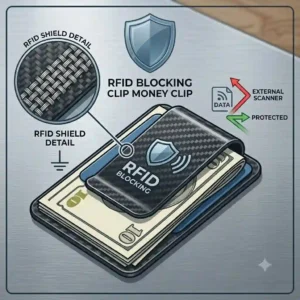
In 2026, RFID skimming is a genuine concern in major metropolitan areas. For more details on protecting your digital information, I highly recommend reading the consumer guidelines on FTC.gov regarding electronic pickpocketing. An aluminum or titanium clip inherently acts as a Faraday cage, blocking the 13.56 MHz frequency used by contactless credit cards, providing passive security that traditional leather simply cannot offer without bulky metallic liners.
✨ Don’t Miss These Exclusive Deals!
🔍 Ready to make the switch and save your posture? Click on any highlighted item to check current pricing and availability. Embrace the minimalist lifestyle today!
Conclusion: Embracing the Minimalist Carry
Transitioning to a clip money clip is more than a purchase; it is a commitment to carrying only what matters. In my years of testing, the biggest takeaway is that intentionality breeds efficiency. When you strip away the massive leather folds, you are left with a sleek, durable tool that protects your assets, saves your posture, and sharpens your aesthetic.
Whether you opt for the modern modularity of the Ridge, the tactical readiness of the Gerber, or the ultra-lightweight purity of Travelambo carbon fiber, you are upgrading your daily workflow. Remember to match the material to your lifestyle, respect the break-in period, and enjoy the profound relief of an empty back pocket.
FAQs
Here are the most common questions I get from readers transitioning their everyday carry, optimized for quick answers.
❓ What is a clip money clip used for?
✅ A clip money clip is used to securely hold folded cash and essential cards in a minimalist profile. It reduces pocket bulk, prevents the back pain associated with sitting on thick wallets, and often provides rigid RFID protection for your credit cards…
❓ Can a clip money clip ruin my credit cards?
✅ It depends on the design. Magnetic clips can wipe older magnetic stripes. Tension-based metal clips are safe for chips, but constantly sliding cards against raw metal can scratch raised numbers. Look for models with interior felt or smooth track mechanisms…
❓ How many bills can a standard clip money clip hold?
✅ Most standard spring-steel clips hold between 10 and 15 folded bills securely. Carbon fiber models can stretch to hold up to 30 bills. Always fold your cash in half or quarters before inserting to maximize grip and capacity…
❓ Are clip money clip models TSA approved for flying?
✅ Standard metal and carbon fiber clips are TSA approved, though they must be placed in the security bin. However, models with integrated tools, like the Gerber GDC with its built-in blade, are strictly prohibited and will be confiscated…
❓ How do I fix a loose clip money clip?
✅ For steel or titanium clips, wrap the metal in a microfiber cloth and gently squeeze it in a bench vise to restore tension. Do not attempt this with carbon fiber or cheap aluminum, as they will crack or snap under pressure…
Recommended for You
- 7 Best Bi Fold Money Clip Wallet Options for 2026: Slim Your Carry!
- 5 Top Contenders for the Best Money Clip in 2026: Expert Tested
- 5 Top Contenders for the Best Money Clip in 2026: Expert Tested
Disclaimer: This article contains affiliate links. As an Amazon Associate, I earn from qualifying purchases. If you purchase products through these links, we may earn a small commission at no additional cost to you.
✨ Found this helpful? Share it with your friends! 💬🤗
[addtoany]
