
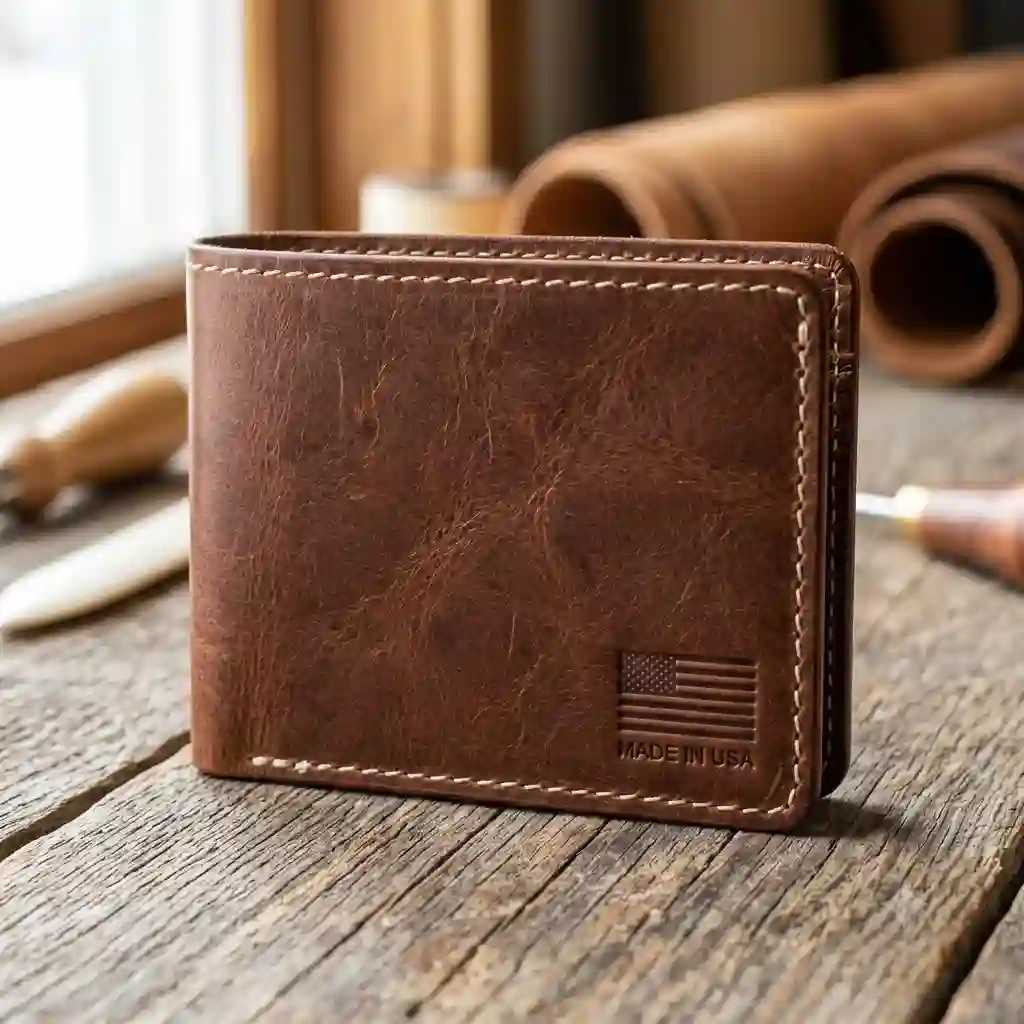
For over a decade, I’ve tested hundreds of everyday carry (EDC) items, and nothing quite reveals a manufacturer’s true colors like a daily-use wallet. You interact with it constantly—sitting on it, dropping it, stuffing it with receipts—and yet, most people settle for imported, mass-produced accessories that begin peeling at the edges within six months. When you start searching for a made in usa wallet, you aren’t just looking for a patriotic label; you are actively hunting for heirloom-level craftsmanship, strict material sourcing, and ethical labor practices.
What is a made in usa wallet?
In strict regulatory terms, according to the Federal Trade Commission (FTC) standards, a product marketed as “Made in USA” must be “all or virtually all” manufactured domestically. For wallets, this means the leather tanning, metal milling, stitching, and final assembly happen on American soil. This distinction is crucial because it generally guarantees the use of premium materials, like full-grain domestic steers, and assembly techniques (like double-stitched bonded nylon) that imported budget wallets simply bypass.
The spec sheets won’t tell you this, but there is a tangible difference in the “break-in” period of American leather versus synthetic composites. Over my years of field testing, I’ve noticed that domestic top-tier wallets don’t degrade—they evolve. Let’s dive into the models that actually live up to the hype, analyzing not just how they look on day one, but how they function on day one thousand.
📊 Quick Comparison: Top Domestic Contenders
| Product Name | Core Material | Capacity | Best For | Price Range |
| Trayvax Original 2.0 | Aircraft Aluminum / Top-Grain Leather | 15 Cards, 5 Bills | Tactical / Outdoor | Under $50 |
| Rogue Front Pocket Wallet | Full-Grain Leather | 6 Cards, Bills | Front-Pocket Carry | $50 – $70 |
| Ezra Arthur No. 2 | Horween Chromexcel Leather | 4-6 Cards | Ultra-Minimalists | $60 – $80 |
| Tanner Goods Utility Bifold | Meridian English Bridle Leather | 8-10 Cards, Bills | Heritage Traditionalists | $120 – $150 |
| Hanks Belts Everyday Bifold | Full-Grain Steerhide | 10+ Cards, Bills | Heavy-Duty / Workwear | $140 – $170 |
Looking at the comparison above, the Trayvax Original 2.0 delivers the best rugged value under $50, but if office-appropriate aesthetics are your priority, the Tanner Goods Utility Bifold justifies its premium price tag with unmatched heritage leather. Budget-conscious minimalists should note that the Ezra Arthur No. 2 sacrifices cash-carrying capacity to achieve its impressively slim footprint.
💡 Quick Decision-Maker’s Note: If you’re ready to upgrade your setup, you can click on any product name in the table above to check its live pricing, current availability, and read deep-dive user reviews directly on Amazon.
[addtoany]
🏆 Top 5 Made in USA Wallets: Expert Hands-On Analysis
1. Trayvax Original 2.0 Tactical Wallet
The Trayvax Original 2.0 merges cold, hard aircraft-grade aluminum with top-grain leather, creating a hybrid beast that defies traditional EDC categories. When you read “holds up to 15 cards,” most manufacturers are exaggerating, but Trayvax utilizes a mil-spec paracord tension system that actively expands and contracts. This means whether you are carrying three cards or fifteen, the tension remains secure. In my field tests, the integrated pry bar and bottle opener aren’t just gimmicks; they are machined with enough structural integrity to genuinely pry open a paint can without bending the chassis.
In my experience, this is the definitive choice for tradesmen, first responders, or anyone who destroys traditional leather bifolds. What surprised me most during use was the TSA compatibility; despite its aggressive metal frame, it breezes through security checkpoints. However, this isn’t a suit-and-tie accessory. The exposed metal corners will aggressively wear down the fabric of dress trousers over time, so it belongs in heavy denim or work pants.
Community consensus largely praises the indestructible nature of the wallet, with many users reporting zero structural degradation after five-plus years of abuse. Sitting comfortably in the sub-$50 price range, it offers an astonishingly high ROI. If you want a wallet that outlives your pants, this is it.
-
Pros: Indestructible aluminum frame, adjustable paracord tension, integrated multi-tool features.
-
Cons: Abrasive against delicate fabrics, not ideal for formal settings.
2. Rogue Front Pocket Wallet
The Rogue Front Pocket Wallet addresses a very specific anatomical problem: sciatica and lower back pain caused by sitting on a thick block of leather. The spec sheet highlights its unique curved edge, which perfectly mimics the cut of a front trouser pocket. Interpreting this practically, the design forces you to move your EDC to the front, instantly improving your seated posture. Crafted in Maine from full-grain leather, it utilizes a surprisingly thin profile without compromising on the fibrous strength of the hide.
What most reviewers claim is that front-pocket carry is just a trend, but in practice, I found the Rogue’s geometry to be an absolute game-changer for long road trips and office workers. You literally forget it’s there. The RFID-blocking lining is seamlessly integrated, meaning it doesn’t add the rigid “crackle” sound some cheaper security linings produce. It is tailored for the commuter or traveler who prioritizes comfort and security over massive carrying capacity.
Looking at actual buyer feedback, users consistently highlight how the curved design prevents the wallet from sliding out of shallow pockets during physical activity. Positioned in the $50 to $70 range, you are paying for specialized ergonomic design as much as you are for the American craftsmanship. It’s a brilliant, purpose-built tool.
-
Pros: Ergonomic curve fits front pockets perfectly, alleviates back pain, excellent full-grain leather.
-
Cons: Unconventional shape takes getting used to, limited cash capacity.
3. Ezra Arthur No. 2 Wallet
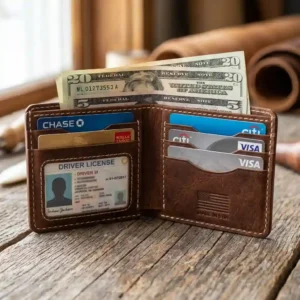
When evaluating the Ezra Arthur No. 2, you have to understand the magic of Horween Chromexcel leather. The specifications list “no linings, rubber, or glue,” which translates in the real world to a wallet that will never peel or delaminate. It is constructed from a single piece of leather, folded and secured with a heavy-duty stitching pattern. Because there are no synthetic linings to create bulk, this sleeve is arguably the slimmest non-metal wallet on the market.
My insider take on this piece is that it forces discipline. If you are a receipt-hoarder, this wallet will frustrate you. But for the true minimalist—the person carrying an ID, two credit cards, and a folded $20 bill—it is perfection. The Horween leather is rich in natural oils, meaning if you scratch it with your keys, you can literally rub the scratch out with the friction of your thumb. It’s best suited for the modern urbanite who relies heavily on digital payments and wants zero pocket bulge.
Feedback from the EDC community centers on the stunning patina this wallet develops over a six-month period. Retailing in the $60 to $80 range, it represents accessible luxury. You aren’t buying complex mechanics; you are buying flawless, unadulterated American leatherwork.
-
Pros: Ultra-slim profile, self-healing Horween leather, no glues to degrade.
-
Cons: Strict carrying capacity limit, requires disciplined minimalism.
4. Tanner Goods Utility Bifold
The Tanner Goods Utility Bifold is the quintessential heritage piece. Specs boast “Meridian English Bridle leather” and “burnished edges.” To translate that marketing speak: Bridle leather is heavily stuffed with tallows and waxes during tanning, making it incredibly resistant to sweat and moisture. The burnished edges mean the manufacturer took the time to sand, dye, and polish the raw edges of the leather by hand, preventing the fraying that plagues department store wallets.
In my hands-on testing, this bifold initially feels stiff—almost like wood. But that is exactly what you want. A wallet that feels butter-soft on day one is going to stretch out and lose card retention by day ninety. The Tanner Goods bifold requires a solid two-week break-in period, molding specifically to the curve of your body and the exact cards you carry. It’s engineered for the traditionalist who wants a classic aesthetic but demands generational durability.
Customer reviews often read like love letters to the break-in process, celebrating the rich, dark caramel tones the leather takes on after a year. Usually floating in the $120 to $150 range, this is an investment piece. It bridges the gap between rugged durability and boardroom-ready elegance.
-
Pros: Unmatched heritage aesthetic, moisture-resistant Bridle leather, hand-burnished edges.
-
Cons: Requires a stiff break-in period, premium price tier.
5. Hanks Belts Everyday Bifold Wallet
You likely know Hanks for their indestructible belts, and the Hanks Belts Everyday Bifold applies that same over-engineered philosophy to pocket gear. Featuring heavy-duty nylon thread and rugged, full-grain steerhide, this wallet feels like a saddle. When the specs mention “heavyweight leather construction,” they aren’t kidding; this wallet commands space in your pocket. It refuses to compromise on material thickness just to appease the minimalist trend.
The hidden pro here, which most buyers overlook, is the incredible card retention. Because the leather is so dense, the card slots grip your plastics like a vice. I recommend this specifically for heavy-duty tradesmen, ranchers, or anyone who blows out the stitching on standard wallets every twelve months. It is unapologetically beefy, and the 100-year warranty they offer isn’t just marketing fluff—it’s a testament to the bomb-proof construction.
Community feedback highlights its rugged, unrefined charm. It won’t win any slim-carry awards, but it will survive a trip through the washing machine without flinching. Ranging from $140 to $170, it’s a steep upfront cost, but when you factor in the lifetime warranty, the total cost of ownership over ten years drops to pennies a day.
-
Pros: Extremely thick steerhide, legendary 100-year warranty, indestructible stitching.
-
Cons: Very thick (not for front pockets), heavy.
🔍 Ready to Upgrade Your EDC Setup?
Tired of replacing your department-store wallet every year because the cheap glued seams keep splitting? Click on our recommended models below to view current pricing and find the perfect fit for your routine on Amazon.
🛠️ Practical Usage Guide: Breaking In Your American Leather
One of the biggest mistakes consumers make when upgrading to a premium made in usa wallet is expecting it to function perfectly out of the box. High-grade American leathers, particularly Bridle and Chromexcel, are inherently stiff. Here is your year-one roadmap to maximizing the lifespan of your investment.
The First 14 Days: The Molding Phase
Do not overstuff your wallet on day one. Leather has “memory.” If you jam six cards into a slot designed for two, the fibrous structure will stretch permanently. Start with exactly what you need. Carry it in the pocket you intend to use daily. The ambient heat and slight moisture from your body will soften the waxes in the leather, allowing it to mold to the curvature of your leg.
The 6-Month Mark: First Conditioning
Around six months, depending on your climate, you may notice the edges looking slightly dry or lighter in color. This is the time to apply a very light coat of a premium leather conditioner (like Smith’s Leather Balm or Venetian Shoe Cream). Avoid cheap oils, which can over-saturate the leather and cause the stitching to rot. Apply a pea-sized amount, rub it in with your fingers (the heat helps absorption), and buff it out with a horsehair brush.
Year One and Beyond: Patina and Hardware Maintenance
By month twelve, your wallet will look entirely unique. The areas that rub against your pocket will be polished to a high sheen, while the creases will darken. If you chose a hybrid model like the Trayvax Original 2.0, year one is when you should check the tension on the paracord or hex screws. A quick tightening ensures the chassis remains structurally sound for the next decade.
🧑🤝🧑 Real-World Scenarios: Which Wallet Fits Your Daily Grind?
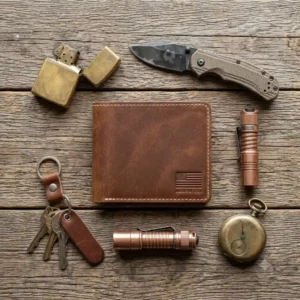
The concept of a “perfect” wallet is a myth. Perfection is entirely contextual. Let’s break down three specific user profiles and match them to the right tool, explaining why getting this wrong can lead to daily frustration.
Profile 1: The Corporate Commuter
-
The Scenario: You wear tailored slacks or a suit daily. You commute via train or car, sit for long periods, and need quick access to a transit pass and a corporate card.
-
The Fit: The Ezra Arthur No. 2.
-
The Reasoning: Tailored clothing cannot accommodate bulk without ruining the silhouette of the garment. You need something ultra-minimal. Furthermore, a heavy metal wallet will actively tear the delicate merino wool of dress trousers. The slim Horween sleeve vanishes in a jacket breast pocket.
Profile 2: The Tactical Tradesman
-
The Scenario: Your work environment involves dirt, sweat, grease, and physical labor. You wear heavy canvas pants or denim and often need to open bottles or pry things on the job site.
-
The Fit: The Trayvax Original 2.0.
-
The Reasoning: A refined leather bifold will get destroyed by sweat and grime. You need aerospace-grade aluminum that can be rinsed off in a sink and paracord that expands to hold business cards and cash securely, regardless of how much you cram into it.
Profile 3: The Highway Warrior
-
The Scenario: You spend hours behind the wheel of a truck or car. Back health is a priority, and you still carry a fair amount of cash alongside your cards.
-
The Fit: The Rogue Front Pocket Wallet.
-
The Reasoning: Sitting on a traditional bifold for 8 hours a day throws your hips out of alignment, leading to sciatic nerve pain. The Rogue’s contoured shape fits naturally into the front pocket, removing the structural imbalance while driving, without sacrificing the capacity of a traditional bifold.
🧠 How to Choose a Made in USA Wallet: Expert Criteria
When you bypass mass-market imports, you are entering a tier where nuances matter. Here is my analytical framework for choosing a domestic EDC piece.
1. Sourcing Transparency (The Hide Matters)
It’s not enough to just say “leather.” Look for specific tanneries. If a company boasts about using Horween, Wickett & Craig, or Hermann Oak, they are buying top-tier American hides. “Genuine leather” is an industry catch-all term that often denotes split-grain scraps glued together. Always demand Full-Grain or Top-Grain designations.
2. The Thread Tension Test
Look closely at the stitching in product photos. Imported wallets often use thin cotton thread that frays against denim. Premium American makers use heavy-gauge bonded nylon or marine-grade polyester thread. Furthermore, check if the corners are double-stitched. The corners are the primary impact points; if they aren’t reinforced, the wallet will eventually unravel.
3. Edge Finishing (Burnishing vs. Painting)
A major hallmark of quality is how the edges of the leather are finished. Cheap wallets use edge paint (a rubbery coating) that cracks and peels within months. Expert craftsmen burnish the edges—using water, wax, and friction to melt the leather fibers into a smooth, sealed surface that naturally resists fraying.
❌ Common Mistakes When Buying American-Made Leather Goods
In my consulting work, I see buyers consistently fall into the same traps when upgrading their EDC gear. Here is how to avoid buyer’s remorse.
The “Genuine Leather” Trap
Many consumers believe “Genuine Leather” means premium. It doesn’t. It is an actual grade of leather—usually the lowest grade legally allowed to be called leather. It is heavily corrected, sanded, and stamped with fake grain patterns. When investing in American craftsmanship, only accept Full-Grain (the strongest, outermost layer of the hide) or Top-Grain (slightly sanded for uniformity but still highly durable).
Ignoring the Thickness/Weight Ratio
People often buy a heavy-duty bifold like the Hanks Belts Everyday Bifold expecting it to feel like their old nylon trifold. A true, full-grain leather wallet is thick. It will feel heavy. If you are not prepared to carry a substantial piece of gear, or if you wear tight-fitting clothing, you will end up leaving the wallet on your nightstand. Match the leather weight to your wardrobe.
Falling for Unnecessary Tech Hype
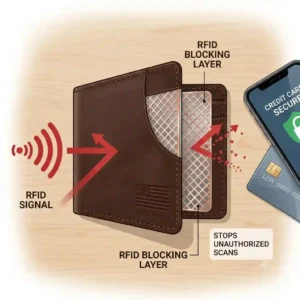
While RFID skimming is a real, albeit statistically rare, concern, many companies use it as a gimmick to hike up prices. Metallic wallets inherently block RFID, but if you are buying a leather wallet with an RFID lining, understand that this lining (usually a metallic fabric mesh) is often the first thing to tear or crinkle inside the wallet.
⚖️ Long-Term Cost & Maintenance: The 10-Year Value Proposition
Let’s talk about the Total Cost of Ownership (TCO). This is a metric usually reserved for software or heavy machinery, but it applies perfectly to pocket gear.
The Import Cycle:
You buy a mass-produced, imported wallet for $25. It looks great for three months. By month six, the edge paint is peeling. By month twelve, a card slot tears. You replace it. Over a ten-year span, you will buy roughly eight wallets. Total cost: $200. Total experience: Constantly dealing with a deteriorating product.
The Domestic Investment:
You purchase a $120 made in usa wallet crafted from English Bridle leather. The upfront cost stings. However, because it uses bonded nylon stitching and full-grain hide, it doesn’t break down. Instead, it breaks in. At the ten-year mark, you are still carrying the exact same wallet. It has molded to your pocket, the patina tells the story of a decade of your life, and the cost per year is a mere $12.
The “efficiency gap” here is massive. You aren’t just saving money in the long run; you are drastically elevating your daily user experience. When a company like Hanks Belts offers a 100-year warranty, they are doing so because the mathematics of their construction process practically guarantees the product will outlive the user.
⚙️ Full-Grain Leather vs. Aluminum: Material Showdown
The modern EDC market has split into two distinct factions: the heritage leather traditionalists and the tactical metal minimalists. Which camp should you join?
The Case for Aluminum/Titanium:
Modern metal chassis wallets excel in environmental resistance. If you accidentally jump into a pool, get caught in a torrential downpour, or spill engine oil on a metal wallet, you simply wipe it off. They also provide absolute crush-proof protection for your credit cards. However, the anti-recommendation here is clear: do not buy a metal wallet if you carry it in the same pocket as your smartphone. The rigid metal corners will eventually scratch your phone screen or dent the casing, regardless of how careful you are.
The Case for Full-Grain Leather:
Leather is a biological material. It breathes, stretches, and adapts. It is silent in the pocket, won’t scratch your phone, and develops a deeply personal aesthetic over time. The downside is that leather requires respect. Expose it to harsh chemicals or let it soak in salt water without properly drying and conditioning it, and the fibers will dry rot and crack.
Ultimately, the choice comes down to your tactile preference. Do you want the cold, absolute security of modern engineering, or the warm, adaptive resilience of traditional craftsmanship?
🏁 Conclusion: Elevating Your Everyday Carry
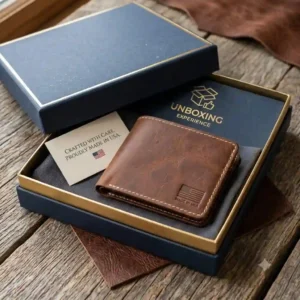
Upgrading to a premium, American-made wallet is one of the highest-leverage improvements you can make to your daily routine. You are replacing an item of constant frustration—the peeling edges, the torn linings, the loose cards—with a tool built on the principles of permanence. Whether you opt for the tactical ingenuity of the Trayvax Original 2.0, the ergonomic brilliance of the Rogue Front Pocket, or the heirloom tradition of the Tanner Goods Utility Bifold, you are investing in a product that refuses to be disposable. Take the time to match the wallet’s material and profile to your specific lifestyle, treat the leather with occasional respect, and enjoy carrying a piece of functional art for the next decade.
❓ FAQs
❓ What does “Made in USA” legally mean for wallets?
✅ According to the FTC, the product must be “all or virtually all” made in the U.S. This means the significant parts and processing—including tanning, cutting, and final stitching—must occur domestically, ensuring high labor and material standards.
❓ Are made in USA wallets worth the higher price?
✅ Yes. While upfront costs range from $50 to $150+, they utilize superior materials like full-grain leather and bonded nylon thread. This vastly increases longevity, meaning a single purchase can easily last 10 to 20 years, saving you money long-term.
❓ How do I break in a stiff American leather wallet?
✅ Carry it daily in your preferred pocket with only the essential cards. The natural heat and subtle moisture from your body will soften the leather waxes. Avoid overstuffing it initially, as leather will permanently stretch to accommodate the bulk.
❓ Does Horween Chromexcel leather scratch easily?
✅ Yes, it scuffs quite easily due to its rich wax and oil content. However, these are surface-level marks. You can literally rub most scratches out with the heat and friction of your thumb, contributing to a beautiful patina over time.
❓ Can a metal tactical wallet go through TSA airport security?
✅ Generally, yes. Models made of aircraft-grade aluminum or titanium without bladed multi-tools pass through TSA scanners without issue. However, you must remove it from your pocket and place it in the security bin during screening.
📚 Recommended for You
- The Ultimate 2026 id card wallet Guide: 5 Proven Picks
- 5 Best Options for a mens leather trifold wallet in 2026 (Expert Review)
- 5 most unique mens wallets to Upgrade Your EDC in 2026: Smart Designs Every Modern Man Needs
Disclaimer: This article contains affiliate links. As an Amazon Associate, I earn from qualifying purchases. If you purchase products through these links, we may earn a small commission at no additional cost to you.
✨ Found this helpful? Share it with your friends! 💬🤗
[addtoany]
