
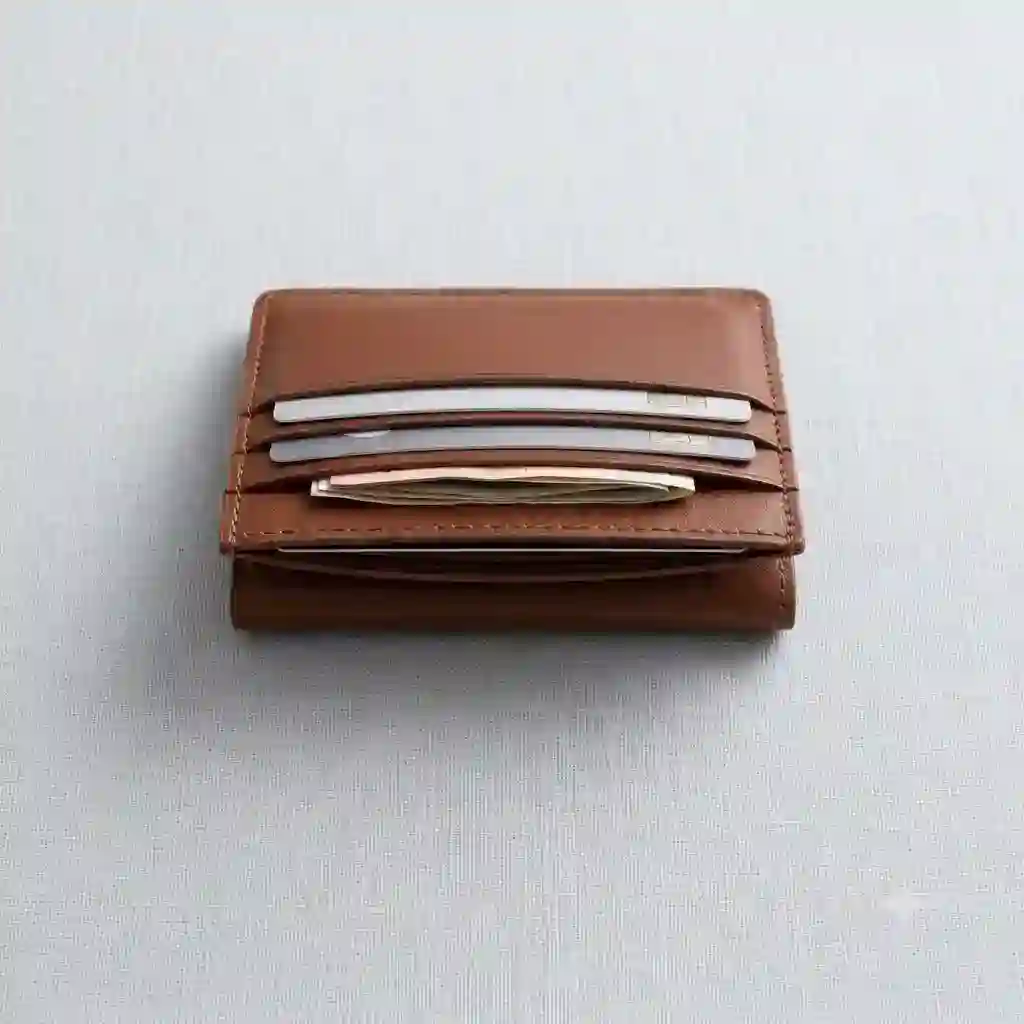
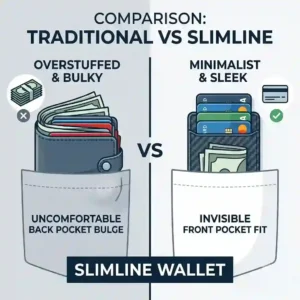
For over a decade as an everyday carry (EDC) consultant, I’ve watched men pull out thick, overstuffed leather bricks at checkout counters. You know the type: bulging with expired gym cards, crumpled receipts from 2024, and enough loose change to anchor a small boat. The transition to a slimline wallet isn’t just about aesthetics; it’s a necessary evolution for your posture, your pocket space, and your daily efficiency.
What is a slimline wallet? Simply put, it is a modernized card-carrier engineered to minimize physical footprint while maximizing utility. Typically constructed from advanced materials like titanium, carbon fiber, or precision-cut top-grain leather, a true slimline wallet forces you to carry only what you need—usually 4 to 10 essential cards and a few folded bills—while completely eliminating the bulky, multi-layered fabric folds of a traditional bifold.
In my field tests over the last several years, the most common objection I hear is, “But I need all my cards!” The reality? You don’t. The migration to digital wallets and mobile payment infrastructures in 2026 has made physical cards a secondary backup rather than a primary tool. Evaluating the right slimline wallet means looking beyond the slick marketing photos. You have to consider elastic retention degradation, the tactical feel of card ejection mechanisms, and how different materials react to the moisture and friction of your front pocket over a thousand miles of walking. Let’s dive into what actually works in the real world.
Quick Front-Pocket Contenders: Data & Spec Analysis
To give you an immediate layout of the landscape, I’ve broken down the top performers currently dominating the minimalist market. These aren’t just random picks; these are the models that have survived my rigorous long-term carry tests.
| Model Name | Primary Material | Ideal Capacity | Mechanism | Best For | Price Tier |
| The Ridge Titanium | Grade 2 Titanium | 1-12 Cards | Elastic Tension | Maximum Durability | Premium |
| Ekster Parliament | Premium Leather | 4-6 Cards | Push-Button | Smart Tracking | Mid-High |
| Bellroy Slim Sleeve | Eco-Tanned Leather | 4-8 Cards | Pull-Tab | Traditional Feel | Mid-Range |
| Secrid Slimwallet | Aluminum/Leather | 4-6 Cards | Stepped Ejector | Quick Access | Mid-High |
| Trayvax Original 2.0 | Aircraft Aluminum | 3-15 Cards | Paracord Tension | Rugged Outdoors | Budget |
Looking at the comparison above, the Bellroy delivers the best value in the mid-range tier for those who can’t let go of the leather feel, but if uncompromising durability is your priority, The Ridge’s titanium plates justify the premium price tag. Budget buyers should note that while the Trayvax is highly affordable and tough, it sacrifices the sleek, boardroom-ready aesthetic for a more tactical, aggressive footprint.
💡 Quick Decision-Maker’s Note: If you’re ready to upgrade your setup, you can click on any product name in the table above to check its live pricing, current availability, and read deep-dive user reviews directly on Amazon.
[addtoany]
Top 5 Slimline Wallets — Expert Field Analysis
When evaluating these models, I ignore the glossy packaging. I care about how the stitching holds up after six months of denim friction and whether the card mechanisms jam when a stray piece of pocket lint gets inside. Here is my unfiltered breakdown of the industry leaders.
1. The Ridge Titanium Wallet
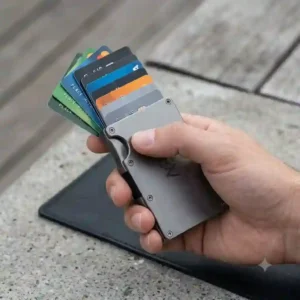
The spec sheet boasts “Grade 2 Titanium” and “1-12 card capacity,” but what does that actually translate to? In practice, titanium isn’t just about sounding cool; it means this slimline wallet acts as a virtually indestructible Faraday cage for your cards. While the company claims it holds 12 cards comfortably, I found that the sweet spot is around 6 to 8. Push it to 12, and the elastic tension becomes so tight that fanning out your cards at the checkout feels like prying open a clam.
In my experience, this is the ultimate utilitarian’s dream. It appeals directly to the “buy it for life” crowd. What most buyers overlook is the learning curve. For the first week, pushing cards out with your thumb through the C-notch will feel awkward. You’ll fumble. But by day ten, muscle memory kicks in, and it becomes a lightning-fast maneuver. It’s incredibly dense and satisfying to hold, though I highly recommend avoiding putting it in the same pocket as your smartphone, as the metal edges will absolutely scratch your screen over time.
Community feedback echoes my sentiments: users rave about the sheer durability and the minimalist footprint, but some note the price point is steep for what is essentially two pieces of metal and an elastic band. However, looking at the $100-$140 range, you are paying for precision engineering and a lifetime warranty. It’s an investment piece.
-
Pros: Indestructible build, expanding capacity, highly secure.
-
Cons: Steep learning curve, can scratch other pocket items.
2. Ekster Parliament Wallet
The Ekster Parliament merges traditional leather aesthetics with modern tech. The defining spec here is the “patented card ejection mechanism” housed inside premium, environmentally certified leather. Rather than digging with your fingers, a push of the bottom trigger cascades your cards into a perfectly spaced tier. What the listing won’t tell you is how addictive this trigger is—you will find yourself fidgeting with it endlessly. The mechanism holds up to 6 non-embossed cards, but if you have old-school raised-number credit cards, that capacity drops to 4 before the system starts jamming.
I specifically recommend this slimline wallet for the tech-forward commuter. The hidden pro here is the compatibility with Ekster’s solar-powered tracker card. If you are prone to misplacing your gear, sliding a tracker into the back pocket of the Parliament is a lifesaver. However, the leather, while premium, is quite soft. In my field tests, it began showing a distinct patina and micro-scratches within just three weeks of sharing a pocket with my car keys.
Priced in the $70-$90 range, user reviews consistently praise the “wow factor” of the pop-up mechanism at cash registers. The most common real-world complaint is that the secondary leather flap (meant for cash and extra cards) can become bulky if overstuffed, defeating the minimalist purpose entirely.
-
Pros: Brilliant quick-access trigger, tracker compatible, elegant look.
-
Cons: Moving parts can theoretically fail, leather scratches easily.
3. Bellroy Slim Sleeve
Bellroy’s claim to fame is its “nude approach” to design, utilizing eco-tanned leather and completely eliminating excess folds. The standout feature is the pull-tab access for infrequently used cards. Amazon listings describe it as a “minimalist bifold,” but in real-world application, it forces you to prioritize. The quick-access slots are perfect for your primary debit card and ID, while the pull-tab compartment stashes your insurance and corporate cards out of the way.
This model is an excellent bridge for someone terrified of giving up their traditional bifold. The spec sheet says 4-8 cards, but in my testing, sticking to exactly 6 cards keeps the profile razor-thin while allowing the leather to mold beautifully over time. What surprised me most was the durability of the pull-tab ribbon; I expected it to fray after a year of pulling, but it remained firmly anchored.
Sitting in the $70-$85 range, the community consensus is incredibly positive, often highlighting it as the perfect gateway slimline wallet. The primary downside reported by users—and verified in my own experience—is that folded cash handling is clumsy. You have to fold bills into thirds to get them to fit properly, making it frustrating if you carry a lot of physical currency.
-
Pros: Zero learning curve, beautiful patina over time, clever pull-tab.
-
Cons: Frustrating cash storage, no active RFID protection.
4. Secrid Slimwallet
Originating from the Netherlands, the Secrid Slimwallet utilizes an internal aluminum Cardprotector wrapped in a leather jacket. The specs emphasize “storing up to 6 flat cards or 4 embossed cards.” The translation here is vital: the internal aluminum housing is rigid and unforgiving. If you try to force a 7th card, the step-ejector mechanism will literally lock up to protect itself. When used properly, the stepped cascade of cards is smoother and quieter than the Ekster.
For the modern professional, this is a masterclass in hybrid design. You get the unbendable, RFID-blocking security of an aluminum core with the warmth and classic grip of leather. The hidden genius is the open back of the aluminum core, allowing dirt and pocket lint to fall straight through rather than accumulating and breaking the mechanism.
Usually found in the $85-$100 range, customer feedback highly praises the flawless ejection system and the massive variety of leather finishes available. The one real-world limitation I’ve found is that the leather jacket has no closure mechanism (no snap or magnet). If you drop the wallet, the jacket will flap open, though your primary cards will remain securely locked in the aluminum core.
-
Pros: Flawless mechanical cascade, easy maintenance, premium feel.
-
Cons: No closure on the leather jacket, strictly limited card capacity.
5. Trayvax Original 2.0
The Trayvax Original 2.0 reads like a piece of military hardware: “Aircraft-grade aluminum, stainless steel backplate, and MIL-SPEC paracord.” What this means for your daily routine is that this slimline wallet can survive being run over by a truck. The paracord isn’t just for aesthetics; it provides the tension system that holds your cards in place, and you can adjust the knot to accommodate anywhere from 3 to 15 cards.
If you are a contractor, an outdoorsman, or someone who destroys standard accessories within months, this is for you. In my field tests, the built-in bottle opener and pry bar features actually came in handy during camping trips. However, the open-frame design means your top card is entirely exposed to the elements and friction. I recommend placing a less-important card (like a grocery store loyalty card) at the front to act as a shield for your primary credit cards.
Sitting securely in the $30-$45 range, the value proposition is unbeatable. User reviews love the ruggedness and the fact that it’s made in the USA, but universally agree that it is not a “dress wallet.” Pulling this out at a Michelin-star restaurant might raise a few eyebrows, but pulling it out on a job site feels right at home.
-
Pros: Indestructible, highly affordable, integrated utility tools.
-
Cons: Aggressive aesthetic, exposed front card, TSA occasionally scrutinizes it.
🔍 Ready to Upgrade Your EDC Setup?
You’ve seen the specs and you know what you carry on a daily basis; now it’s time to streamline your pocket, eliminate unnecessary back pain, and upgrade your daily efficiency. Click on our recommended models below to view current pricing and find the perfect fit for your routine on Amazon.
The 30-Day Transition Guide: Downsizing Without Panic
Switching to a slimline wallet isn’t just a physical change; it’s a psychological one. Many users experience a brief period of “card anxiety” when they leave the house without their 20-card arsenal. Here is the practical roadmap for surviving your first month without reverting to your old bulky bifold.
Week 1: The Ruthless Audit
Dump your current wallet on a table. Separate the contents into three piles: Daily Use (ID, main credit card, debit card), Occasional Use (insurance, corporate card), and Digital Candidates. Take a half-hour to load all your grocery store loyalty cards, gym passes, and secondary credit cards into your smartphone’s digital wallet. Throw away the receipts. Put the Daily and Occasional cards into your new minimalist setup.
Week 2: The Pocket Reassignment
A common mistake during the first 14 days is putting the new, thinner wallet into the back pocket out of habit. A small metal or leather sleeve in a loose back pocket will shift around and has a high risk of falling out when you sit on a soft couch. Force yourself to use your front left or right pocket. It will feel strange at first, but it dramatically reduces the risk of pickpocketing and eliminates back-pain caused by sitting on a thick lump.
Month 1 Maintenance:
By day 30, the novelty wears off and routine sets in. If you chose a leather model, this is the time to apply a micro-dab of leather conditioner to prevent drying out from pocket friction. If you chose an elastic-bound metal model, check the tension. You should now be completely comfortable navigating the world with a fraction of the bulk you used to carry.
Commuter vs. Traveler: A Lifestyle Case Study
No single accessory works universally for every demographic. To illustrate this, let’s look at two drastically different user profiles and why the “perfect” wallet for one is a nightmare for the other.
Profile 1: The Urban Tech Commuter (e.g., Mark, 32)
Mark rides the subway, taps his card at coffee shops, and works in a digitized office. He handles cash maybe twice a year. For Mark, a mechanical pop-up like the Ekster Parliament is the ultimate tool. He can trigger his subway pass with one hand while holding his coffee in the other. The priority here is speed, RFID security against dense crowds, and smart-tracking capabilities in case he leaves it on a train. A traditional pull-tab leather model would slow him down.
Profile 2: The International Frequent Flyer (e.g., Sarah, 45)
Sarah spends half her week in airports, crossing borders, and dealing with various international currencies, which often require physical cash handling and multiple hotel key cards. For her, a rigid aluminum box like The Ridge is actually a bad fit. Why? Because slipping folded foreign currency under a tight metal money clip is frustrating, and rigid metal blocks trigger TSA anxiety. Sarah needs the Bellroy Slim Sleeve. It flexes, it handles cash better, it doesn’t trigger metal detectors if accidentally left in a pocket, and it looks professional in global business meetings.
Understanding your own specific friction points will guide you far better than any generic “Top 10” list.
Common Mistakes When Buying a Minimalist Wallet
As a consultant, I’ve seen countless buyers make the same errors when transitioning to smaller everyday carry items. The biggest trap is treating a slimline wallet like a clown car.
Mistake 1: Buying for Maximum Capacity
Many buyers look at a model that says “holds 1-15 cards” and immediately aim to stuff 15 cards into it. If you are buying a minimalist tool just to stretch it to its absolute physical limits, you are missing the point. The mechanisms will wear out faster, the elastic will stretch permanently, and the wallet will become bulky. Buy a wallet rated for 10 cards, and only put 6 in it.
Mistake 2: Ignoring the “Cash Surcharge”
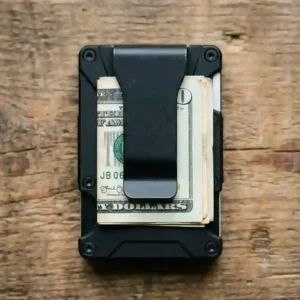
Minimalist designs hate paper money. If a manufacturer claims their product handles cash effortlessly, look closely at how. Do you have to fold the bills twice? Three times? Pushing a wad of trifolded bills under a tight money clip creates an awkward lump that ruins the sleek profile. If you are a bartender or someone who relies heavily on cash tips, heavily structured aluminum cardholders will frustrate you daily.
Mistake 3: Fearing the Front Pocket
The entire architectural philosophy of these items is centered around front-pocket carry. A health study by the Mayo Clinic has shown that sitting on a thick back-pocket wallet causes pelvic asymmetry, leading directly to sciatica and lower back pain. Yet, many buyers still toss their new, rigid titanium rectangle into their back pocket, only to find that sitting on a solid block of metal is incredibly painful. Move it to the front.
Metal vs. Leather: The Great Material Debate
When choosing your daily companion, the material dictates the entire experience. It affects weight, patina, maintenance, and interaction with other objects in your vicinity.
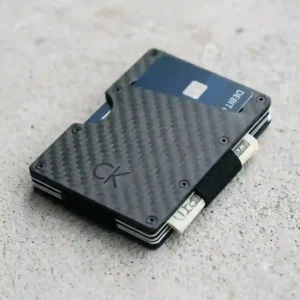
If you opt for metal (aluminum, titanium, carbon fiber), you are choosing a static experience. The wallet will look exactly the same on day 100 as it did on day one, save for a few scratches. Metal slides easily in and out of tight jeans, and the rigid structure means your cards will never warp or bend. However, metal is abrasive. If you casually toss a metal wallet onto a glass coffee table, it clatters loudly and risks scratching the surface. In the same vein, if it shares a pocket with your smartphone, the phone screen will eventually lose that battle.
Leather, conversely, is dynamic. According to Horween Leather Co., premium top-grain leather absorbs the oils from your hands, the indigo from your jeans, and the shape of the cards it holds, developing a unique patina over time. It is silent when placed on a table and friendly to your phone screen. The trade-off? Leather stretches. If you carry 8 cards in a leather slot for a month and then drop down to 4 cards, the remaining 4 will be dangerously loose and prone to falling out.
Long-Term Cost & Maintenance: What Happens in Year Two?
Amazon product listings paint a picture of day-one perfection, but what is the total cost of ownership as you push past the two-year mark?
For elastic-tension metal models like The Ridge or Trayvax, the failure point is never the metal; it’s the soft materials holding it together. After roughly 18 to 24 months of sliding 6 cards in and out several times a day, the heavy-duty elastic will begin to fray at the edges and lose its snap. Fortunately, reputable companies sell replacement elastic kits (usually in the $15-$20 range). Replacing them takes about ten minutes and a tiny Torx screwdriver, essentially resetting the wallet’s lifespan.
For mechanical models with pop-up triggers, the enemy is particulate matter. Pocket lint, beach sand, and microscopic dirt will eventually work their way into the spring-loaded mechanisms. By year two, a trigger that was once buttery smooth might start feeling gritty or failing to push the cards up evenly. The maintenance here requires canned compressed air (the kind used for keyboards) to periodically blast out the housing chamber.
What to Expect: Real-World Performance & Patina
The spec sheet won’t tell you how a product ages, but aging is an inevitable part of everyday carry. Transforming the raw specs into everyday expectations saves you from buyer’s remorse.
If you purchase a brightly colored anodized aluminum wallet, expect the color to chip at the hard corners within the first three months. Keys, coins, and the metal rivets on your jeans will slowly eat away at the anodized layer, revealing the raw silver aluminum beneath. Many users love this “battle-worn” look, but if you want your gear to stay pristine, you must opt for raw titanium or carbon fiber, which hide micro-abrasions much better.
For eco-tanned leathers, the first drop of rain or sweaty summer day will cause dark spotting. Do not panic. As the leather dries and you continue to handle it, those spots blend into the overall darkening of the material. A premium leather slimline wallet should look significantly darker and glossier at month six than it did out of the box. If it still looks identical a year later, it’s likely coated in a thick layer of synthetic plastic or polyurethane (a sign of cheap craftsmanship).
Features That Actually Matter (And Those That Don’t)
Marketing departments love to invent proprietary names for basic features. As an expert, here is my filter on what actually impacts your daily use versus what is pure marketing hype.
Matter: Quick Access Slots
You likely use one single card for 80% of your transactions. Whether it’s a thumb-push notch on a metal plate or a dedicated front-cutout on a leather sleeve, the ability to deploy your primary card without opening the entire wallet is the most critical feature of a minimalist design.
Don’t Matter: 15+ Card Capacities
If a minimalist brand is bragging about holding 15 or 20 cards, they are contradicting their own design philosophy. Any slimline wallet stuffed with 15 cards is no longer slim. It is a brick.
Matter: Beveled Interior Edges
On metal models, if the inside edges aren’t properly beveled or chamfered, inserting cards will slowly shave away the plastic edges of your credit cards. High-end brands machine their edges smooth; cheap knock-offs do not.
The RFID Security Factor: Hype vs. Reality
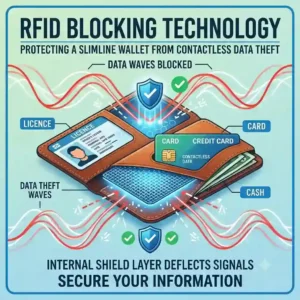
Every slimline wallet on the market in 2026 boasts “RFID Blocking Technology.” But is RFID skimming a massive threat, or is it an overblown marketing tactic?
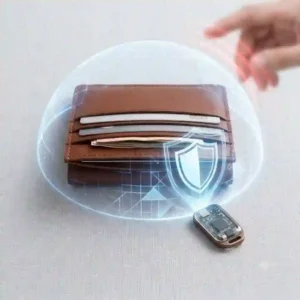
The reality is somewhere in the middle. The spec sheet promises that hackers cannot scan your contactless credit cards through the wallet material. While true—aluminum, titanium, and carbon fiber naturally block the radio frequencies—actual instances of crowd-skimming are statistically rare. Modern credit cards utilize dynamic cryptograms; even if a thief successfully skims the RFID signal, the intercepted data is typically only good for a single, heavily restricted transaction before the system flags it.
However, where RFID blocking truly proves its worth is in preventing “card clash.” If you carry an RFID-enabled transit card (like an Oyster card or MetroCard) alongside an RFID-enabled credit card, tapping your wallet against a terminal can cause the machine to read the wrong card, charging your bank account instead of your transit pass. A metal wallet acts as a shield, allowing you to control exactly which card is exposed and read by the terminal.
How to Choose Your Daily Carry
If you are overwhelmed by the options, follow this expert decision-making framework to pinpoint exactly what you need.
-
Assess Your Physical Currency Needs: Be brutally honest. Do you carry more than five bills daily? If yes, eliminate rigid metal plates. Opt for a leather sleeve with a dedicated cash flap.
-
Count Your Hard Plastic: Lay out only the cards you used in the last 14 days. If the number is under 6, you are a prime candidate for a mechanical pop-up or a strict aluminum box.
-
Evaluate Your Work Environment: Do you work in construction, manufacturing, or frequent the outdoors? Skip the delicate leathers and opt for tactical aluminum with paracord tension.
-
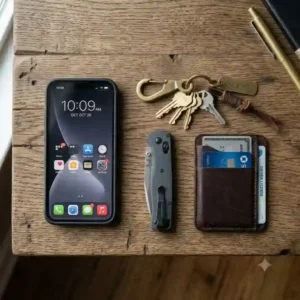
Identify Your Pocket Real Estate: Determine where you carry your phone and keys. If you intend to put the wallet in the same pocket as your $1,200 smartphone, you must choose leather to avoid catastrophic screen scratching.
-
Determine Your Aesthetic Language: A wallet is pulled out on dates, at business lunches, and at the bar. If your style is traditional, a slick carbon fiber block might look out of place. Match the material to your wardrobe.
Conclusion
Transitioning to a slimline wallet is a one-way street; once you experience the freedom of an unburdened pocket, the thought of carrying a traditional, overstuffed bifold becomes entirely unappealing. Whether you gravitate toward the indestructible, utilitarian nature of the Ridge, the high-tech mechanical cascade of the Ekster, or the classic, organic warmth of the Bellroy, the goal remains the same: carrying less, but carrying better.
Remember that the spec sheet only tells half the story. The true value of these EDC tools reveals itself in the subtle moments of your day—the speed of paying for a coffee, the relief of sitting down without adjusting your posture, and the durability of a product engineered to survive the friction of modern life. Assess your true daily carry needs, embrace the constraints of a smaller footprint, and make the upgrade.
FAQs
❓ What is the main point of a slimline wallet?
✅ The primary goal is to force minimalism, reducing pocket bulk, preserving the lifespan of your clothing, and eliminating the lower back pain associated with sitting on thick, traditional bifold wallets. They streamline access to your most essential daily cards…
❓ Can a slimline wallet hold cash?
✅ Yes, but with limitations. Most models require you to fold bills in half or thirds to slip under a metal money clip or into a tight leather pocket. They are not designed for large wads of physical currency…
❓ Does an Ekster wallet ruin cards over time?
✅ In my long-term testing, the ejection mechanism does not ruin cards, but the constant friction of cards sliding against each other can slowly wear down the painted numbers on cheaper plastic cards over a period of years…
❓ Are Ridge wallets actually comfortable in the front pocket?
✅ Yes. Because of their exact credit-card footprint, they slip easily into the front pocket and naturally sit flush against the thigh, making them nearly unnoticeable when walking, driving, or sitting down for extended periods…
❓ How long does an elastic minimalist wallet last?
✅ The metal plates will last a lifetime, but the elastic bands generally begin to lose their structural tension after 1.5 to 2 years of heavy daily use. Most premium brands offer cheap, simple replacement elastic kits…
Recommended for You
- Amazing 7 womens brown leather wallet: Ultimate Buyer’s Guide 2025
- 5 Best Made in USA Wallet Options for 2026 (Expert Review)
- Badge Wallets for Firefighters: Ultimate 2025 Buying Guide & 7 Essential Picks 🚒
Disclaimer: This article contains affiliate links. As an Amazon Associate, I earn from qualifying purchases. If you purchase products through these links, we may earn a small commission at no additional cost to you.
✨ Found this helpful? Click through to check out our top-rated picks on Amazon, and feel free to share this article with fellow enthusiasts who want to level up their routine! 💬🤗
[addtoany]
