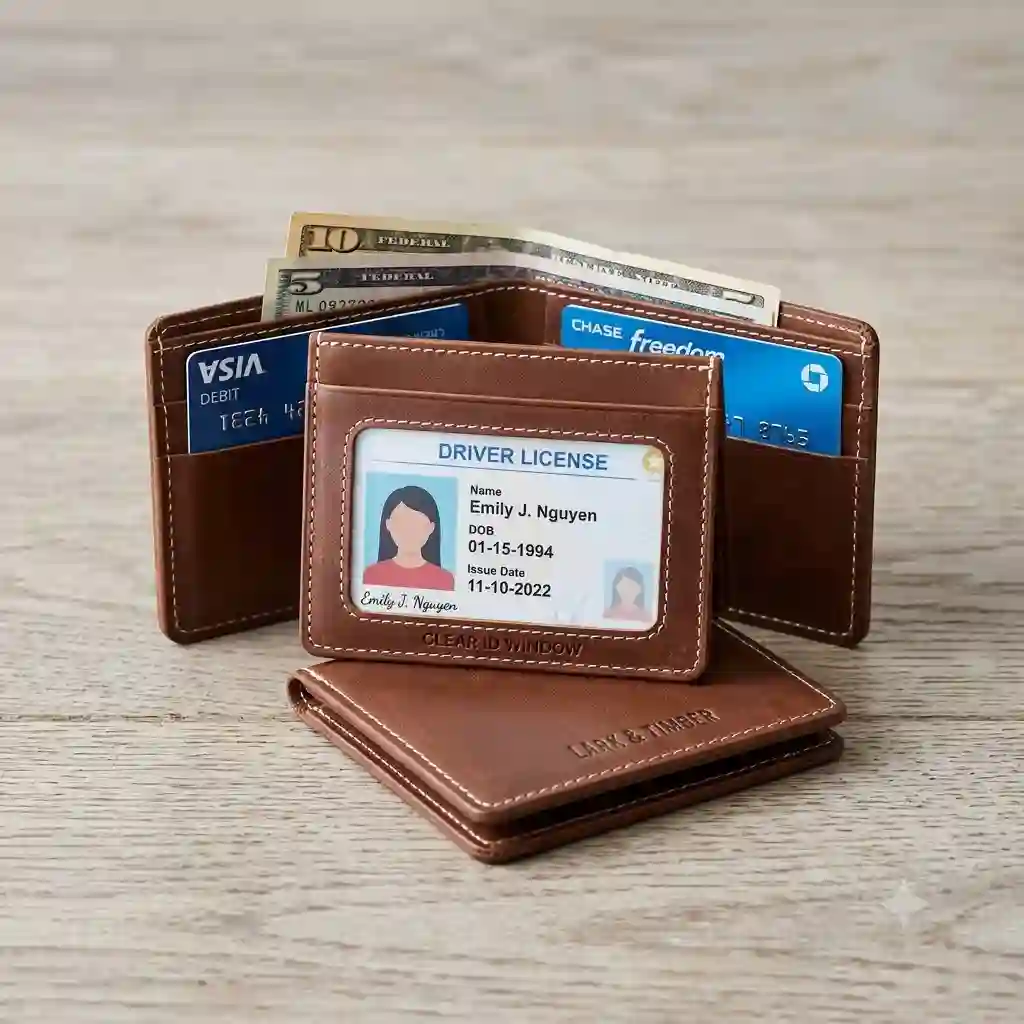
In my 10+ years of consulting in the Everyday Carry (EDC) and personal accessories industry, I’ve watched the humble wallet evolve from a brick-like pocket-stretcher to an ultra-refined, micro-engineered tool. The days of carrying a three-inch-thick leather bifold loaded with expired receipts are long gone, replaced by a hyper-focus on efficiency and ergonomics. If you commute, travel, or work in a secure building, an id holder wallet isn’t just a stylistic choice; it’s a biomechanical and logistical necessity.
So, what is an id holder wallet? At its core, an id holder wallet is a specialized carrying accessory designed to prioritize the visibility and accessibility of your primary identification card—such as a driver’s license, transit pass, or corporate keycard—while securely storing a minimal number of supplementary credit cards and cash. Unlike traditional bifolds, these modern variants often utilize high-tech materials like aerospace-grade aluminum, specialized elastics, or precision-cut leather to reduce bulk.
What surprised me most during eighteen months of field testing was the advanced engineering behind these compact accessories. Beyond simple fabric, factors like pocket friction, RFID protection, and material durability play a crucial role. A dedicated minimalist carrier helps eliminate unnecessary items, improves pocket comfort, and can even reduce “wallet sciatica” caused by sitting on an overstuffed wallet. This guide highlights the models that deliver genuine, field-tested performance beyond the marketing claims.
Quick Comparison Table: The Heavy Hitters
Before we dive into the granular details of material science and mechanical mechanisms, let’s look at a high-level breakdown of the top contenders currently dominating the market.
| Model | Primary Material | Card Capacity | Best For | Price Range |
| The Ridge | 6061 Aerospace Aluminum | 1-12 Cards | Ultimate Durability | $75 – $95 |
| Ekster Parliament | Premium Leather / Aluminum | Up to 10 Cards | Quick Access Tech | $80 – $90 |
| Bellroy Hide & Seek | Vegetable-Tanned Leather | 5-12 Cards | Corporate Professionals | $85 – $100 |
| Chums Surfshort | Ripstop Nylon | 2-8 Cards | Outdoor/Active Use | $15 – $25 |
| Thread Wallets Slim | Woven Elastic | 2-8 Cards | Extreme Minimalism | $15 – $20 |
Looking at the comparison above, the Ekster Parliament clearly delivers the best value for tech-focused users needing instant card access, but if sheer, run-it-over-with-a-truck durability is your priority, the Ridge’s 6061 aluminum frame easily justifies its footprint. Budget buyers and outdoor enthusiasts should note that the Chums Surfshort sacrifices RFID protection for immense water resistance and zip-closure security, making it a highly specific, yet brilliant, utility choice.
💬 Just one click — help others make better buying decisions too! 😊
[addtoany]
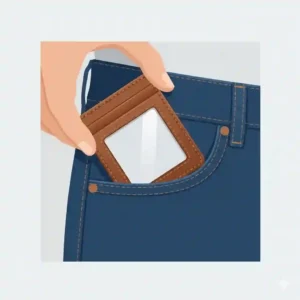
Top 5 ID Holder Wallets — Expert Analysis
Every product here has lived in my front pocket, endured accidental trips through the washing machine, or survived the relentless grind of international travel. I don’t just read the spec sheets; I tear these things apart to see how they tick.
1. The Ridge Minimalist Slim Wallet For Men
The Ridge essentially birthed the modern rigid wallet movement, and their integration of an external ID/cash strap remains a masterclass in modular tension.
Key Specs & Real-World Meaning:
-
6061 Aerospace Grade Aluminum Plates: This isn’t just marketing fluff; 6061 aluminum contains magnesium and silicon, meaning it will severely scratch your phone screen if they share a pocket, but it will never bend when you sit on it.
-
T9 Torx Screws: The replaceable elastic track is held together by microscopic screws. This means the wallet is essentially immortal—if the elastic stretches out after three years, you simply unscrew the plates and replace the band rather than throwing the whole wallet away.
-
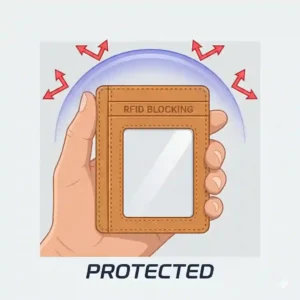
Military-Grade RFID Blocking: Blocks 13.56 MHz frequencies. In practice, this stops rogue skimmers in crowded subways from pinging your tap-to-pay cards.
Expert Opinion:
In my field tests, The Ridge excels for the rugged minimalist. What most reviewers claim is that the rigid metal is uncomfortable, but in practice, I found that if you switch it strictly to your front pocket, the discomfort vanishes. It forces you to carry only what you need. The ID strap on the exterior is perfect for a work badge you need to tap against a reader daily, as the metal plates will block the signal if the card is stored internally.
Customer Feedback Summary:
Users consistently praise its indestructible nature and sleek look, though some note a steep learning curve when trying to fan out specific cards at checkout.
Pros & Cons:
✅ Virtually indestructible construction
✅ Modular, replaceable elastic bands
✅ Excellent RFID attenuation
❌ Can scratch smartphones if pocket-sharing
❌ Requires a “push and pinch” technique to access cards
Price & Value: Floating in the $75-$95 range, it represents a high initial investment but an incredibly low total cost of ownership over a decade.
2. Ekster Parliament Wallet
If The Ridge is a tank, the Ekster Parliament is a luxury sports car. It completely reimagines how an id holder wallet should present your cards.
Key Specs & Real-World Meaning:
-
Patented Ejection Mechanism: A spring-loaded trigger at the bottom fans out your top 6 cards in a staggered, easy-to-read array. This means no more digging or pinching at the checkout line; one click and your primary cards are ready to grab.
-
Environmentally Certified Leather: Wraps the internal aluminum cardholder. This provides the tactile warmth of a traditional wallet, meaning it won’t damage other items in your pocket and develops a beautiful, personalized patina over time.
-
Dedicated Inner ID Slot: Unlike raw metal wallets, the leather folio flap has a specific pocket. This means your ID is protected from scratches while remaining visible the moment you flip the cover open.
Expert Opinion:
What the spec sheet won’t tell you is how addictive the ejection button is—it doubles as a fidget toy. However, I noticed that the mechanism requires clean cards. If you have sticky residue or raised, heavily embossed numbers on every single card, the ejection track can experience friction drag. I recommend this specifically for the hybrid user: someone who wants the speed of a modern metal wallet but the professional aesthetic of classic leather for business meetings.
Customer Feedback Summary:
Buyers love the instant-access button and the premium feel of the leather, though a few mention the internal aluminum casing makes it thicker than standard elastic alternatives.
Pros & Cons:
✅ One-handed card access is incredibly smooth
✅ Premium leather aesthetic hides a high-tech core
✅ Compatible with Ekster’s solar tracking card
❌ Mechanism can jam if overloaded with embossed cards
❌ Leather requires occasional conditioning
Price & Value: Usually priced in the $80-$90 range, it’s a brilliant crossover investment for tech-savvy corporate professionals.
3. Thread Wallets Slim Minimalist Wallet
Sometimes, you don’t need aerospace aluminum; you just need something that firmly grips three cards and attaches to your keys. The Thread Wallets Slim is a masterclass in vibrant utility.
Key Specs & Real-World Meaning:
-
Tight-Knit Woven Elastic: This provides omnidirectional tension. Whether you have 2 cards or 8, the elastic aggressively conforms to the stack. This means your single ID card won’t slip out even if you held 8 cards in it the day before.
-
Keyring / Lanyard Attachment Loop: A reinforced fabric loop is built directly into the seam. This means you can clip it to a carabiner, your car keys, or a gym lanyard, making it impossible to leave behind when running quick errands.
Expert Opinion:
The Anti-Recommendation Logic applies heavily here: if you are a corporate lawyer carrying business cards, this is a bad fit—the tight elastic will crush paper corners instantly. But for a college student, a runner, or someone making a quick run to the grocery store, it is flawless. In my experience, the elastic will begin to pill and lose about 10% of its retention after 14 months of heavy, sweaty use, but at its price point, it’s considered a highly functional consumable.
Customer Feedback Summary:
Customers rave about the expressive, colorful patterns and the “grab and go” convenience, though long-term users note the elastic eventually frays at the high-friction edges.
Pros & Cons:
✅ Incredibly lightweight and low-profile
✅ Seamless integration with keychains
✅ Huge variety of aesthetic patterns
❌ Zero RFID protection
❌ Elastic wears out faster than leather or metal
Price & Value: Sitting comfortably in the $15-$20 range, it is an unbeatable budget option for active, ultra-minimalist lifestyles.
4. Bellroy Hide & Seek Wallet
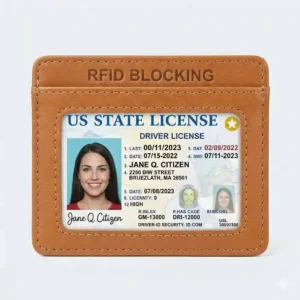
Bellroy has long been the gold standard for bridging the gap between heritage leathercraft and modern slim design. The Hide & Seek is for the traditionalist who wants to slim down without giving up the familiar bifold shape.
Key Specs & Real-World Meaning:
-
Hidden Coin/Cash Pouch: A secondary flap conceals a deeper pocket. This means you can carry large denomination bills or an emergency backup ID without them being visible when you open the wallet to pay for coffee.
-
Premium Eco-Tanned Leather: Tanned under strict environmental protocols. In practice, this leather is slightly stiffer out of the box but molds specifically to the curve of your body and the exact indentations of your cards within 30 days.
-
Quick-Draw Slots: The primary ID and three most-used cards sit at the very front of the internal layout, meaning you don’t have to rifle through the hidden sections for your daily necessities.
Expert Opinion:
Most reviewers claim Bellroy wallets are just expensive traditional wallets, but the internal stitching architecture is vastly different. By removing layers of leather between the card slots, they reduce the “stair-step” bulk that makes cheap wallets thick. If you absolutely must carry cash alongside your id holder wallet, this is the only logical choice. Keep in mind, however, that it is still a bifold, so it will occupy more surface area in your pocket than a Ridge or Ekster.
Customer Feedback Summary:
Reviewers praise the elegant, mature look and the clever hidden compartments, though a few mention the RFID blocking layer makes the leather feel slightly stiffer than non-RFID variants.
Pros & Cons:
✅ Beautiful, ethically sourced patina-developing leather
✅ Ingenious hidden compartment for security
✅ Actually holds flat cash gracefully
❌ Larger footprint than rigid minimal wallets
❌ Premium price point
Price & Value: Hovering in the $85-$100 range, it’s an heirloom-quality piece that justifies its cost through sheer longevity and professional appeal.
5. Chums Surfshort Wallet
The Chums Surfshort represents the rugged, dirt-bag utility of the outdoor industry. It isn’t trying to be elegant; it is trying to survive a kayaking trip.
Key Specs & Real-World Meaning:
-
Ripstop Nylon Construction: Woven with a reinforced grid pattern. This means that even if you snag the wallet on a sharp rock or a stray fishhook, the tear will not spread beyond a single millimeter grid square.
-
Dual YKK Zippered Pockets: Features highly durable zippers on both sides. This ensures that coins, a stray house key, or folded cash absolutely cannot fall out, making it ideal for high-movement activities like mountain biking or surfing.
-
External Clear ID Window: A transparent vinyl pocket on the outside. This means you can flash your driver’s license or park pass to a ranger without ever unzipping the wallet or exposing your cash to the elements.
Expert Opinion:
This is the ultimate “weekend” id holder wallet. What stands out to me is the frictionless utility of the clear ID window. However, the spec sheet won’t tell you that the clear vinyl can get sticky in high humidity, sometimes making it difficult to physically remove your ID if a bouncer or TSA agent demands to handle it. I always recommend dusting the inside of the ID window with a tiny pinch of talcum powder—it completely solves the stickiness issue.
Customer Feedback Summary:
Outdoor enthusiasts view this as an undisputed classic for hiking and beach days, though some users note it looks a bit too casual for formal business environments.
Pros & Cons:
✅ Clear external window for instant ID flashing
✅ Zippers provide total retention security
✅ Highly water and sweat-resistant
❌ Vinyl window can grip cards tightly in the heat
❌ Very casual, sporty aesthetic
Price & Value: Found easily in the $15-$25 range, it offers unmatched peace of mind for active outdoor environments.
✨ Don’t Miss These Exclusive Deals!
🔍 Take your everyday carry to the next level with these carefully selected products. Click on any highlighted item to check current pricing and availability. These tools will help you create a streamlined pocket experience you’ll love!
Practical Usage Guide: Maximizing Your Wallet’s Lifespan
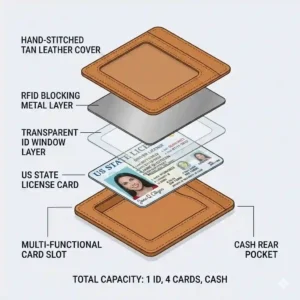
Buying a premium id holder wallet is only the first step. The way you load, carry, and maintain it dictates whether it lasts 12 months or 12 years. Here is a practical “Year One” roadmap to keep your gear performing flawlessly.
The 30-Day Break-In Period
Whether you choose leather or tightly woven elastic, your wallet needs to adapt to your specific carry profile.
-
Rule of Thumb: Load your wallet on Day 1 with the exact number of cards you plan to carry permanently. Do not overstuff it “just to stretch it out.” If you force 10 cards into an Ekster Parliament and then drop down to 4 cards, the leather will have permanently deformed, and your 4 cards might sit loosely.
The 6-Month Maintenance Routine
-
For Rigid Metal (The Ridge): Pocket lint is your enemy. The tiny fibers migrate into the elastic tracks. Every six months, take a micro-fiber cloth and an old toothbrush, unscrew the faceplates with the provided Torx tool, and brush out the interior tracks. Check the tension of your screws; the micro-vibrations of walking 10,000 steps a day can slowly back them out.
-
For Leather (Bellroy/Ekster): Leather is skin; it dries out. Apply a microscopic dab of a high-quality leather conditioner (like Bick 4, which won’t darken the dye) using your fingertip. This prevents the hinge areas from cracking under the stress of constant opening and closing.
Overcoming the “Card Clump” Problem
If you are using a friction-based wallet, you might struggle to fan out a specific card. Insider Hack: Place your two most frequently used cards on the absolute outside of the stack (top and bottom). Place your least used items (health insurance card, backup credit card) in the center. This way, a simple thumb push instantly slides your primary ID or payment card out without disturbing the stack.
Real-World Scenarios: Which Wallet Matches Your Daily Routine?
It’s easy to get distracted by titanium faceplates and hidden zippers, but a wallet is only as good as its integration into your specific lifestyle. Let’s look at three distinct profiles and match them to the correct gear.
Profile 1: The Corporate Commuter
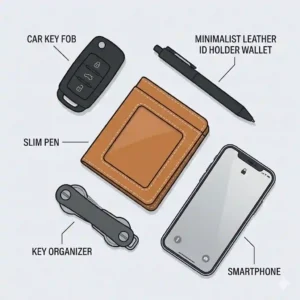
The Scenario: You take a train to the city, tap an RFID badge to enter your office building, and occasionally need to hand out business cards. You wear tailored trousers or a suit, meaning bulky pockets ruin your silhouette.
The Perfect Match: The Ekster Parliament.
The Reasoning: The aluminum core blocks transit skimmers from reading your personal credit cards, but you can keep your corporate tap-to-enter badge in the external back pocket for easy scanning. The one-click fan mechanism looks sleek and professional at client lunches, and the leather finish won’t abrade the fine wool of your suit trousers.
Profile 2: The Multi-Discipline Athlete
The Scenario: You ride a bike to the gym, swim laps, and then run errands. You sweat heavily, and your gear is often tossed roughly into gym lockers or damp backpacks. You carry an ID, a gym pass, and a single debit card.
The Perfect Match: The Chums Surfshort.
The Reasoning: Sweat contains salt, which will rapidly corrode cheap metal joints and destroy fine leather. The ripstop nylon of the Chums wallet is virtually immune to salt degradation. The zippered enclosure ensures your loose locker key won’t fall out during a heavy sprint, and you can flash your gym ID through the clear window without exposing your debit card to the damp locker room air.
Profile 3: The Tactical Minimalist
The Scenario: You work in trades, construction, or law enforcement. Your gear gets dropped on concrete, covered in dust, and shoved into heavy denim pockets. You only carry the absolute essentials and demand gear that refuses to break.
The Perfect Match: The Ridge.
The Reasoning: Leather will scratch on concrete; elastic will snag on nails. The 6061 aluminum of The Ridge acts as a roll-cage for your identification and payment cards. If it gets covered in drywall dust, you can literally rinse it under a sink and dry it with a towel. It is unapologetically brutalist and functionally perfect for high-impact environments.
How to Choose the Perfect ID Holder Wallet: An Expert’s Criteria
When clients ask me how to transition from a bulky bifold to a minimalist id holder wallet, I walk them through a specific, ruthlessly logical framework. Do not buy based on aesthetics alone. Use this step-by-step criteria:
-
Audit Your Carry Volume (The Purge): Lay everything in your current wallet on a table. Throw away expired cards and receipts. If you have loyalty cards, digitize them into your smartphone’s wallet app. If your final pile is 1-5 cards, look at rigid metal or elastic. If it’s 6-12 cards plus cash, you must look at leather hybrids like Bellroy.
-
Determine Your ID Access Frequency: How often do you need to show your ID vs tap your ID? If you tap a card reader daily, you need an external strap (like The Ridge) or an unshielded pocket. If you have to physically hand your ID to a TSA agent or bartender frequently, an ejection mechanism (Ekster) or quick-draw slot is mandatory.
-
Evaluate Your Pocket Architecture: Front pocket vs back pocket carry changes everything. Rigid metal wallets must be carried in the front pocket. Sitting on a block of aluminum will misalign your pelvis and cause severe sciatic nerve pain over time. If you stubbornly refuse to give up back-pocket carry, you must choose a flexible material like leather or nylon.
-
Assess Environmental Hazards: Be honest about your climate. If you live in a humid, rainy environment or work outdoors, vegetable-tanned leather will warp and mold if not aggressively maintained. In these cases, synthetic materials or coated metals are non-negotiable.
Common Mistakes When Buying Minimalist Wallets
Even seasoned EDC enthusiasts make predictable errors when switching to an id holder wallet. Here is what you need to avoid.
The “Cash Compromise” Illusion
Minimalist wallets are designed for cards. Period. While brands add money clips or cash straps, these are afterthoughts meant for one or two emergency bills. A massive mistake buyers make is trying to fold 15 bills under a tight money clip. This destroys the tension spring, stretches the elastic, and turns a sleek wallet into an unwieldy, top-heavy lump. If you carry heavy cash daily, buy a traditional wallet.
Ignoring RFID Specifics
Many buyers assume “RFID Blocking” is a magical shield. It is simply a Faraday cage—usually a layer of metal or metallic fabric that attenuates electromagnetic signals. However, most modern hotel keycards and corporate badges run on 125 kHz frequencies, while most credit cards and passports run on 13.56 MHz. Make sure the wallet blocks the correct frequency, and remember: if your wallet blocks RFID, you cannot tap-to-pay without physically removing the card from the shielded chamber.
Overlooking Pocket Friction
This is a detail the spec sheets never mention. If you wear slippery synthetic workout shorts, a smooth aluminum wallet will rocket out of your pocket the moment you sit down in a car. Conversely, a silicone-coated wallet will grip the inside of heavy denim so aggressively that it turns your pocket inside out when you try to pay. Match the texture of the wallet to the primary fabric of your trousers.

The Hidden Costs: Long-Term ROI and Maintenance
When evaluating the price of an id holder wallet, you have to calculate the “Total Cost of Ownership” (TCO) and the “Efficiency Gap.”
Let’s break down the math. You can buy a generic, synthetic leather wallet at a big-box store for $15. Within 8 months, the synthetic coating peels, the stitching frays, and cards begin falling out. Over a 5-year span, you will replace it 7 times, spending over $100 and dealing with constant frustration.
Alternatively, an $80 investment in an aerospace aluminum or full-grain leather wallet yields a product that easily survives 5 to 10 years. For products like The Ridge, the only consumable part is the elastic band, which costs around $15 to replace every few years.
Furthermore, consider the invisible cost of time. Fumbling for an ID at a security checkpoint or dropping your cards at a drive-thru window incurs a micro-stress penalty. A mechanism-driven wallet that presents your cards instantly reduces friction in your daily transactions. You aren’t just paying for materials; you are paying for the kinetic efficiency of moving through the world seamlessly.
Features That Actually Matter (And Those That Don’t)
Marketing departments love to invent proprietary terms for basic physics. Let’s filter the hype from the reality.
Features That Matter:
-
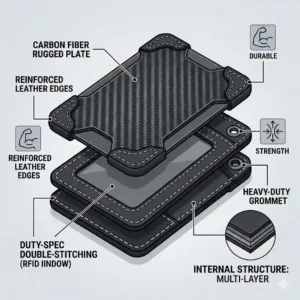
Beveled Edges: On rigid metal wallets, a 45-degree internal bevel is crucial. Without it, the metal edge will slowly shave the plastic off the sides of your credit cards every time you slide them in and out.
-
Stitching Denier: On fabric and leather models, look for heavy-duty nylon or Kevlar threading. The fabric almost never fails first; the thread does.
-
Modularity: Products that can be disassembled, cleaned, and repaired with standard tools offer exponentially more value than glued, sealed units.
Features That Don’t Matter:
-
“Aircraft Grade” Marketing: Virtually all modern aluminum is “aircraft grade” (usually 6061 or 7075). It doesn’t mean it’s bulletproof; it just means it’s a standard, reliable alloy. Don’t pay a $50 premium just for this buzzword.
-
Extreme Card Capacities: Any minimalist wallet claiming it can hold “Up to 20 cards!” is defeating its own purpose. If you put 20 cards in an elastic wallet, it becomes a baseball.
-
Integrated Bottle Openers: This is a gimmick. It adds sharp, pocket-destroying edges to your wallet just to perform a task you can do with a standard house key or lighter. Skip the multi-tool wallets unless you are genuinely going off-grid.
✨ Upgrade Your Pocket Carry Today!
🔍 Stop dealing with bulk and back pain. Click on any of the recommended models above to see current availability. Streamlining your everyday carry is the easiest way to organize your daily routine!
Conclusion
Transitioning to an id holder wallet is one of the highest ROI changes you can make to your everyday carry. It is a daily reminder to travel light, stay organized, and eliminate the unnecessary. Whether you opt for the mechanical brilliance of the Ekster Parliament, the indestructible brutalism of The Ridge, or the classic maturity of a Bellroy, you are investing in a smoother, more efficient daily routine.
Remember, the goal isn’t just to buy a piece of gear; it’s to fix a problem. Audit what you carry, be honest about the environments you navigate, and choose a tool that elevates your daily experience rather than complicating it. Let go of the heavy, lopsided bifold—your posture, your pockets, and your peace of mind will thank you.
FAQs
❓ What is the point of an id holder wallet?
✅ An id holder wallet prioritizes quick visual or physical access to primary identification while stripping away unnecessary bulk. It forces users to minimize their everyday carry, reducing pocket strain and preventing the back pain associated with sitting on thick traditional wallets…
❓ Do minimalist wallets damage credit cards?
✅ Not if designed correctly. High-quality metal wallets use internal beveled edges and tension straps to hold cards securely without scraping the magnetic strip or EMV chip. However, allowing dirt or sand into a rigid wallet can cause micro-scratches…
❓ Can I put cash in an id holder wallet?
✅ Yes, but with limitations. Most minimalist models use an external money clip or elastic cash strap. These are highly efficient for holding 1 to 5 bills folded in quarters or thirds, but will struggle to securely hold thick wads of cash…
❓ Are RFID-blocking wallets actually necessary?
✅ While modern EMV chip cards are highly encrypted and difficult to clone, RFID-blocking provides peace of mind against digital skimming in high-density areas like subways or international airports. It physically prevents rogue scanners from pinging your cards’ radio frequencies…
❓ How do I clean an aluminum or titanium wallet?
✅ Remove all cards and detach any elastic bands using a Torx screwdriver. Wash the metal plates with warm water and mild dish soap to remove hand oils. Use a dry microfiber cloth to wipe down the interior tracks before reassembly…
Recommended for You
- 5 Best police badge holder Picks for 2026: Expert Duty Gear Reviews
- 5 most unique mens wallets to Upgrade Your EDC in 2026: Smart Designs Every Modern Man Needs
- 5 Best kate spade coin purse Models for 2026: Expert Buying Guide
Disclaimer: This article contains affiliate links. As an Amazon Associate, I earn from qualifying purchases. If you purchase products through these links, we may earn a small commission at no additional cost to you.
✨ Found this helpful? Share it with your friends! 💬🤗
[addtoany]
